Stains, breath, taste: the visible effects
The first effects of tobacco are visible every day:
- yellow or brown stains on the teeth, caused by tar and nicotine, which settle into tiny irregularities in the enamel and on tartar;
- noticeable breath that lingers despite brushing;
- a dulled sense of taste and smell;
- more tartar, to which bacterial plaque clings easily.
A scale and polish removes much of the surface staining. Deeper discolouration may be suitable for teeth whitening, but the result generally fades faster if you keep smoking, and it is only considered on healthy teeth and gums.
Diseased gums that bleed less
Tobacco is one of the main risk factors for gum disease (periodontitis). It weakens local defences, favours aggressive bacteria and speeds up the loss of the bone that supports the teeth.
It also has a misleading effect: nicotine narrows the small blood vessels in the gums. As a result, smokers' gums often bleed less, even when they are diseased. The most common warning sign, bleeding when brushing, is therefore masked, and the disease can progress for a long time unnoticed.
If you smoke, look out instead for:
- receding gums, teeth that look longer;
- gaps opening between the teeth;
- loose teeth;
- persistent bad breath.
A gum examination with pocket measurements allows early detection. When the disease is established, gum treatment aims to stabilise it; stopping smoking clearly improves the response to treatment.
Healing, extractions and implants
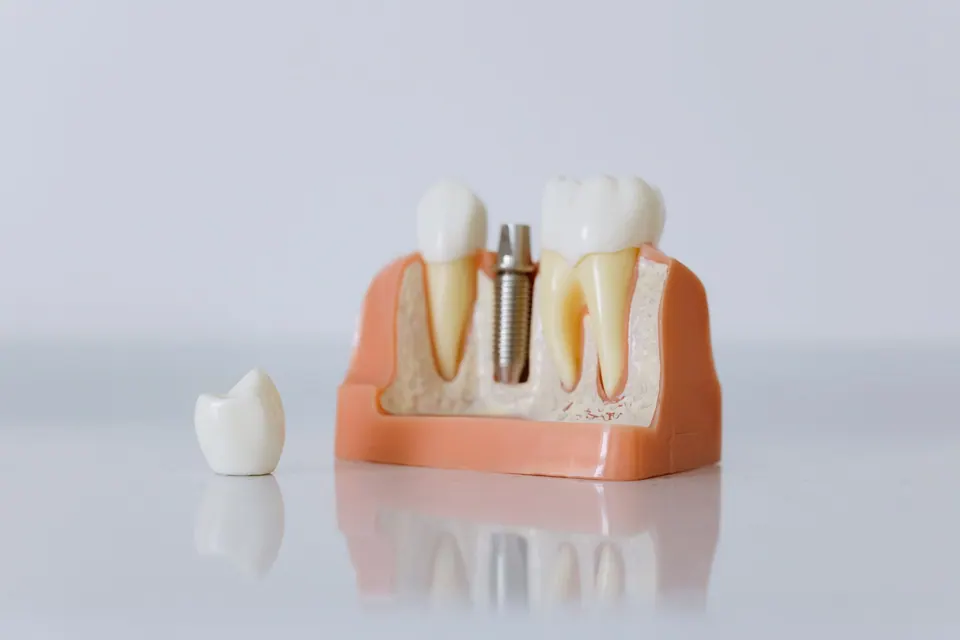
By reducing the oxygen supply to the tissues, tobacco slows healing. After an extraction, it notably increases the risk of dry socket, a painful inflammation of the tooth socket. Drawing on a cigarette and the heat of the smoke also disturb the formation of the blood clot.
For implants, tobacco is a recognised risk factor:
- bone may bond less well with the implant during the healing phase;
- in the long term, inflammation of the tissues around the implant (peri-implantitis) is more common in smokers.
Smoking does not always rule out a dental implant, but the dentist takes it into account in the assessment. They will usually recommend stopping, or at least abstaining before and after the procedure, and being very thorough with hygiene and follow-up. Each situation is discussed during the consultation.
Mouth cancer: signs not to ignore
According to the World Health Organization, tobacco in all its forms is one of the main causes of mouth cancer. Combining it with alcohol increases the risk further.
See a dentist or doctor promptly if any of these signs lasts more than two to three weeks:
- a sore or ulcer that does not heal;
- a white or red patch on the tongue, gums, inside of the cheeks or palate;
- a lump or thickening in the mouth or neck;
- unexplained pain or difficulty swallowing or chewing;
- a numb area, or a tooth becoming loose for no obvious reason;
- persistent hoarseness.
These signs most often have a harmless cause, but only an examination can tell. During check-ups, the dentist examines the whole mouth, not just the teeth, and refers you to a specialist if needed.
E-cigarettes, shisha and chewing tobacco
Other forms of tobacco and nicotine also affect the mouth:
- Shisha (hookah) is not a safer alternative. A single session exposes you to a large amount of smoke, and its use is associated with gum disease and cancers of the mouth and throat. Sharing the mouthpiece can also pass on infections.
- E-cigarettes contain fewer toxic substances than cigarette smoke, but they deliver nicotine and fine particles, and some sweet flavourings may contribute to decay. Their long-term effects on the mouth are still not well known.
- Chewing tobacco or snuff is in direct contact with the gum: it is associated with local lesions, gum recession and mouth cancer.
If you use any of these products, tell your dentist: it helps them keep an eye on the areas at risk.
Quitting: what your mouth gains
It is never too late to stop. After quitting, blood flow in the gums improves, defences gradually recover and healing becomes more effective. Gum treatment works better, and the risk of mouth cancer falls over the years.
Do not worry if your gums bleed a little more in the first few weeks: this is often a sign that circulation is returning and that inflammation hidden until now is becoming visible. Mention it to your dentist.
You do not have to quit alone: your doctor or pharmacist can advise you on the support available (counselling, nicotine replacement or other treatments depending on your situation) and refer you to stop-smoking services.
At German Dental Clinic in Agdal, we assess your teeth and gums whether you still smoke or have stopped. If you live in or around Rabat, book an appointment for a check-up.
Sources
Frequently asked questions
My gums have been bleeding since I stopped smoking, is that normal?
It is common. Tobacco masked the inflammation by reducing blood flow in the gums. When you stop, bleeding returns and reveals inflammation that was already there. Keep brushing gently and book a gum examination.
Can whitening remove tobacco stains?
A scale and polish already removes much of the surface staining. Whitening can lighten deeper discolouration on healthy teeth, but the result tends to fade faster if you keep smoking.
Can I have an implant if I smoke?
It is not always ruled out, but tobacco increases the risks during healing and in the long term. The dentist assesses your situation and will usually advise you to stop, or at least to abstain around the time of the procedure.
Is shisha less harmful to the mouth than cigarettes?
No. Shisha smoke also contains toxic substances, and its use is associated with gum disease and mouth cancers. The water does not filter these substances well enough to make it safe.
The information on this page is general. Only a consultation allows a diagnosis and a suitable treatment plan.