What can be prepared remotely, and what cannot
Moroccans living abroad, expats and visitors often use a stay in the country to have dental treatment. That is entirely possible, as long as one thing is clear: no final treatment plan can be drawn up without a clinical examination. Photos or an old X-ray give some indications, but they replace neither an examination of your mouth nor up-to-date images.
What you can do beforehand:
- contact the practice several weeks before you arrive, giving the dates of your stay;
- describe what you are looking for and your medical history (conditions, medication, allergies);
- schedule the assessment appointment at the start of your stay, not the day before you leave;
- leave a few days' margin for the unexpected.
The assessment shows what can be done during your stay, and what will need a return visit or follow-up with your usual dentist.
Sending your X-rays and records
If you have recent documents, they help to prepare the first consultation:
- a panoramic X-ray or recent radiographs, ideally in their original digital format;
- a report from your usual dentist and any treatment plan;
- a list of your medication and medical history;
- a record of major treatment (implants, grafts, root canal treatment), including the brand of any implants already placed, if possible.
You can send them to the practice by email (contact@germandentalclinic.ma) or by WhatsApp (+212 6 10 34 37 27). Only send what is relevant, and always keep your own copies.
These documents help prepare the consultation, but the dentist may need new images on site, for example a digital panoramic X-ray, to confirm the diagnosis.
Realistic timelines for each treatment
How long things take depends above all on biology, not logistics. Some general guidance, to be confirmed at the assessment:
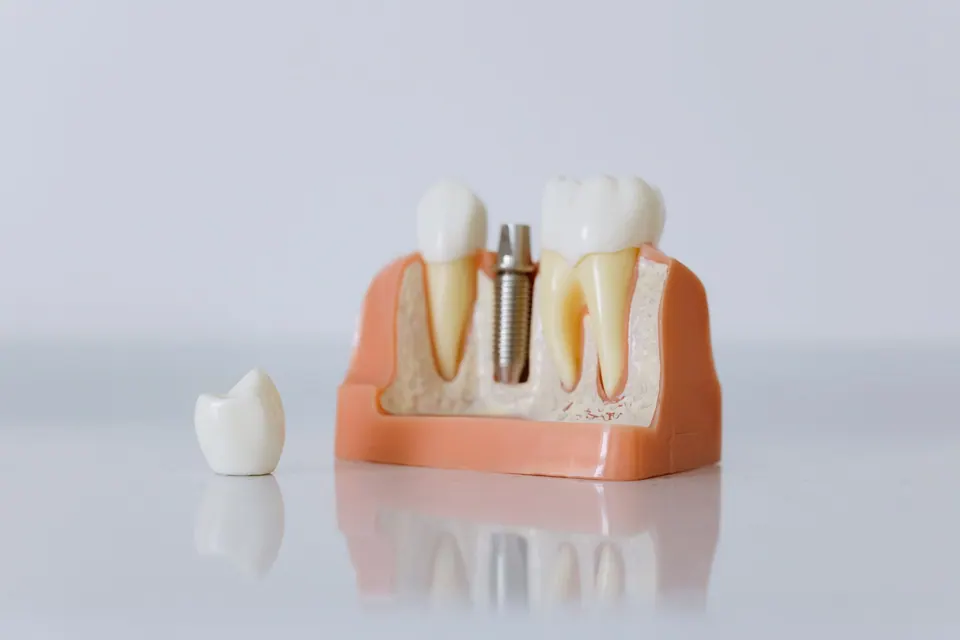
- A dental implant needs a healing phase, during which the bone integrates with the implant, before the final crown is fitted. This phase is usually measured in months, and longer if a bone graft is needed. In general you should therefore plan for at least two trips, or arrange for the crown to be fitted by a dentist in your home country, which needs to be discussed beforehand.
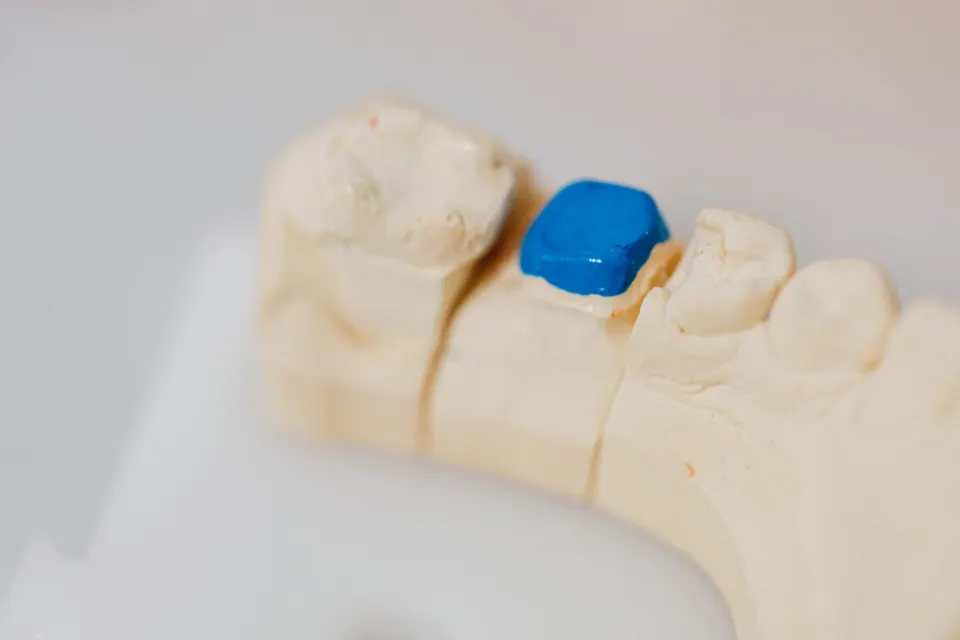
- A dental crown can often be completed more quickly. Thanks to digital impressions and the clinic's CAD/CAM milling unit, some crowns are made on site, sometimes on the same day, depending on the material and the situation. If the tooth first needs root canal treatment, or the gums need treating, the timeline is longer.
- Veneers require an aesthetic assessment, often a trial, then fitting: several appointments spaced apart should be expected, and such a visible decision deserves time for reflection.
Trying to squeeze everything into a few days can lead to compromises. A realistic schedule is better than an overly tight plan.
Flying after dental surgery
After an extraction, implant placement or a graft, it is natural to wonder about the flight home. There is no single rule: the right timing depends on the procedure, your health and the length of the flight.
- After a simple procedure, flying can often be considered once the first few days have passed and any bleeding is under control, but the dentist should confirm this.
- After surgery involving the sinus (sinus lift or sinus augmentation), changes in cabin pressure can interfere with healing: waiting longer and avoiding blowing your nose hard is then often recommended.
- If you are at risk of blood clots (previous history, hormone treatment, pregnancy, recent surgery), also discuss it with your doctor.
Plan to stay a few days after any surgery, so that you can be seen again if anything unusual happens. Scheduling a procedure the day before a long-haul flight is not a good idea.
Follow-up once you are home
Dental treatment does not end at the last appointment. Before you leave, ask for:
- a written report of the treatment carried out, with the materials used and, for an implant, its brand and dimensions;
- a copy of your X-rays, before and after treatment;
- your aftercare instructions and the schedule of planned check-ups.
This information allows your usual dentist to provide good follow-up care and, if needed, to order parts compatible with your implant. It is worth letting them know before you go, to check whether they are willing to take over.
Also bear in mind that if a late complication occurs, you will need either to come back to Rabat or to see a dentist near home: this is something to weigh up in your decision.
Documents for your insurer
Rules on cover for treatment received outside your home country vary widely between insurers, and some public health systems do not reimburse dental treatment received abroad. Check before you start:
- ask your insurer whether prior approval is required and which supporting documents they accept;
- ask the practice for a detailed estimate, item by item, before treatment begins;
- keep the detailed, receipted invoice, listing each procedure, the tooth involved and the date;
- attach the treatment report and X-rays if needed;
- check whether a translation of the documents is required.
If you are covered by a Moroccan scheme (AMO, Morocco's compulsory health insurance), the usual rules of your fund apply.
A dental emergency on holiday
A broken tooth, a crown that comes off or pain that sets in can happen during a stay in Morocco. A few practical tips:
- Crown or temporary crown come off: keep it, do not glue it back with a household adhesive, and avoid chewing on that side.
- Broken tooth: keep the fragment if possible and seek care promptly.
- Adult tooth knocked out: hold it by the crown without touching the root, keep it in milk or in your own saliva, and seek urgent care.
- Pain or swelling: see our dental emergency page and call the practice in Agdal so the situation can be assessed.
A high fever, difficulty swallowing or breathing, or swelling spreading towards the eye or neck call for a hospital emergency department. Before you travel, check that your travel insurance covers emergency treatment, and take a list of your medication with you. To arrange an assessment during your stay, you can book an appointment.
Sources
Frequently asked questions
Can I get a treatment plan remotely before I come?
Recent X-rays and photos make it possible to give initial indications and prepare the appointment. But a reliable treatment plan requires a clinical examination and, often, new images. An assessment in person remains essential.
Can an implant and its final crown be done in a single stay?
Generally not: the bone needs time to integrate with the implant before the final crown is fitted. In some situations a temporary tooth can be provided quickly, but the final crown comes later. So plan for a second trip or for follow-up with your own dentist.
What should I do if a problem arises after I get home?
First contact the practice that carried out the treatment to describe the situation, with photos if possible. Depending on the case, a visit to a dentist near you may be needed, which is why it matters to leave with a written report and your X-rays.
The information on this page is general. Only a consultation allows a diagnosis and a suitable treatment plan.