At what age should the first visit take place?
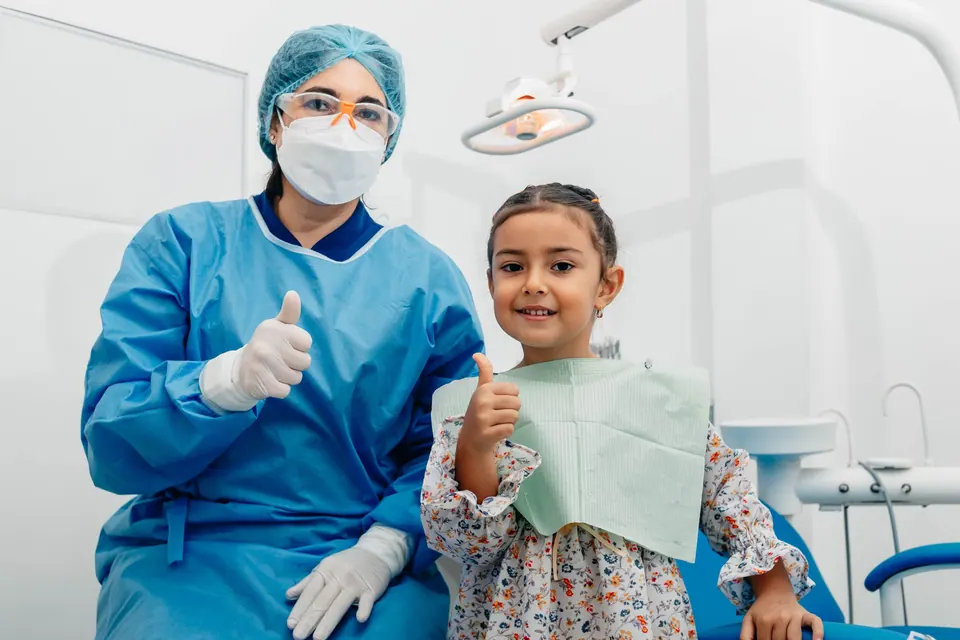
The first visit can take place as soon as the first teeth appear, usually during the first year, and at the latest around the age when all the baby teeth have come through. This first appointment is short and involves no major treatment: your child discovers the dental chair, often on a parent's lap, the dentist looks at the teeth and gums, and you receive advice suited to your child's age.
This early contact has two benefits. First, it allows the earliest signs of decay to be spotted, as they can appear very young, particularly with night-time bottle or breast feeding. Second, it builds trust: a child who has got to know the practice in good conditions will cope much better with any treatment later on.
After that, regular check-ups are recommended, at intervals set by the dentist according to your child's risk of decay.
Why treat baby teeth?
People sometimes say there is no point treating a baby tooth since it will fall out anyway. That is a misconception. Decay in a baby tooth:
- can hurt and disturb sleep, eating and concentration;
- progresses quickly, because the enamel of baby teeth is thinner;
- can cause an abscess, with swelling of the cheek;
- can, in some cases, affect the developing permanent tooth just beneath it.
Baby teeth also act as guides for the permanent teeth. A baby molar lost too early leaves a gap into which the neighbouring teeth can drift, which may obstruct the permanent tooth coming through. Some baby molars stay in the mouth until late childhood, so keeping them in good condition really matters.
Treatments offered to children
Depending on age and situation, care may include:
- Check-up and prevention: examination of the teeth, assessment of decay risk, a brushing demonstration with the child and parent, advice on diet and an age-appropriate fluoride toothpaste.
- Fissure sealing: on the permanent molars that come through around the age of six, deep grooves can be protected with a thin resin that limits plaque build-up.
- Treating decay: from a small filling to deeper treatment, following the same principles as adult tooth decay treatment, but adapted to baby teeth.
- Pulp treatment of baby teeth, when decay has reached the nerve, to keep the tooth until it falls out naturally.
- Extraction of a baby tooth that is too damaged or that does not fall out while the permanent tooth is coming through.
- Care after knocks to the teeth, which are common when toddlers start walking or during sport.
Every treatment is explained to the child in simple words, and to the parents in detail.
A gentle approach, at the child's pace
Fear of the dentist often stems from a first experience that was painful or rushed. At the practice, several principles guide the care of younger patients:
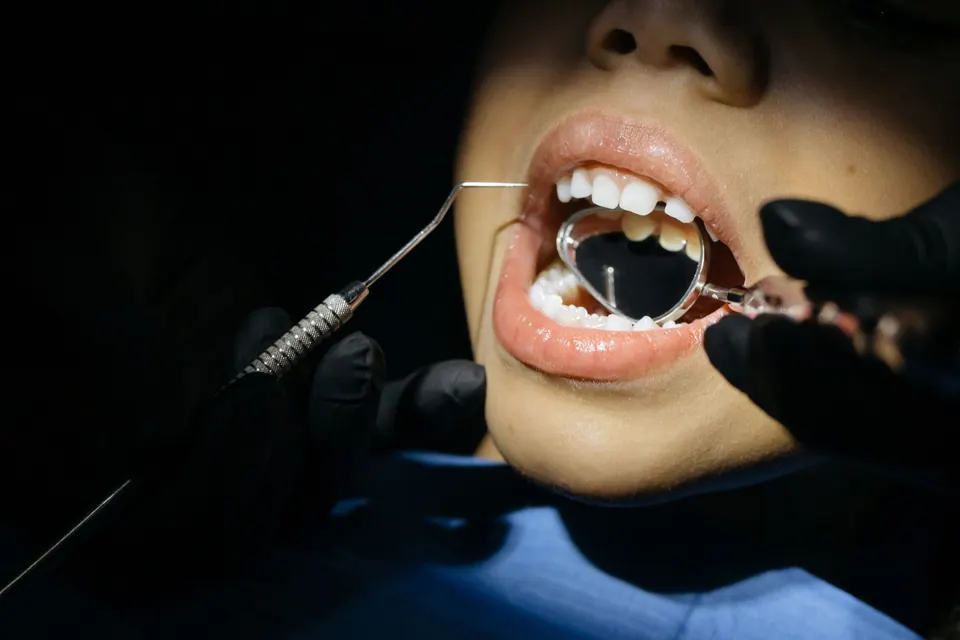
- Tell, show, do: we explain what is going to happen, show the instrument (the little mirror, the air spray, the light), then do it.
- Child-friendly words: we avoid frightening terms, without ever lying to the child.
- Short sessions and, whenever possible, planned treatment rather than emergency care.
- A parent's presence when it helps the child, and tips on preparing for the visit at home without making it dramatic.
When a child is too young or too anxious for a long treatment, it may be split into several sessions or other approaches may be discussed. The child's comfort comes before speed.
Teething and losing baby teeth
The arrival of the first teeth often comes with swollen gums, heavy drooling and a need to chew. A teething ring cooled in the fridge (never the freezer) and gently massaging the gum with a clean finger bring relief to many children. A high fever, significant diarrhoea or a very listless child should not be put down to teething without medical advice.
Later, around the age of six, baby teeth start to wobble and then fall out. Sometimes a permanent tooth comes through behind a baby tooth that is still in place, especially in the lower jaw: if the baby tooth does not loosen in the following weeks, a check-up is needed. And if a knock breaks or knocks out a tooth, follow the advice on our dental emergency page.
Preventing decay at home
Most prevention happens at home, with a few simple guidelines:
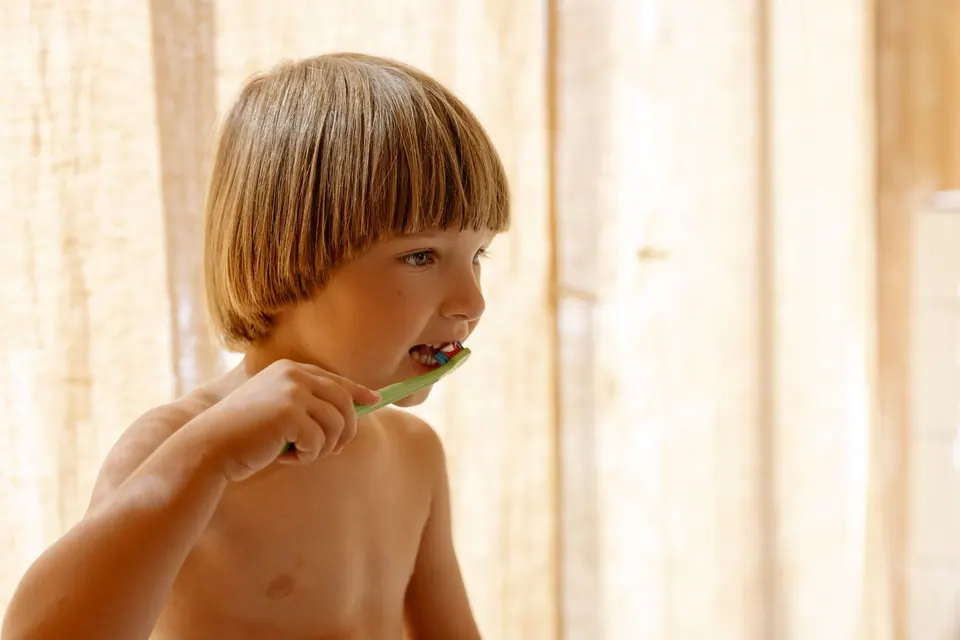
- Brushing from the first tooth, twice a day, with a soft-bristled brush and a fluoride toothpaste in an amount suited to age (a smear for the youngest, then a pea-sized amount).
- The parent brushes or goes over the teeth again until the child has the dexterity to do it properly, usually until around seven or eight.
- No bottle of milk or juice to fall asleep with: the sugar stays in contact with the teeth all night.
- Water as the everyday drink, and sweets kept for mealtimes rather than snacking.
- The evening brush is the most important: nothing to eat or drink after it, except water.
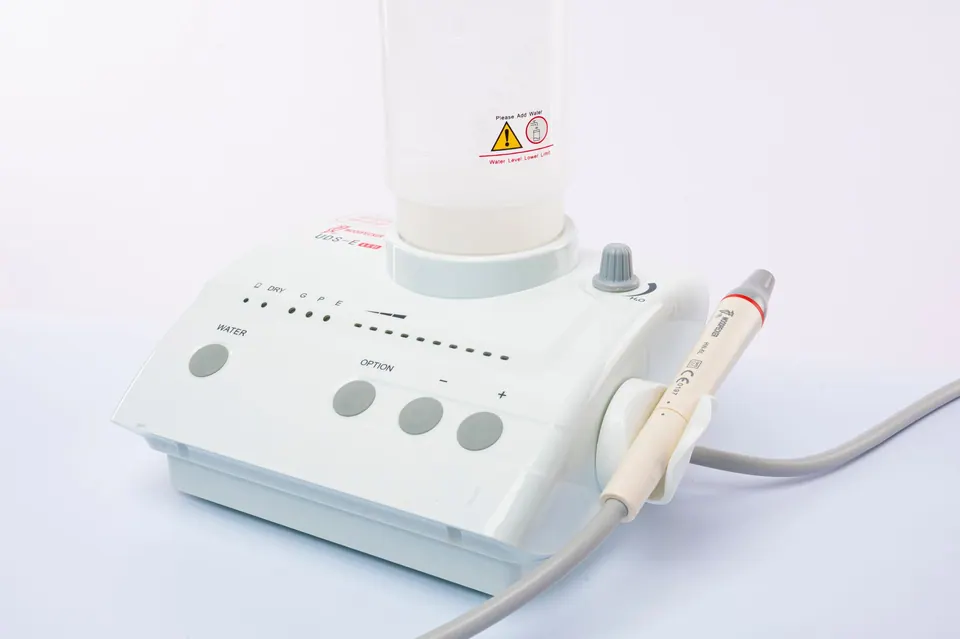
In the teenage years, a scale and polish may be added to check-ups, especially if oral hygiene slips.
Monitoring growth and alignment
Regular follow-up also makes it possible to watch how the teeth develop. The dentist checks the order in which permanent teeth come through, the space available in the arch, how the jaws meet, and certain habits that can influence growth: prolonged thumb or dummy sucking, mouth breathing, atypical swallowing.
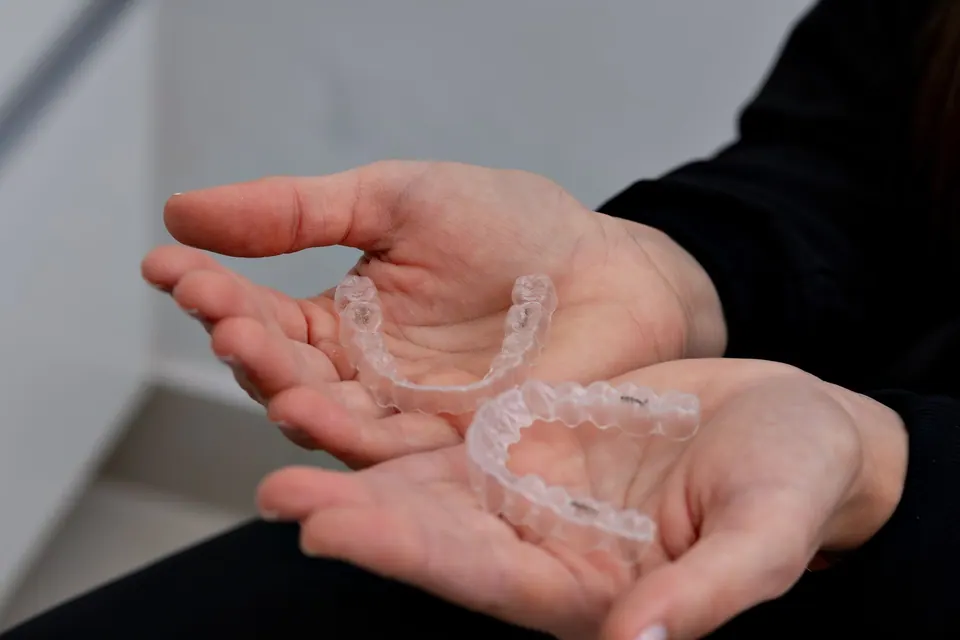
Spotting a discrepancy early does not always mean treating it early: sometimes monitoring is enough. When a correction becomes useful later on, options exist, including clear aligners for teenagers depending on the case. For your child's first visit in Rabat, book an appointment at the Agdal practice.
How it works
- Welcome and discoveryYour child discovers the chair and the instruments at their own pace, with a parent.
- Examining the teethCheck of the teeth, gums and how the dentition is developing, with nothing painful.
- Personalised adviceBrushing demonstration, diet, age-appropriate toothpaste.
- Targeted preventionFissure sealing or fluoride application if the risk of decay warrants it.
- Treatment if neededDecay is treated in short sessions, after explaining things to the child.
- Regular follow-upCheck-ups at suitable intervals monitor the teeth and growth.
Frequently asked questions
How can I prepare my child for their first visit?
Talk about it simply and positively, without promising that "nothing will hurt" or using the dentist as a threat. You can read a story on the subject or play at counting their teeth. Choose a time when your child is rested, avoiding nap time. Stay calm yourself: children pick up very easily on their parents' anxiety.
My child has a brown spot on a tooth. Is it serious?
A brown or chalky white spot may be early decay, but it may also be a harmless stain or an enamel defect. Only an examination can tell the difference. If it is early decay, it can often be stabilised or treated simply. It is better to come in promptly than to wait for pain to appear.
What should I do if my child knocks a tooth?
Stay calm, rinse the mouth gently and apply a cold compress if the lip is bleeding. If a tooth is broken, displaced or knocked out, contact the practice quickly. A knocked-out baby tooth is not put back, but a permanent tooth can be if you act very quickly: see our dental emergency page.
From what age should fluoride toothpaste be used?
Fluoride toothpaste is recommended from the first tooth, in a very small amount (just a smear) for the youngest, then a pea-sized amount once the child can spit. The fluoride concentration depends on age. The dentist will tell you which toothpaste is suitable at the visit, based on your child's risk of decay.
My child sucks their thumb. Should I be worried?
Sucking is normal in very young children. It becomes an issue when it continues beyond early childhood, as it can change the position of the teeth and the shape of the palate. The dentist looks at its effects during check-ups and advises you on how to help your child stop, without making them feel guilty.
Are X-rays safe for a child?
In children, X-rays are not taken routinely: they are prescribed when they provide useful information, for example to detect decay between two teeth or to follow a permanent tooth. Digital radiography uses low doses and the number of images is limited to what is necessary.
The information on this page is general. Only a consultation allows a diagnosis and a suitable treatment plan. Updated on 14 October 2026.