What is smile design for?
Cosmetic dental treatment is often a long-term commitment, and sometimes an irreversible one. Smile design answers a simple question: what will my smile look like, and will I like it?
It is used to:
- turn your wishes, often expressed in vague terms ("brighter", "teeth that look less short", "more balanced"), into precise parameters;
- check that the project suits your face, lips, gums and bite;
- let you see and feel the result in your mouth before any tooth is prepared;
- provide a reference plan for the dentist and the laboratory for the rest of the treatment.
Smile design is therefore not a treatment in itself: it is a method of planning and dialogue. It prevents a technically sound result from turning out different from what you had in mind.
It is also reassuring. Many patients hesitate for years to correct their smile for fear of not recognising themselves. Being able to judge the project on your own face, before committing, often changes how you approach treatment.
What we analyse
A harmonious smile is about more than white, straight teeth. The study relies on aesthetic reference points, always adapted to the individual:
- the face: its shape, the midline, the line of the eyes and the horizontal that guides the orientation of the teeth;
- the lips: how much tooth shows at rest and when speaking, and the curve of the lower lip, which the edge of the upper teeth ideally follows;
- the gums: their level, their symmetry and how much gum shows in a broad smile;
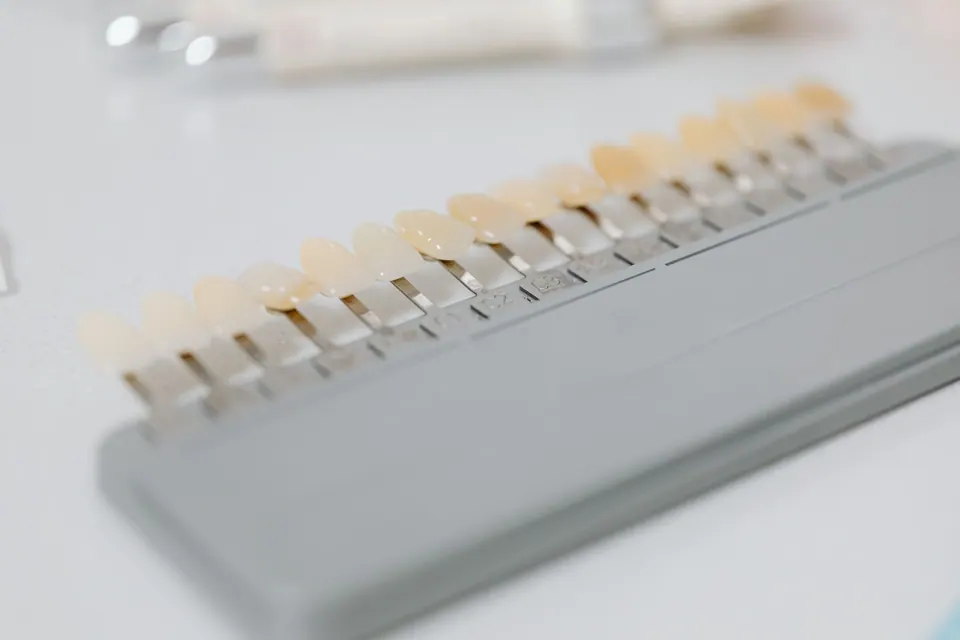
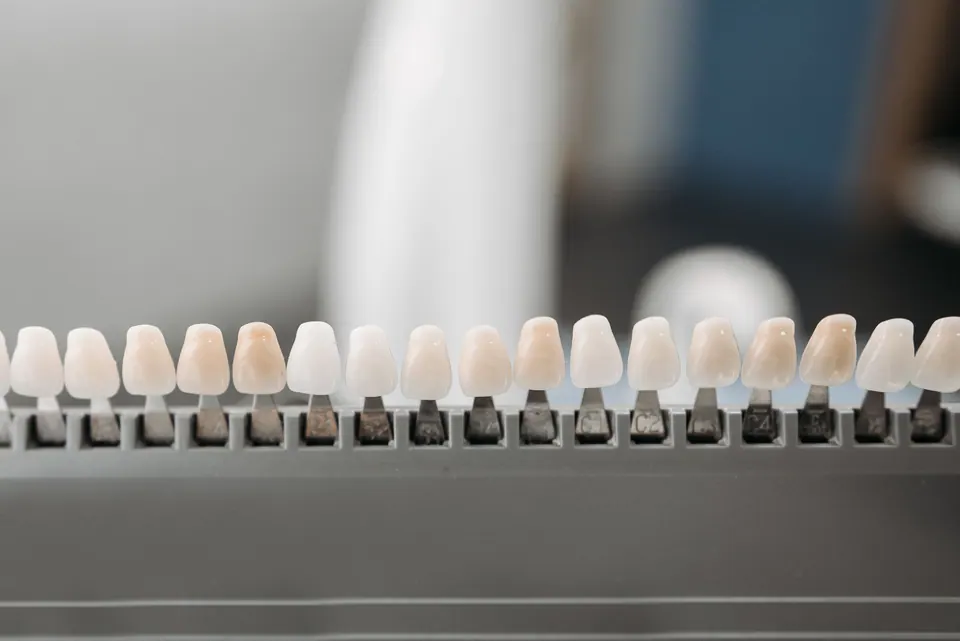
- the teeth: width to length proportions, shape, surface texture, shade and translucency;
- function: how the teeth meet, chewing movements and the pronunciation of certain sounds.
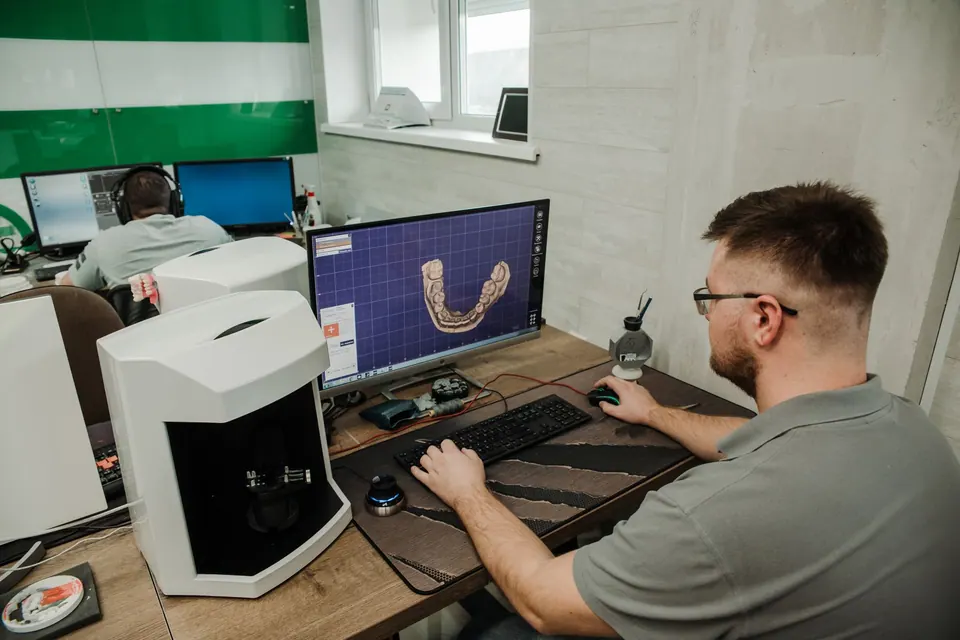
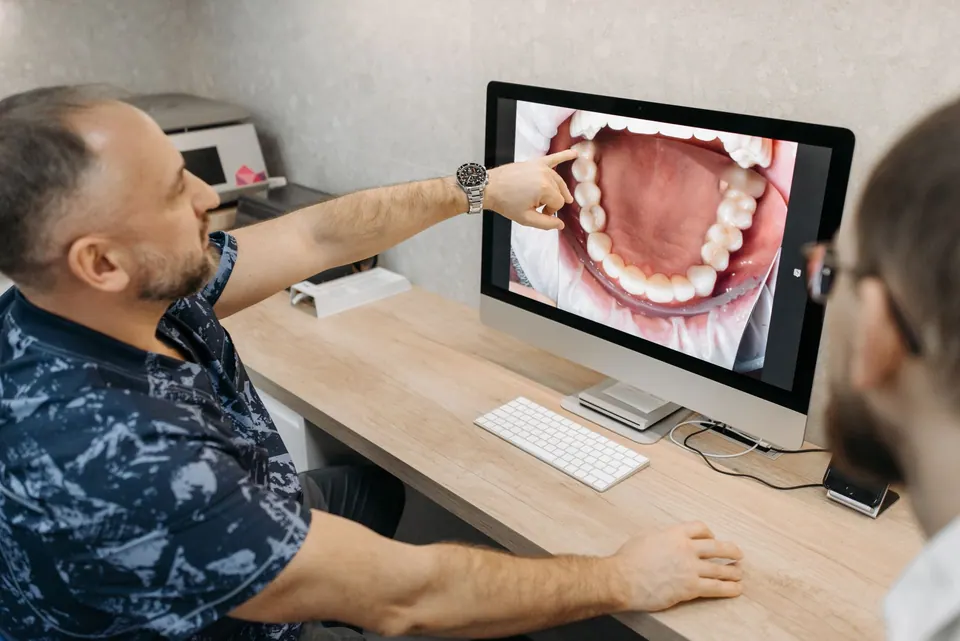
This information is gathered with photographs and short videos of your smile, and a digital impression taken with an intraoral scanner, with no impression paste.
From digital plan to trial in your mouth
Using this data, a project is built on the computer: the future teeth are designed and positioned on the digital model of your mouth. The project can then be turned into a physical model, which is used to make a transfer key.
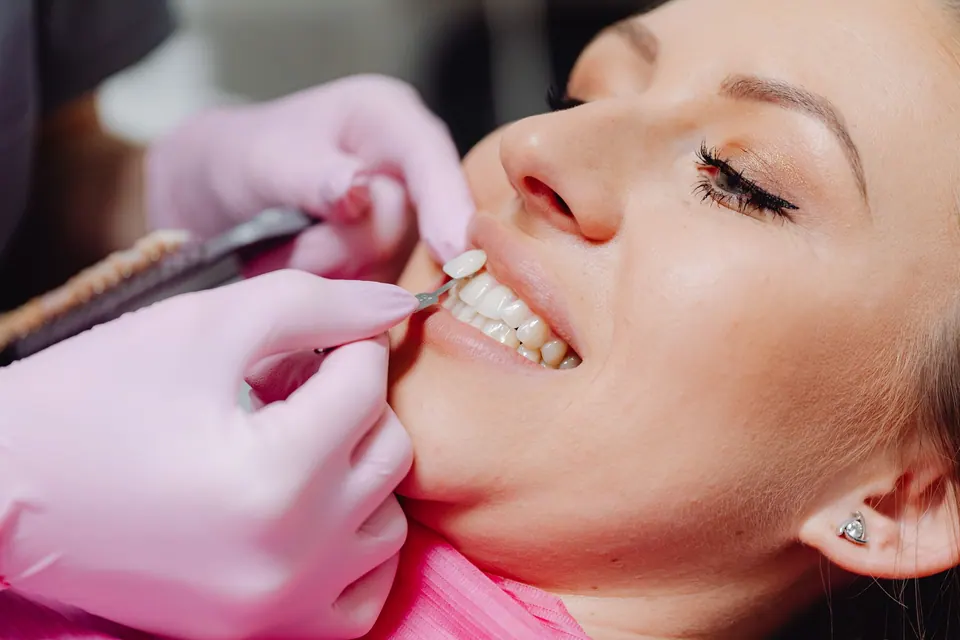
Then comes the decisive step: the mock-up. A temporary resin in the chosen shade is applied to your teeth using this key, without preparing them and without anaesthesia. Within minutes, you see the proposed shape and length in your own mouth. You can smile, talk, look at yourself from different angles, take photos and ask someone close to you for their opinion.
This is the moment to say everything: a tooth that looks too long, a smile that is too uniform, a shade that is too light. Adjustments are made at this stage, before anything irreversible is done. The mock-up is then easily removed.
Temporaries: living with your new smile
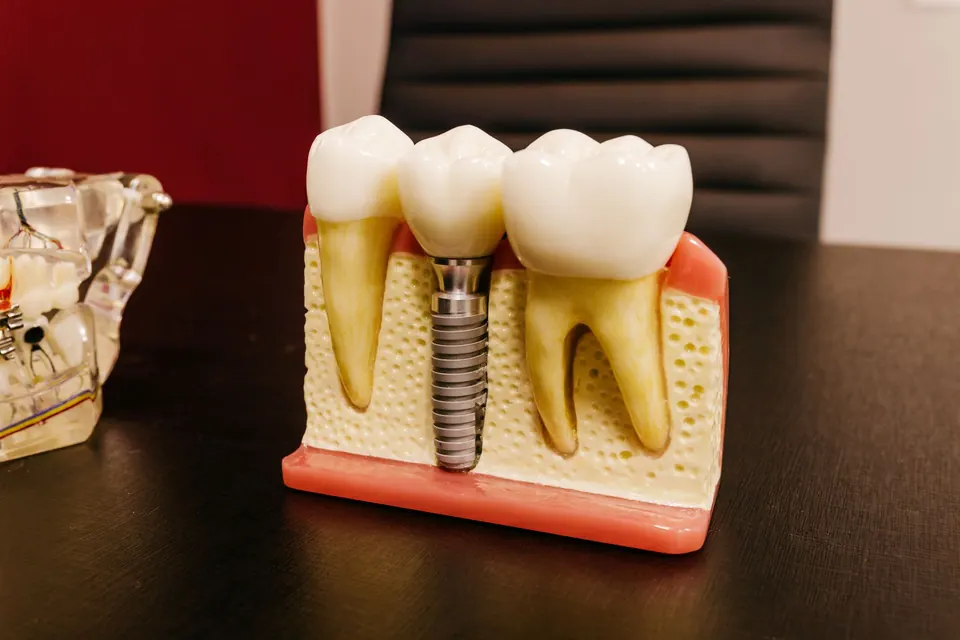
When treatment involves replacing old crowns or placing new dental crowns, a further trial stage is possible: temporary crowns made according to the project.
Worn for a period agreed with the dentist, they let you test the result in everyday life: eating, speaking, laughing, seeing yourself in photos. This period is valuable for checking comfort, speech and appearance, and for adjusting whatever needs it. Very often, it is while wearing these temporaries that patients gain confidence in the project. The final restorations then reproduce the approved shapes, in stronger and more aesthetic materials.
For veneers the principle is similar: the approved mock-up guides the preparation, which is carried out through the mock-up so that only what is strictly necessary is removed.
Which treatments is it used for?
Smile design is useful whenever the project changes the shape or length of visible teeth:
- ceramic or composite dental veneers;
- replacement of old or unsightly front crowns;
- a complete smile makeover, sometimes called a Hollywood smile;
- restoration of teeth worn down by age or bruxism (teeth grinding);
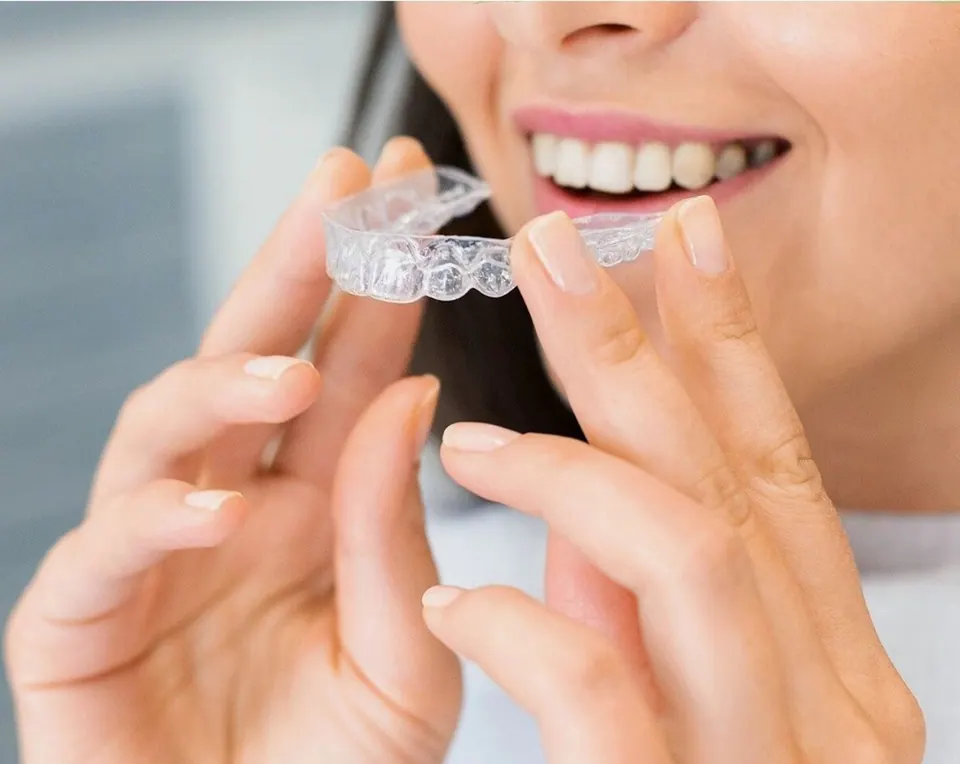
- projects combining aligners and restorations, to decide the ideal position of the teeth before restoring them.
It is rarely needed, on the other hand, for simple whitening, which does not change the shape of the teeth. The study can also lead to an unexpected conclusion: the desired project is not suitable, or a lighter approach gives an equivalent result. That is also part of its purpose.
Limits and points to bear in mind
Smile design is a projection tool, not a promise accurate to the millimetre. A few nuances are worth keeping in mind:
- mock-up resin is thicker and less translucent than final ceramic: the definitive shade and texture will look more natural, but slightly different;
- the project must remain biologically achievable: some shapes that look appealing on screen would require too much reduction of the teeth or would encroach on the gum;
- gums and bone have their own limits, and an irregular gum line may need additional treatment;
- if there is gum inflammation or decay, these problems are treated first.
A good project is one that balances your expectations, the health of your teeth and the longevity of the restorations.
What affects the cost of the study
The cost of smile design depends on the level of study required:
- the scope of the project (a few teeth or the whole smile);
- making a model and a key for the mock-up;
- the number of adjustment appointments;
- making temporary crowns, where applicable;
- any additional examinations.
The study is usually part of the overall cosmetic treatment plan and detailed in your quotation. To discuss it, you can book an appointment at the practice in Agdal, Rabat.
How it works
- Consultation and examinationWe listen to your expectations and assess your teeth, gums and bite.
- Photos, videos and digital impressionYour smile is recorded and scanned intraorally, with no impression paste.
- Designing the projectThe future teeth are designed around your face and biological constraints.
- Mock-up in your mouthA resin mock-up is tried on your teeth, without preparation, and adjusted.
- Approval and next stepsThe approved project becomes the reference for temporaries, veneers or crowns.
Frequently asked questions
Does the mock-up damage the teeth?
No. The resin mock-up is applied to the teeth without preparing them and without anaesthesia, then removed. It leaves no mark on the enamel. That is precisely its value: it lets you judge the project before anything irreversible is done.
Will the final result be identical to the mock-up?
The approved shape and length are reproduced, but the final result usually looks more natural: ceramic is thinner and more translucent than trial resin. Slight differences in shade and texture are therefore normal, and most often they give a more lifelike appearance.
Can I ask for changes after the trial?
Yes, this is exactly the time to do so. Length, corner shape, shade, alignment of the edges: everything can be discussed and adjusted before the final work is made. It helps to look at yourself in photos and on video, and to take time to think.
Does software decide what my smile will look like?
No. The software is a measuring and visualisation tool. Decisions are made by the dentist, together with you, according to your face, your teeth and your preferences. A cosmetic project is judged in the mouth and in real life, not only on screen.
How long can I keep temporary crowns?
They are designed for a transition period agreed with the dentist, long enough to approve appearance and comfort. They are less strong than final crowns: avoid very hard or sticky foods and let us know if one comes loose or cracks.
The information on this page is general. Only a consultation allows a diagnosis and a suitable treatment plan. Updated on 14 October 2026.