Two ways of moving teeth
The principle of orthodontics never changes: gentle, continuous forces are applied so that the teeth gradually move through the bone, which remodels around them. What differs is the method.
Braces (fixed appliances) are small brackets bonded to the teeth and connected by a wire. They can be metal or made of tooth-coloured ceramic. The orthodontist adjusts the wire at regular appointments.
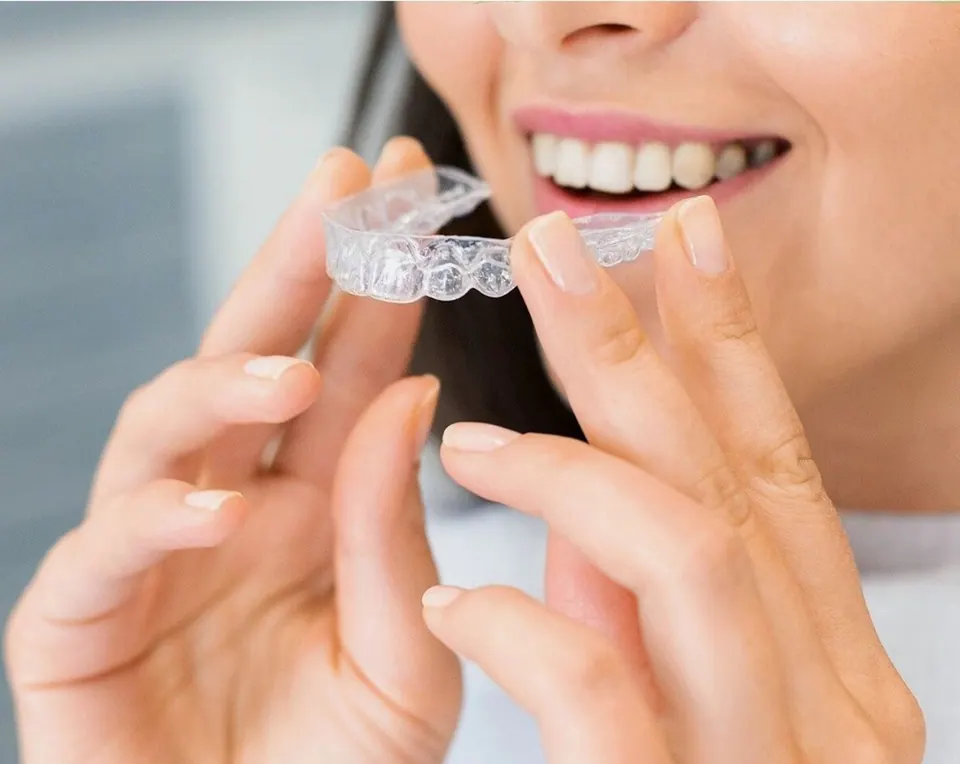
Aligners are custom-made clear trays that are changed at regular intervals. Each tray is slightly different from the previous one and brings the teeth a little closer to the planned position. The sequence of movements is planned in advance on a computer, based on a digital impression.
Both methods are well established. The choice depends mainly on the type of misalignment, your lifestyle and how consistently you can wear the appliance.
What aligners offer
Clear aligners appeal first of all because they are discreet: at conversation distance, they often go unnoticed. They have other advantages too:
- they are removable, so you take them out to eat and brush, which makes oral hygiene easier;
- no wires or brackets rubbing against the cheeks or lips;
- no particular food restrictions, since you eat without the appliance;
- you can see the planned tooth movement before you start, thanks to digital planning.
Small tooth-coloured bumps bonded to some teeth, called attachments, are often needed so that the tray can grip and guide the movements. They are discreet and removed at the end of treatment.
Aligners are also useful for adults who need other dental work: slightly straightening teeth before veneers or a crown can sometimes reduce the amount of tooth preparation required. They can also correct a minor relapse in someone who wore braces when they were younger.
The trade-off: real discipline
Aligners only work if you wear them. They must be worn for most of the day and night, and removed only to eat, to drink anything other than water and to brush your teeth. A tray left in its case moves no teeth.
This calls for a few habits:
- brush your teeth before putting the trays back in, so that no food is trapped underneath;
- avoid constant snacking, which means taking the trays out again and again;
- keep the case with you so you do not lose your trays at a restaurant or at work;
- follow the change schedule given by your dentist.
If you know you will find this routine hard to keep up, a fixed appliance may be the safer option, as it works around the clock without relying on the patient's memory.
When braces are still the right choice
Braces have not disappeared, and for good reasons. They allow very precise control of certain complex movements: major rotations of rounded teeth, significant vertical movements, closing spaces after extractions, or large discrepancies between the jaws.
They are also often preferred for children and teenagers, because they do not depend on compliance. Ceramic brackets or braces bonded to the inner surface of the teeth are more discreet alternatives to traditional metal.
Their drawbacks are well known: irritation of the cheeks and lips in the first weeks, longer and more careful brushing, hard or sticky foods to avoid, and regular adjustment visits. Poor hygiene around the brackets can leave white marks on the enamel.
Questions to ask yourself before deciding
A few simple questions can help you clarify your priorities:
- Is my case a simple realignment, or a more complex discrepancy between the jaws?
- Am I ready to wear trays almost all day, every day?
- Does discretion really matter for my work?
- Do I need any treatment first (cavities, gums, scaling)?
- Have I worn braces before and now see some relapse?
Only a clinical examination, photos and X-rays can answer the first question. In some cases both options are possible and the choice is yours. In others, one is clearly more suitable.
Retention: a step not to neglect
Whatever technique you choose, teeth tend to drift back towards their original position after treatment. That is why a retention phase is essential: a thin wire bonded behind the teeth, a tray worn at night, or both.
This step is an integral part of the treatment. Neglecting it risks relapse, sometimes only a few months after the appliance comes off. Your dentist will explain how long and how often to wear your retainer in your particular case.
Regular check-ups also make it possible to confirm that the retainer wire is still firmly bonded and that hygiene around it is good.
Your orthodontic assessment in Agdal
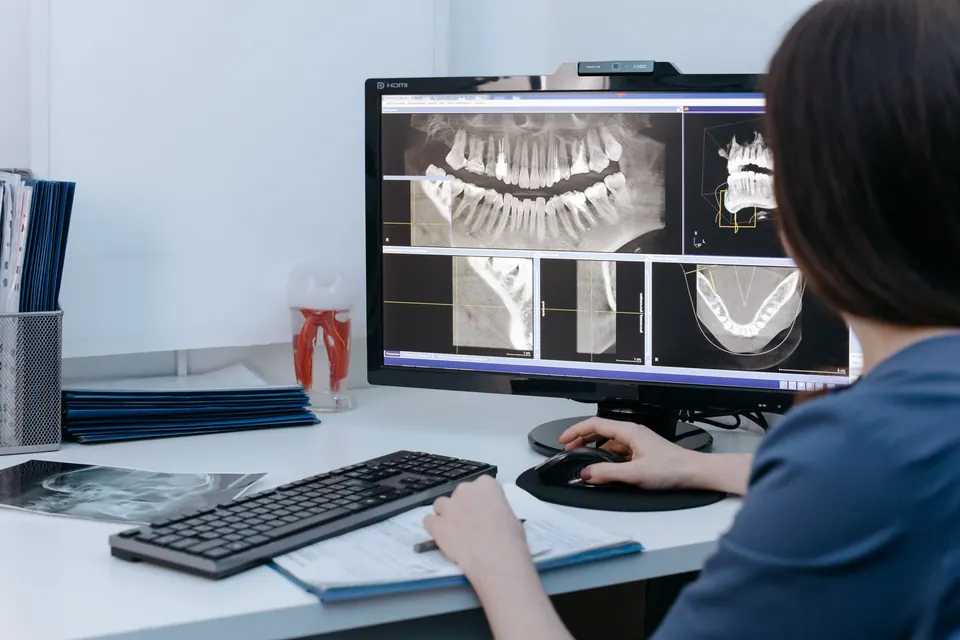
At German Dental Clinic in Agdal, the assessment starts with an examination, photos and an impression taken with the intraoral scanner, with no impression paste, which forms the basis of the treatment plan. When straightening is part of a wider cosmetic project, it can be coordinated with a smile design approach.
If you live in Rabat and would like to know whether aligners suit your situation, you can book an appointment for an initial assessment.
Frequently asked questions
Are aligners suitable for every case?
No. They treat many alignment problems, but certain complex movements or large jaw discrepancies are better managed with a fixed appliance, sometimes combined with other treatments. An orthodontic examination will determine this.
Do aligners hurt?
You will often feel some pressure for a day or two with each new tray, a sign that the teeth are moving. This discomfort is usually mild and fades quickly.
Can I have orthodontic treatment as an adult?
Yes, there is no strict age limit as long as the gums and bone are healthy. Any gum disease must be stabilised first. Treatment may simply require closer monitoring.
What happens if I forget to wear my trays?
The teeth do not move as planned and the next tray may no longer fit properly. If you have not worn them for a while, contact your dentist rather than moving straight on to the next stage.
The information on this page is general. Only a consultation allows a diagnosis and a suitable treatment plan.