Why do wisdom teeth so often cause problems?
Wisdom teeth, or third molars, sit right at the back of the mouth, behind the second molars. There are usually four of them, but some people have fewer, or none at all.
Over the course of evolution, our jaws have become shorter while these teeth have kept their size. They therefore arrive last in a space that is already occupied. Several situations are possible:
- the tooth comes through fully and finds its place, causing no trouble;
- it remains impacted, meaning entirely within the bone;
- it is partially erupted: part of it breaks through the gum while the rest stays covered;
- it grows at an angle, lying against the neighbouring molar or tilted towards the cheek.
Problems arise mainly in the last three cases, sometimes after years without symptoms.
Do wisdom teeth always need to be removed?
No. A well-positioned, healthy wisdom tooth that can be brushed properly has no reason to be removed. Likewise, a fully impacted, deep tooth with no sign of disease can simply be monitored with regular X-rays.
Extraction is, however, recommended when the tooth is causing a problem or poses a real risk:
- repeated episodes of pericoronitis, inflammation of the gum that partly covers the tooth;
- decay on the wisdom tooth itself or on the hard-to-reach back surface of the second molar;
- bone loss or resorption of the root of the neighbouring molar;
- a cyst forming around the crown of the impacted tooth;
- an indication arising from orthodontic or prosthetic treatment.
Age matters too: in young adults, the roots are often less developed and the bone more flexible, which generally makes the procedure and healing easier. However, this alone is never a sufficient reason to operate on a tooth that causes no problems.
The X-ray assessment before extraction
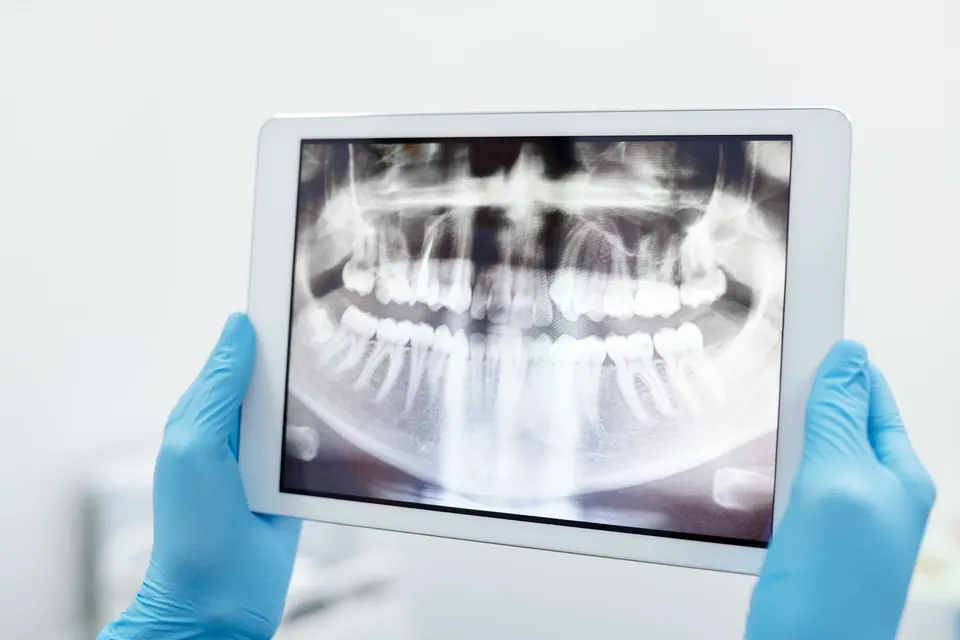
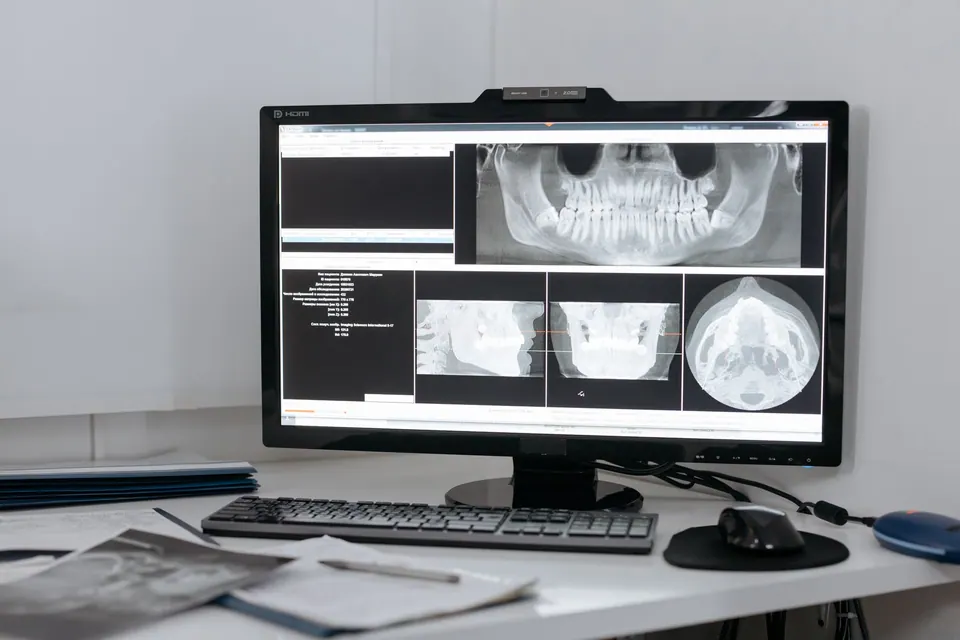
Before deciding, a panoramic X-ray is taken. It shows all four wisdom teeth, their orientation, the shape of their roots and their relationship with neighbouring structures.
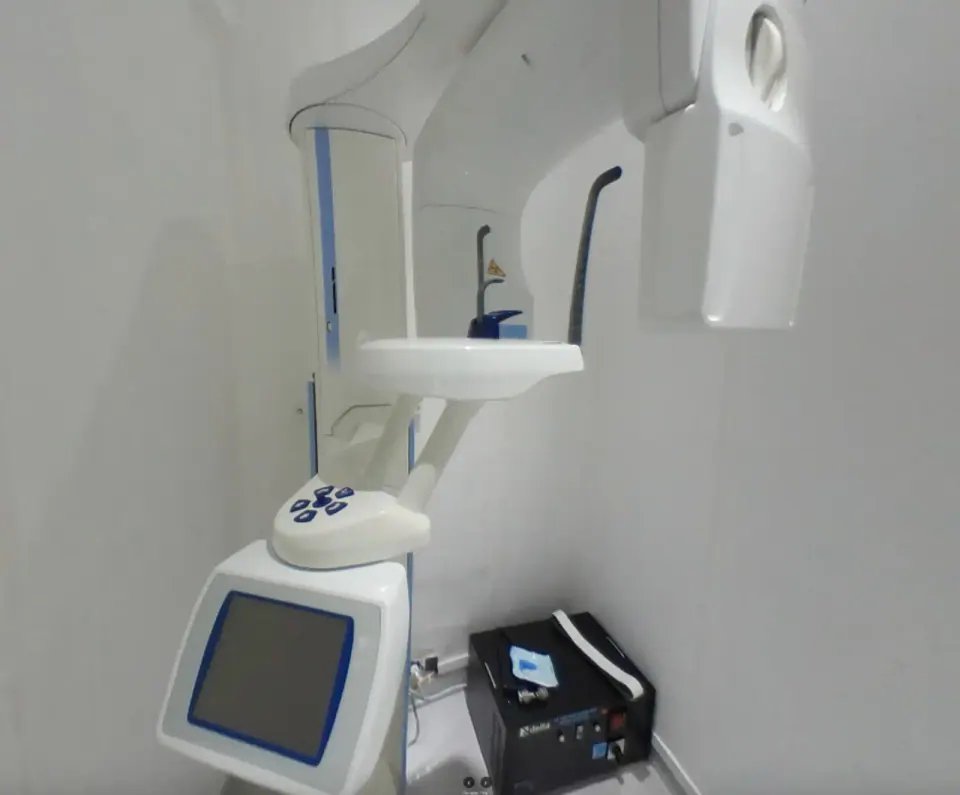
For the lower teeth, the most important point is the position of the inferior alveolar nerve, which runs through the jaw and provides sensation to the lower lip and chin. When the roots appear very close to this nerve, a three-dimensional scan may be requested to clarify their relationship and adapt the technique. For the upper teeth, the proximity of the maxillary sinus is checked.
This assessment also helps organise the procedure: removing a single tooth, the two on one side, or all four in one or more sessions, depending on difficulty and your preference.
How wisdom tooth removal is carried out
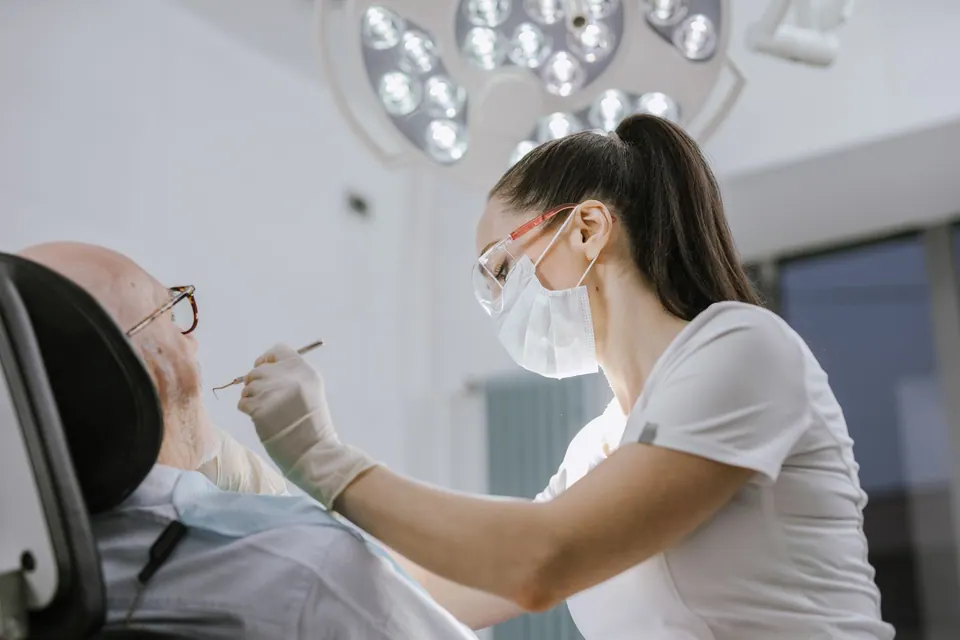
The procedure takes place at the practice in Rabat, under local anaesthesia. If you are particularly anxious, say so beforehand: the dentist will take the time to explain each step and adapt how the session runs.
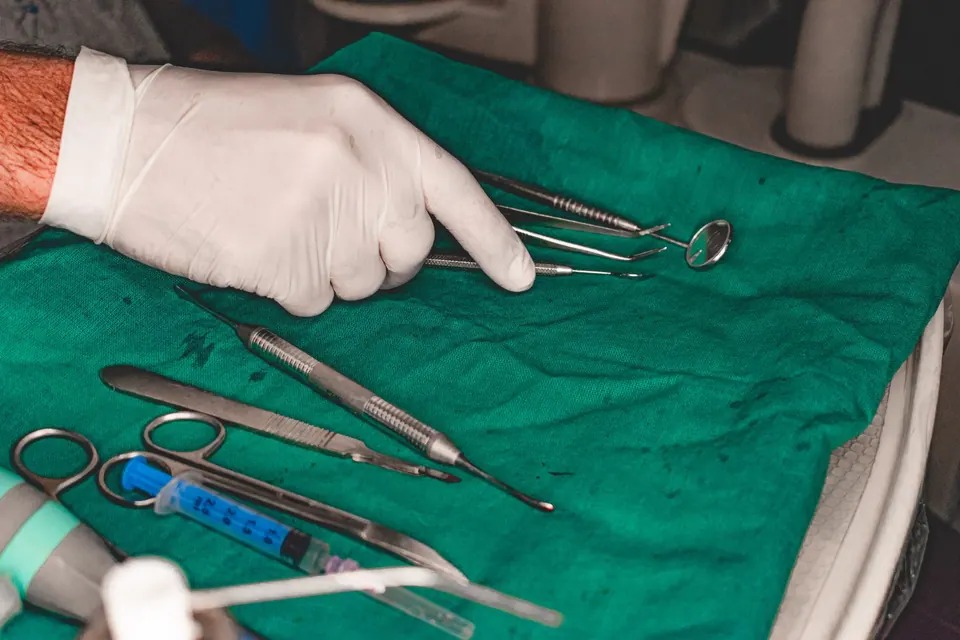
A wisdom tooth that has fully erupted and is well aligned is removed like any other tooth. For an impacted or partially erupted tooth, the procedure is surgical: the dentist opens the gum, frees the tooth by removing the minimum of bone necessary, then often divides it into several pieces to remove it without forcing on the neighbouring structures. The area is then cleaned and closed with stitches.
The duration depends on the number of teeth and their position. During the procedure, you feel pressure and hear noises, but no pain. At the end, you are given written instructions and a prescription, and a check-up is scheduled if needed. For more on the procedure in general, see also our tooth extraction page.
Recovery: swelling, mouth opening and eating
Recovery after removing an impacted wisdom tooth is often more noticeable than after an ordinary extraction. Swelling of the cheek is common; it usually peaks around the second or third day, then goes down. A bruise may appear on the cheek or neck, and mouth opening may be limited for a few days.
A few simple measures help you through this phase:
- apply cold to the cheek at intervals, especially on the first day;
- take the prescribed medication at regular times, without waiting for pain to set in;
- sleep with your head raised;
- eat cold or lukewarm soft food: yoghurt, purées, cooled soups, scrambled eggs;
- do not smoke, spit or use a straw;
- resume gentle brushing from the next day, and mouthwashes if prescribed.
If possible, plan a few quieter days, with no intense physical effort or major events, so you can recover calmly.
Risks and complications to be aware of
Clear information is part of good care. Complications are uncommon, but they do exist:
- dry socket, intense pain a few days after the procedure, more frequent in smokers, treated at the practice;
- infection, shown by swelling that increases instead of decreasing, sometimes with fever;
- injury to the inferior alveolar nerve or the lingual nerve, which can cause tingling or reduced sensation in the lip, chin or tongue. It is most often temporary, but can exceptionally be long-lasting. The X-ray assessment serves precisely to evaluate and reduce this risk;
- an opening into the sinus for upper teeth, managed with specific instructions and sometimes a stitch.
These risks are explained during the consultation, in light of your own X-ray.
Sudden pain or swelling: what to do in an emergency?
A flare-up of pericoronitis can come on suddenly: pain at the back of the jaw, swollen gum behind the last molar, an unpleasant taste, difficulty opening the mouth or swallowing. While waiting for your appointment, rinse the area gently and brush it carefully, without applying heat to the cheek.
Swelling spreading towards the neck or eye, fever, or difficulty breathing or swallowing require immediate care. Our dental emergency in Rabat page explains how to reach us quickly. Outside an emergency, the extraction is planned once the inflammation has settled, which makes it more comfortable. To have your wisdom teeth assessed, you can book an appointment at the Agdal clinic.
How it works
- ConsultationDiscussion of symptoms, examination of the mouth and assessment of whether an extraction is really useful.
- Panoramic X-rayAnalysis of the position of the teeth, the roots and their proximity to the nerve or sinus, supplemented by 3D imaging if needed.
- PlanningChoice of the number of teeth per session, information on recovery and pre-operative instructions.
- ProcedureExtraction under local anaesthesia, often with the tooth divided into sections, followed by stitches.
- Follow-upCheck of healing and removal of stitches if needed.
Frequently asked questions
Do all four wisdom teeth have to be removed at the same time?
Not necessarily. Some people only have one or two teeth to remove, and only those causing problems are concerned. When several extractions are indicated, they can be grouped into one session or spread out, for example right side then left side, to keep one side comfortable for chewing. The choice depends on the difficulty and your constraints.
How long does swelling last after wisdom tooth removal?
It usually increases for two to three days, then gradually goes down over the course of the week. Applying cold early and taking the prescribed medication regularly help to limit it. Swelling that keeps increasing after the third day, especially with fever, needs checking, as it may signal an infection.
My wisdom tooth hurts. Do I need it out straight away?
Not necessarily as an emergency. Pain from pericoronitis is often treated locally first, sometimes with medication, and the extraction is then scheduled once the inflammation has settled. Operating once things have calmed down is more comfortable and safer. However, significant swelling or fever calls for a prompt consultation.
Can wisdom tooth removal damage a nerve?
This is a known risk for lower teeth, whose roots can lie close to the nerve that provides sensation to the lip and chin. Injury remains uncommon and is most often temporary. The X-ray, supplemented by 3D imaging if needed, makes it possible to assess this risk and adapt the technique, or even discuss an alternative.
When can I go back to work or sport?
Many patients return to office work after a few days, depending on the number of teeth removed and the degree of swelling. Intense sport should be avoided for about a week, as exertion can restart bleeding and swelling. The dentist will give you guidance suited to your procedure.
Should an impacted wisdom tooth that does not hurt be removed?
Not systematically. If it is deep, with no cyst, no damage to the neighbouring molar and no infection, regular X-ray monitoring may be enough. Removal is considered when a concrete risk appears or as part of another treatment. It is a decision to make together, with the X-ray to guide it.
The information on this page is general. Only a consultation allows a diagnosis and a suitable treatment plan. Updated on 14 October 2026.