How does teeth whitening work?
The colour of a tooth does not depend on its surface alone. Enamel is translucent: it lets the dentine underneath show through, and dentine is naturally more yellow. Over time, pigments seep into these tissues and the shade darkens.
Whitening uses a peroxide-based gel (hydrogen or carbamide peroxide). As it breaks down, the product releases oxygen that penetrates the tooth and splits the coloured molecules into smaller, lighter particles. The tooth structure is not worn away: this is what sets genuine whitening apart from simple polishing or a "whitening" toothpaste, which only acts on surface stains.
The result depends on your starting shade, the cause of the discolouration and how each individual tooth responds. It is therefore gradual and varies from one person to another.
Is whitening right for you?
Whitening generally works well on:
- yellowing that comes with age;
- staining from coffee, tea, tobacco or certain foods;
- teeth that are naturally slightly yellow.
It is less predictable on grey shades, on some medication-related discolouration, on the white or brown spots of fluorosis, and on root-treated teeth that have darkened (these may need a specific internal whitening, decided after an examination).
One key point: crowns, veneers and composite fillings do not whiten. If you have visible restorations on your front teeth, they will keep their colour while the natural teeth around them become lighter. This needs to be planned for, sometimes by arranging to replace them after whitening.
Finally, many patients come in thinking they need dental veneers when their teeth are well shaped and simply dull. In that case, well-conducted whitening may be enough and keeps the enamel fully intact. This conservative approach is the one we suggest first whenever it is realistic.
Contraindications and precautions
Whitening is not a trivial procedure. It is advised against or postponed in several situations:
- pregnancy and breastfeeding, as a precaution;
- teenagers whose teeth are still young, as the pulp chamber is large;
- untreated decay, cracks or faulty restorations, through which the gel could reach the pulp;
- inflamed gums or active gum disease;
- gum recession and exposed roots, which are often very sensitive;
- significant pre-existing tooth sensitivity;
- known allergy to peroxides.
This is why a clinical examination, and an X-ray if needed, always comes before treatment. A scale and polish is often carried out a few days beforehand: removing tartar and surface stains lets the gel act evenly and sometimes reveals a shade already lighter than expected.
In Morocco, it is advisable not to use over-the-counter kits or sessions carried out outside a dental setting: a poorly dosed product, applied without protecting the gums or on a cavity, can cause burns and pain.
In-chair, at home or both?
There are two main methods, and they are often combined.
In-chair whitening. The gums are first protected with a barrier, then a more concentrated gel is applied to the teeth under the dentist's supervision, in one or more applications during the session. This method gives a visible lightening quickly and suits people who prefer a fully supervised treatment.
Take-home whitening. Custom trays are made from an impression of your teeth. You wear them at home with a less concentrated gel, following a precise protocol (wearing time, number of days). The effect is more gradual, often better tolerated, and the trays can be reused later for touch-ups.
The protocol chosen depends on your shade, your sensitivity, your schedule and your expectations. It is explained in detail during your consultation in Rabat, with written instructions.
Sensitivity and side effects: what to expect
The most common side effect is temporary tooth sensitivity, especially to cold, which appears during treatment or in the days that follow. It is usually moderate and goes away on its own. To reduce it, sessions can be spaced out, tray wearing time shortened, or a desensitising toothpaste used before and during treatment.
Gum irritation is also possible if the gel spills over; it remains superficial and temporary when the protocol is followed.
During and just after whitening, teeth absorb pigments more readily. For a few days it is advisable to limit coffee, tea, coloured soft drinks, tomato sauces, turmeric and tobacco. If sharp or persistent pain develops, stop the home treatment and contact the practice.
What affects the cost of whitening
The fee for whitening depends on several factors, which the assessment helps to clarify:
- the method chosen (in-chair, at home or combined);
- making custom trays;
- the number of sessions or the amount of gel needed to reach the desired shade;
- preliminary care: scaling, treating decay, managing sensitivity;
- possible internal whitening of a root-treated tooth;
- replacing, after whitening, visible restorations that no longer match the new shade.
You receive a precise quote after the examination, with no obligation.
Making the result last
Whitening is not permanent: the shade can gradually dull, at a pace that depends mainly on your diet and whether you smoke. A few simple habits help preserve it:
- brushing twice a day and cleaning between the teeth;
- rinsing with water after coffee or tea;
- regular check-ups and scaling;
- occasional touch-ups with your trays, only as advised by the dentist.
If you are also considering veneers or crowns on your front teeth, whitening is done first, so that their shade can be matched to your lightened teeth. It is also a common first step in a broader Hollywood smile plan. To find out what is realistic in your case, you can book a consultation at the Agdal practice.
How it works
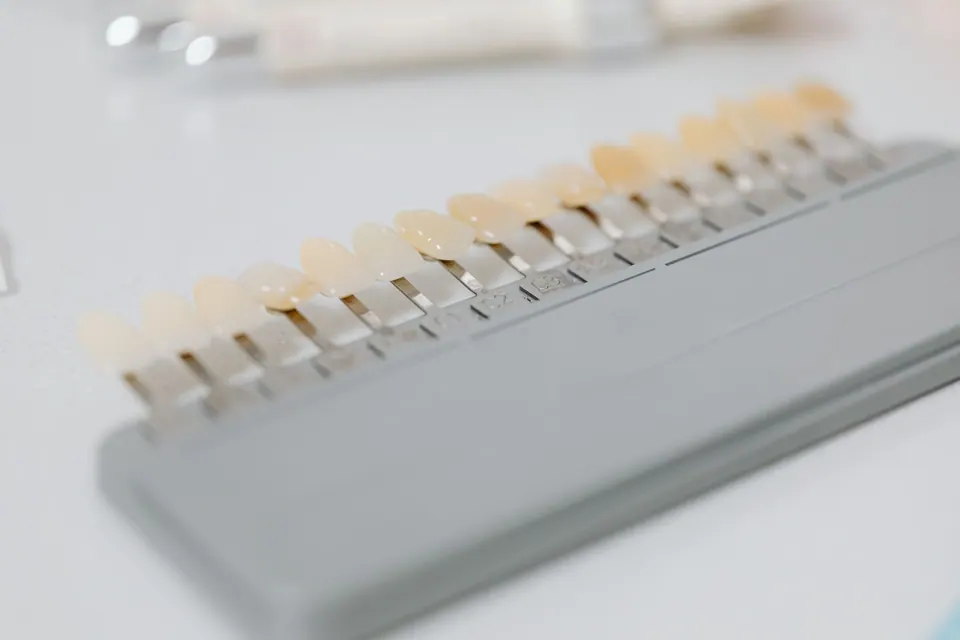
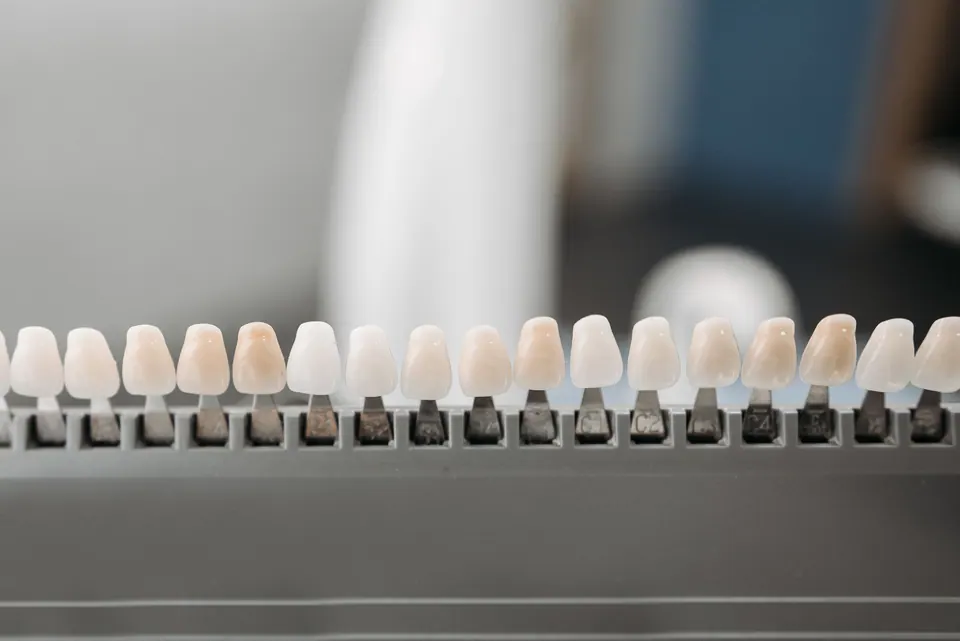
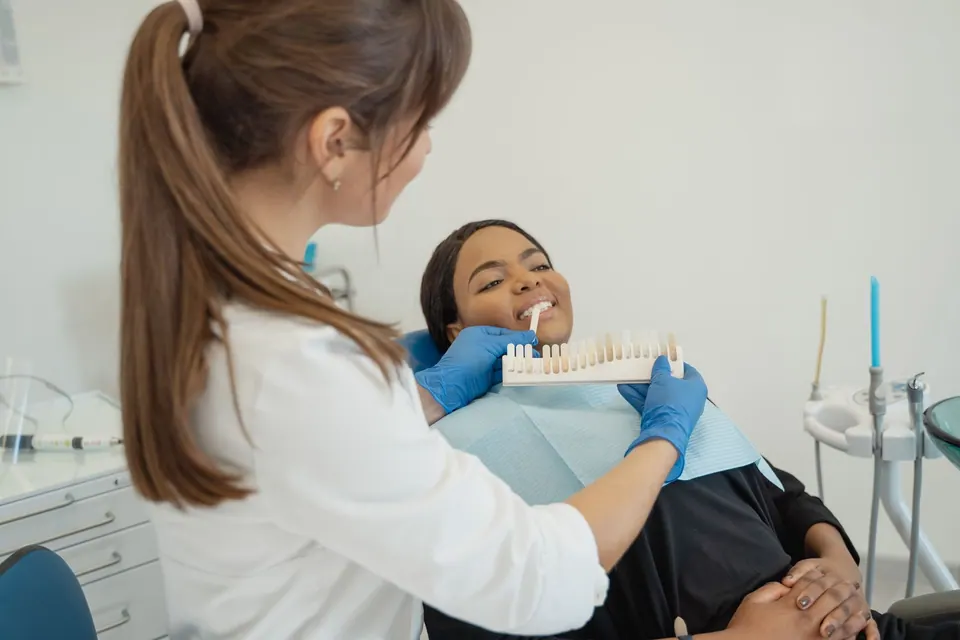
- Examination and shade assessmentCheck of the teeth, gums and existing restorations, and measurement of the starting shade.
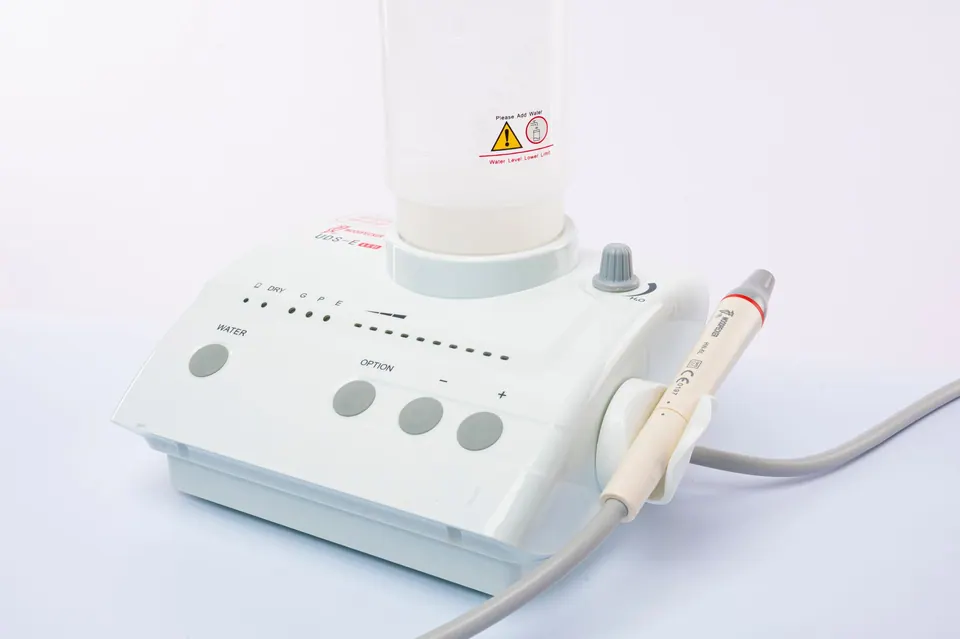
- Scaling and preliminary careRemoval of tartar and surface stains, and treatment of decay or sensitive areas if needed.
- Choosing the protocolIn-chair, at-home or combined method, depending on your teeth and expectations.
- Session or traysGel applied at the practice with the gums protected, or custom trays handed over with instructions.
- Checking the resultComparison with the initial shade, management of any sensitivity and maintenance advice.
Before & after
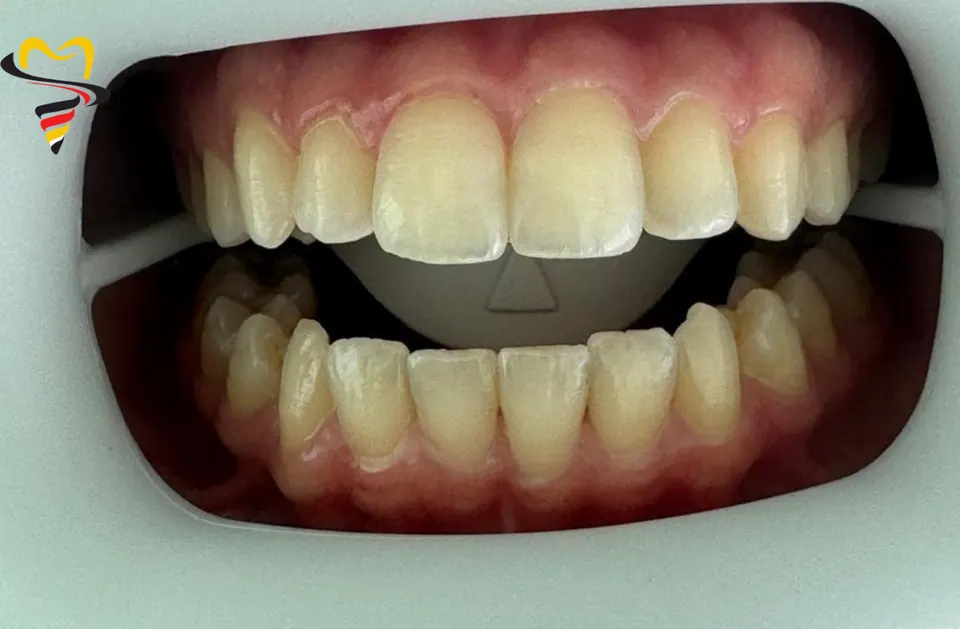
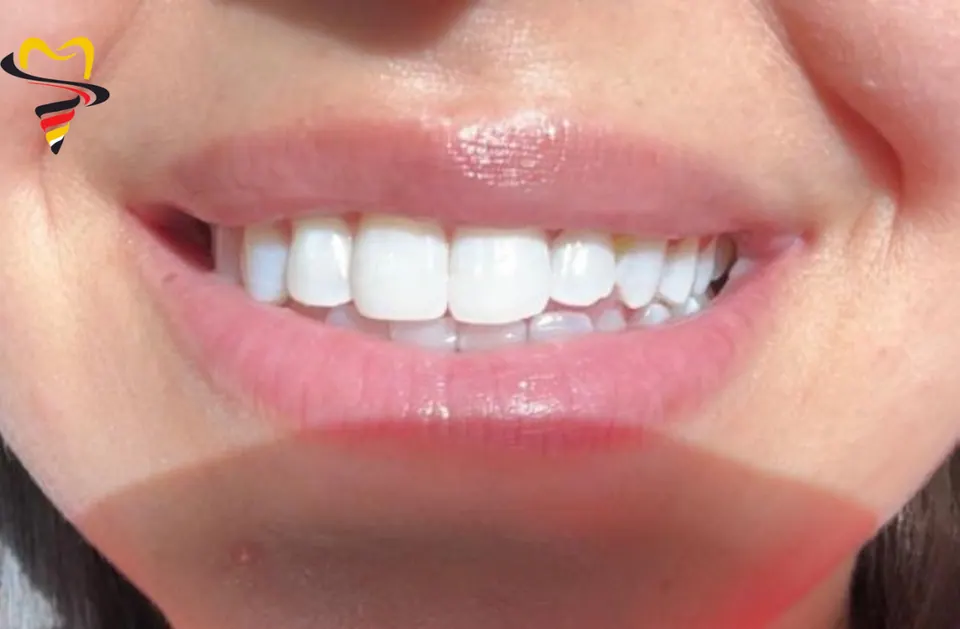 BeforeAfter
Teeth whitening
Teeth whiteningFrequently asked questions
Does whitening damage enamel?
When carried out with a suitable product and a supervised protocol, whitening does not remove tooth structure and does not significantly weaken enamel. Problems mainly arise with poorly dosed products, overly frequent applications or teeth that have not been examined beforehand, for example when there is decay or cracks.
How long does the result last?
It varies a great deal from person to person. It depends on your diet, smoking, oral hygiene and original shade. The result fades gradually rather than disappearing suddenly. Occasional touch-ups, agreed with the dentist, often help prolong it.
Will my crowns or veneers whiten too?
No. Ceramic and composite resins do not change colour under the gel. If these restorations are visible, they may look darker once the neighbouring natural teeth have been whitened. This is discussed before treatment, and replacing them can be considered afterwards.
Are whitening toothpastes enough?
They remove some surface stains thanks to abrasive or polishing agents, but they do not change the internal colour of the tooth. Used intensively, some can even wear down enamel. They are useful for maintenance, not as a substitute for whitening.
Can sensitive teeth be whitened?
Often yes, with some adjustments: a desensitising toothpaste before treatment, a less concentrated gel, more widely spaced sessions. However, sensitivity caused by decay, a crack or exposed roots must be treated first. The preliminary examination is there precisely to make this distinction.
Do I have to choose between whitening and veneers?
Not necessarily. If you are happy with the shape and alignment of your teeth, whitening alone is often the most conservative solution. If some teeth are damaged or poorly shaped, whitening can be done first, then veneers placed only where they bring a real benefit.
The information on this page is general. Only a consultation allows a diagnosis and a suitable treatment plan. Updated on 14 October 2026.