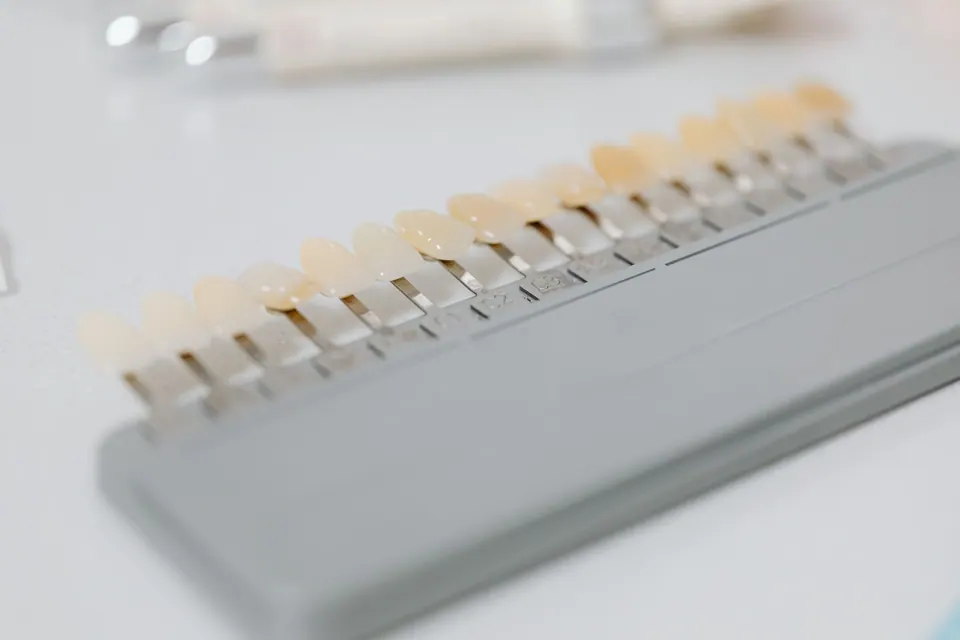
What exactly is a dental veneer?
A veneer is a very thin bonded restoration that covers the outer surface of a tooth, mainly the incisors and canines, and sometimes the premolars that show when you smile. It does not replace the tooth: it rests on the existing enamel, to which it adheres thanks to a precise bonding protocol.
There are two main families:
- Porcelain (ceramic) veneers: made from an impression, they reproduce the translucency of enamel well and resist staining over time.
- Composite veneers: the resin is shaped layer by layer, either directly in the mouth or in the laboratory. They often require little or no preparation and are easier to touch up, but their surface can dull and stain more over the years.
The choice between the two depends on the condition of your teeth, your habits (coffee, tea, smoking), your aesthetic expectations and the balance of your bite. It is discussed during the consultation, never chosen from a catalogue.
When are veneers recommended?
Veneers mainly address cosmetic concerns on teeth that are generally healthy. They are often considered for:
- discoloured teeth that whitening cannot lighten satisfactorily (some long-standing stains, discolouration caused by medication, darkened root-treated teeth);
- worn, short or irregularly shaped teeth;
- small gaps between the teeth (diastemas);
- slight crowding, when orthodontics is not wanted or not needed;
- cracks or small chips in the enamel;
- old composite restorations that have yellowed.
On the other hand, a veneer is not the answer to everything. If the tooth is badly broken down, a dental crown protects it better. If the only concern is colour, teeth whitening may be enough and preserves the enamel completely. If the teeth are clearly out of position, aligners may be suggested before, or instead of, veneers.
Precautions and contraindications
A veneer bonded onto a weak foundation will not last. Before considering this treatment, several points are checked at German Dental Clinic in Rabat:
- Gum health: inflammation or gum disease must be treated first, otherwise the edge of the veneer may become visible or encourage plaque build-up.
- Decay: it is treated before any cosmetic step.
- Bruxism (clenching or grinding the teeth, often at night): it increases the risk of debonding or fracture. It does not necessarily rule out veneers, but it calls for precautions, such as wearing a protective night guard.
- The amount of enamel available: bonding is more reliable on enamel than on dentine.
- The bite: the way your teeth meet determines how long the restorations will last.
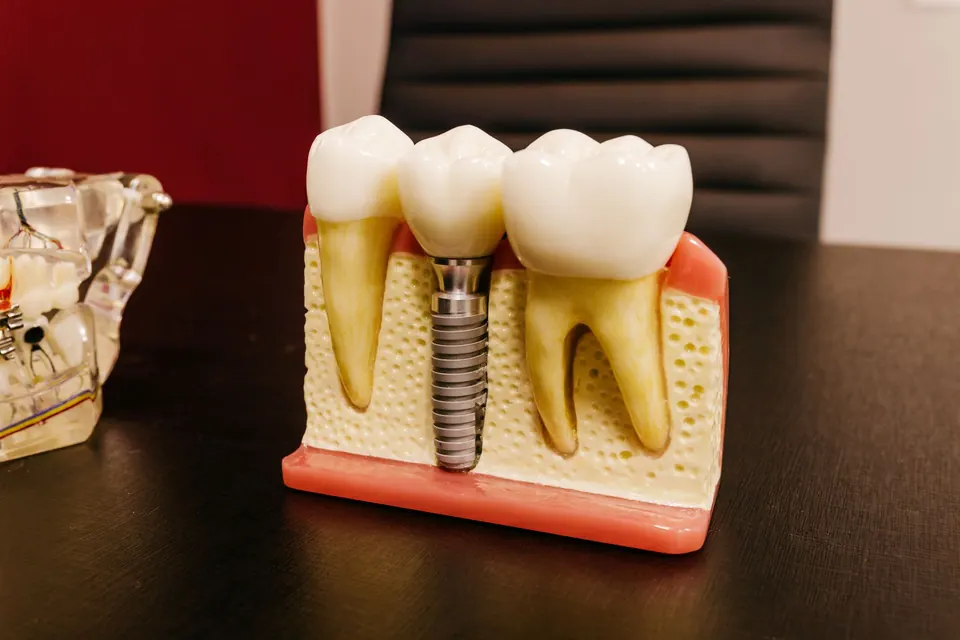
You should also know that preparing a tooth for a porcelain veneer is usually irreversible: however minimal, enamel reduction cannot be undone. That is why the preferred approach remains as conservative as possible, with a number of veneers suited to what really shows in your smile.
Seeing the result before committing
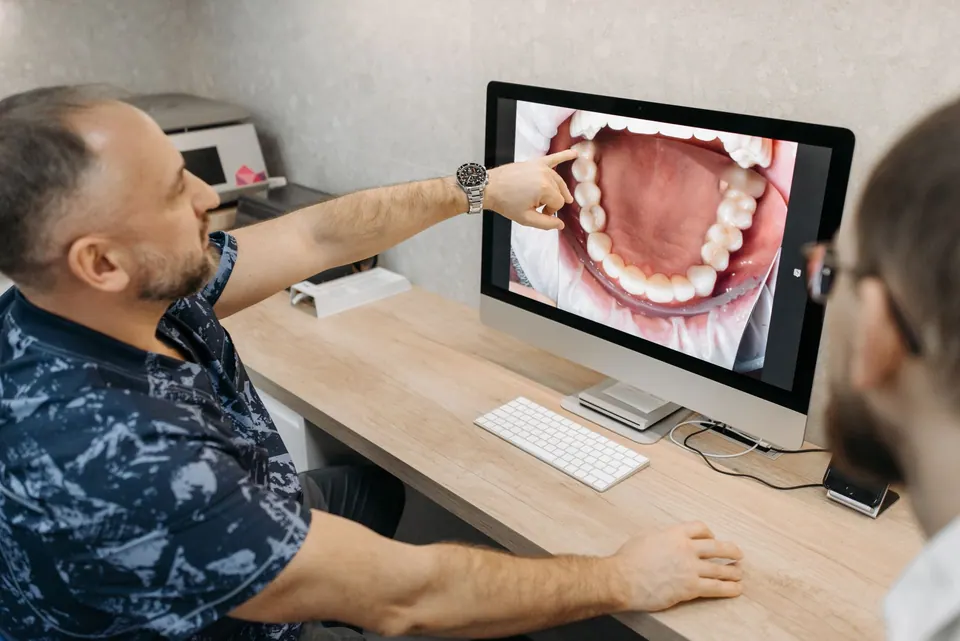
For many patients, the main concern is a smile that is too white, too uniform or does not look like them. To address this, the project is first studied using photographs, a digital impression taken with an intraoral scanner and an analysis of your facial proportions.
This study is used to create a mock-up: a temporary resin model placed directly on your teeth without touching them, reproducing the planned shape and length. You see, in your mouth and in a mirror, what the project would look like, you can show it to people close to you and ask for adjustments. This step is described in detail on our smile design page.
Only when you are happy with the project is preparation of the teeth considered. This approach avoids unpleasant surprises and gives the ceramist, or the dentist shaping the composite, a precise reference.
Porcelain or composite: how to choose?
No material is better in every case. These are the criteria that guide the decision:
- Appearance: porcelain mimics the natural light play of enamel very well; well-layered composite can look very natural, but it ages differently.
- Preserving the tooth: composite often allows a no-preparation approach, which appeals to younger patients or those who want to keep a reversible option.
- Colour stability: porcelain stains very little; composite needs maintenance polishing.
- Repairability: a chip in composite can be repaired in the mouth; a fractured porcelain veneer usually has to be remade.
- Number of appointments: direct composite can sometimes be done in one visit, while porcelain has to be fabricated.
At your appointment, Dr Fenjero Walid presents the options suited to your case, with their advantages and limitations, so that the decision is genuinely yours.
What affects the cost of dental veneers
The fee cannot be reduced to a price "per tooth" found online. Several factors influence it, which is why a quotation is only drawn up after an examination:
- the number of teeth to be treated, which depends on the width of your smile;
- the material chosen (porcelain or composite) and the fabrication technique;
- any preliminary treatment: scaling, gum treatment, fillings, replacement of old restorations;
- carrying out an aesthetic study and a mock-up;
- the need for a protective night guard in case of bruxism;
- the complexity of the case, for example when some teeth need a crown rather than a veneer.
A detailed quotation is given to you after the assessment, so that you can make an informed comparison.
Caring for veneers and how long they last
A well-bonded, well-maintained veneer can stay in place for many years, but no restoration is permanent. How long it lasts depends mainly on your habits.
- Brush twice a day with a soft toothbrush and a low-abrasion toothpaste, and clean between your teeth with floss or interdental brushes.
- Avoid biting hard objects (pens, ice cubes, fruit stones) or opening packaging with your teeth.
- Wear your night guard if one has been prescribed.
- Keep up regular check-ups and scaling: healthy gums remain the best setting for a veneer.
If you notice unusual sensitivity, an edge that catches or a veneer that moves, come in without delay. Early action often makes it possible to rebond or repair it. To discuss your project, you can book an appointment at the practice in Agdal, Rabat.
How it works
- Consultation and assessmentExamination of the teeth and gums, X-rays if needed, and a discussion of your cosmetic expectations.
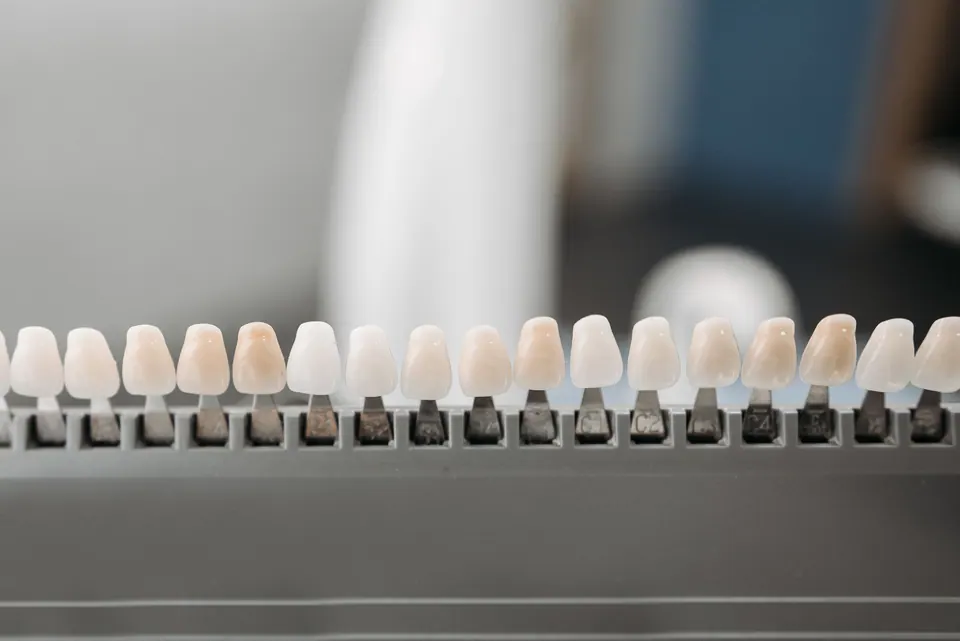
- Aesthetic studyPhotographs, digital impression and smile analysis to define the shape and shade of the future veneers.
- Trial mock-upA temporary mock-up is placed on your teeth to visualise and adjust the project before any preparation.
- Preparation and impressionMinimal enamel preparation if needed, followed by a precise recording for fabrication.
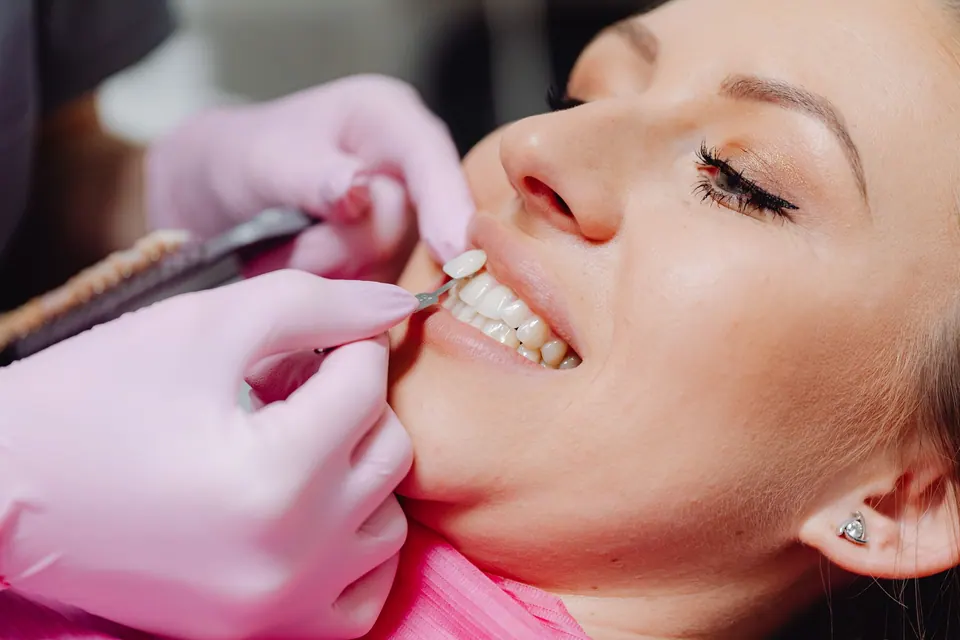
- BondingTry-in, shade approval, then permanent bonding under isolation and adjustment of the bite.
- Follow-upCheck of how the veneers have settled, hygiene advice and, if needed, a protective night guard.
Before & after
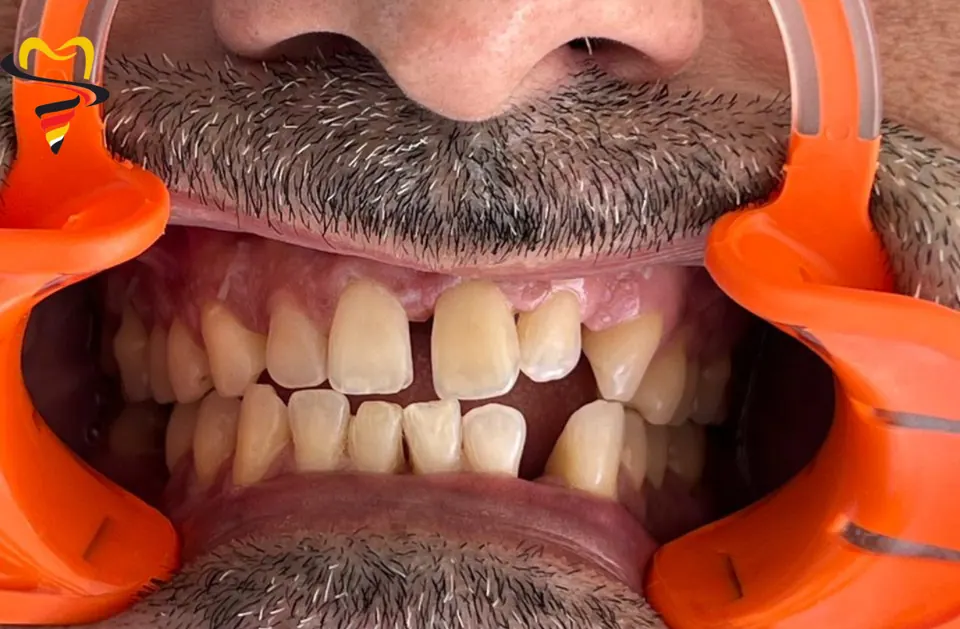
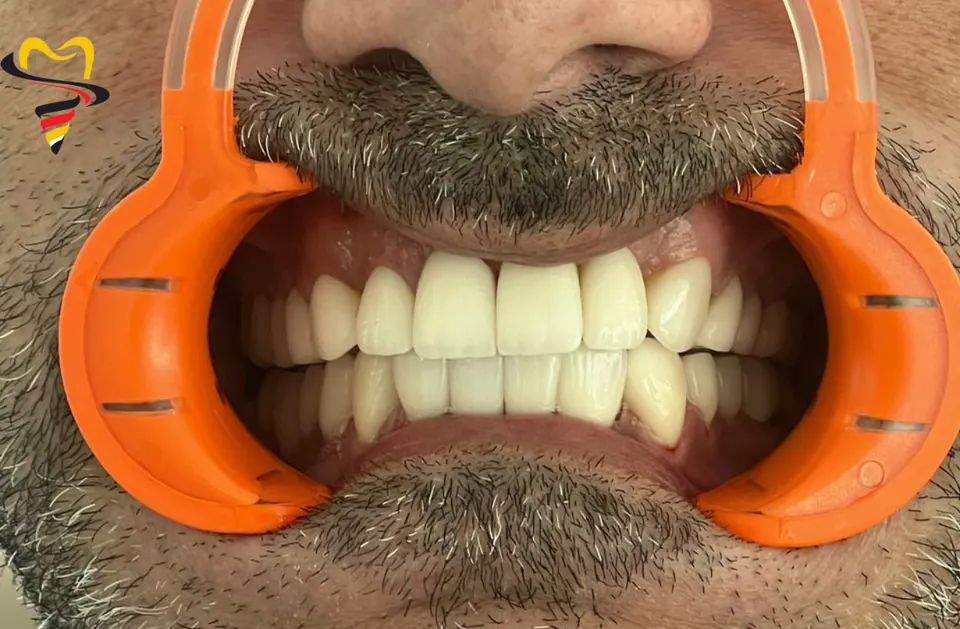 BeforeAfter
Veneers and crowns
Dental veneers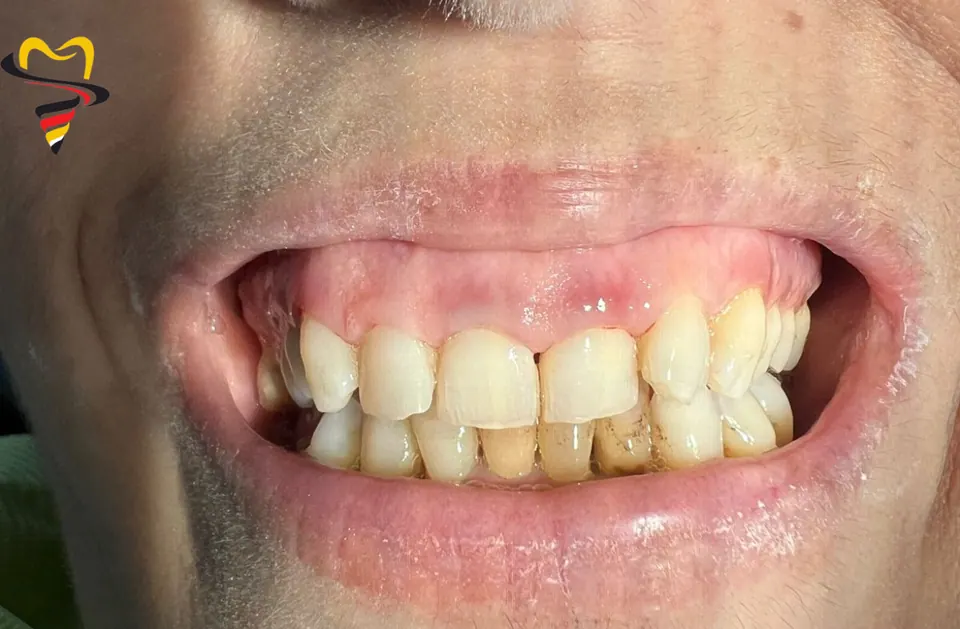
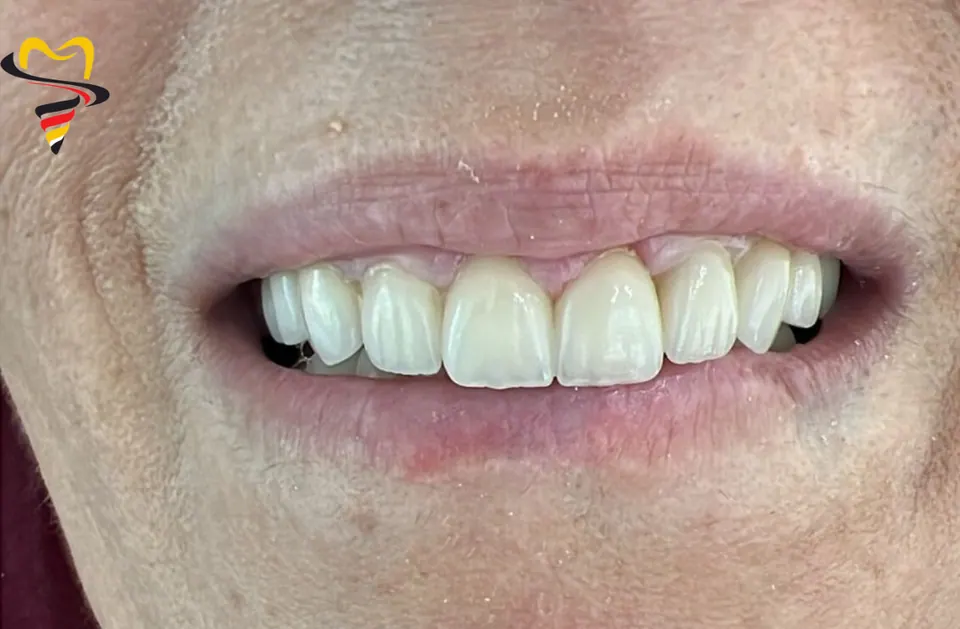 BeforeAfter
Dental veneers
Dental veneersFrequently asked questions
Do dental veneers damage the teeth?
Porcelain veneers often require preparation of the enamel, even if very thin, and this step is irreversible. Some composite veneers can be placed without preparation. The aim is always to remove as little tissue as possible, guided by the aesthetic project approved beforehand, rather than reducing the tooth out of habit.
Is having veneers fitted painful?
Preparation, when needed, is done under local anaesthesia and causes little discomfort. After bonding, slight sensitivity to cold may appear for a few days, then disappears in most cases. If it persists, let us know so that the fit and bite can be checked.
How many veneers do I need?
There is no standard number. It all depends on the width of your smile, the teeth that show when you talk and smile, and the flaw to be corrected. Sometimes one or two veneers are enough to blend in a single tooth; in other cases, a wider treatment is preferable to keep an even shade.
Can veneers be whitened?
No, porcelain and composite do not respond to whitening products. If you want to lighten your natural teeth, it is therefore recommended to whiten them before the veneers are placed, so that the veneer shade can be chosen to match the new colour of your teeth.
Veneers or crowns: what is the difference?
A veneer covers only the visible surface of the tooth and preserves more tissue. A crown covers the whole tooth: it is recommended when the tooth is badly damaged, weakened, or root-treated with significant loss of structure. The choice is made tooth by tooth, after clinical and X-ray examination.
What should I do if a veneer comes off?
Keep the veneer in a small box, without cleaning it with harsh products, and contact the practice promptly. Depending on its condition, it can often be rebonded. Avoid chewing on that side in the meantime, as the prepared tooth may be sensitive and more exposed.
The information on this page is general. Only a consultation allows a diagnosis and a suitable treatment plan. Updated on 14 October 2026.