What is a dental crown?
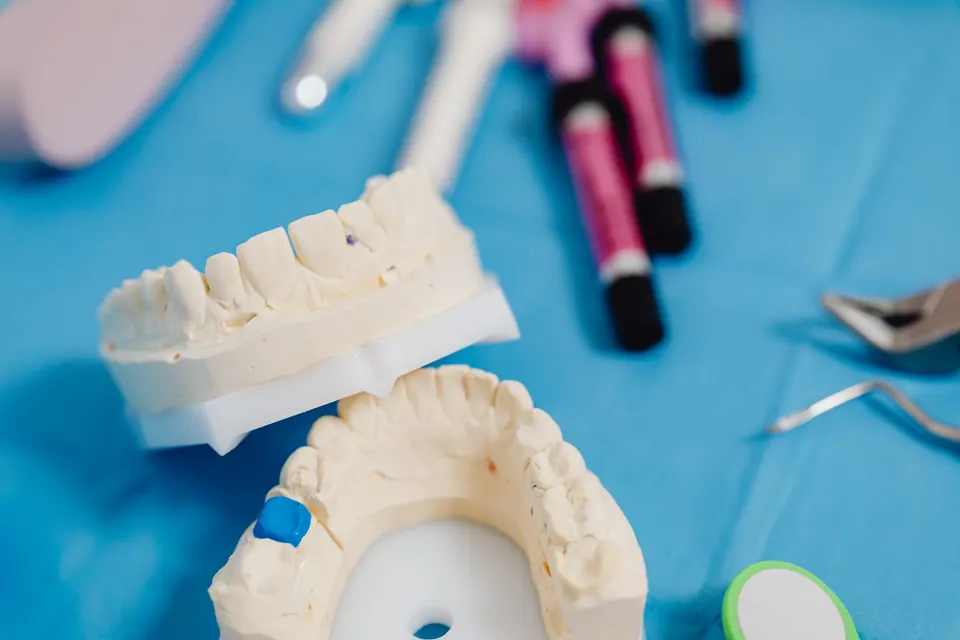
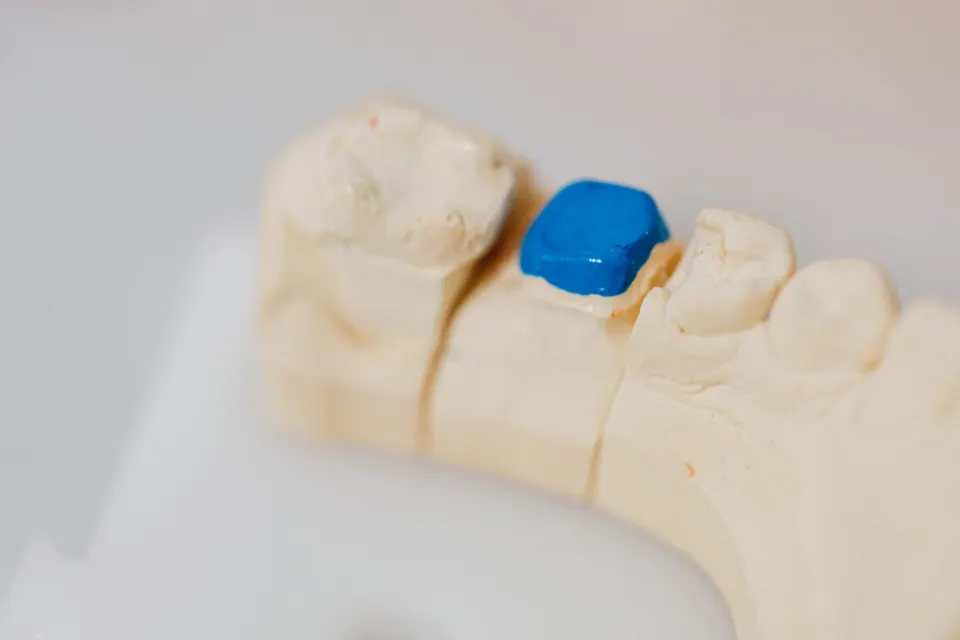
A crown is a fixed prosthesis that fits over the visible part of a tooth, like a made-to-measure cap. It is bonded or cemented onto the previously prepared tooth and cannot be removed. Its role is twofold: to protect what remains of the natural tooth against fracture, and to restore an anatomical shape so you can chew, speak and smile normally.
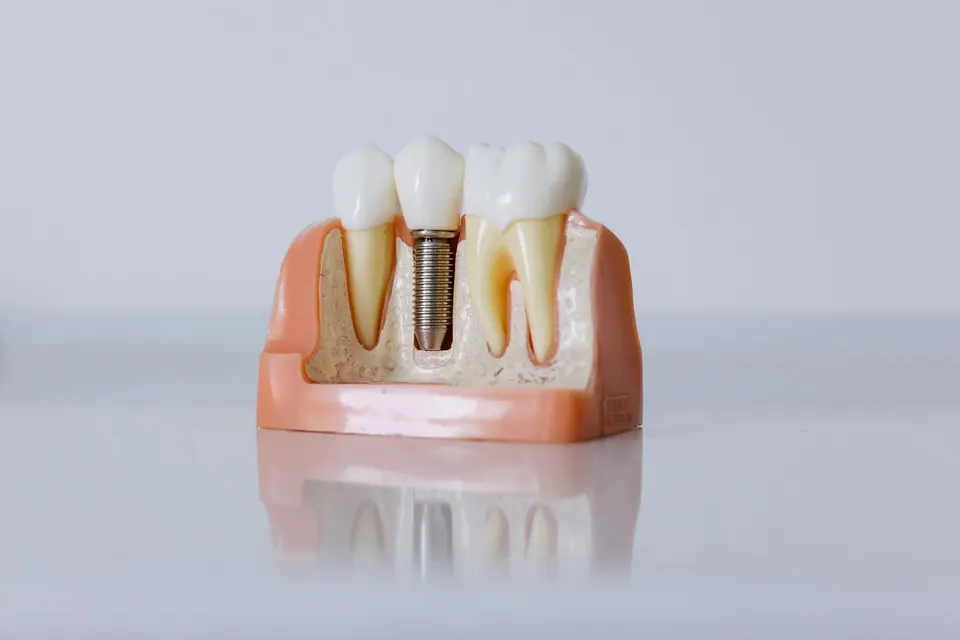
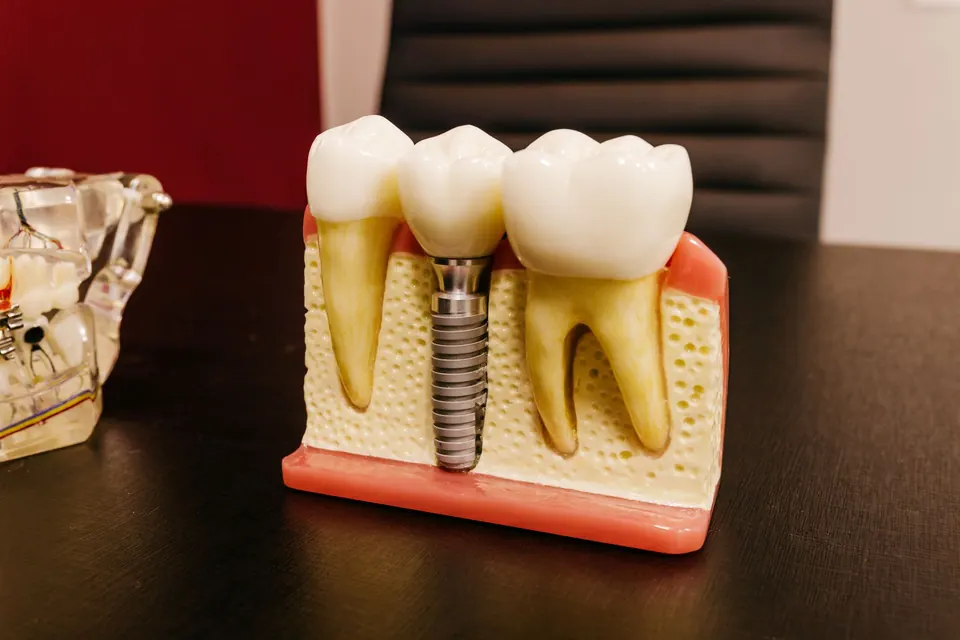
You may hear the terms "cap" or "jacket crown": the principle is the same. A crown can be placed on a natural tooth, whether living or root-treated, or on an implant; in the latter case, it replaces the missing tooth entirely. It also serves as a support when a dental bridge is needed to fill a gap.
Unlike a standard filling, which replaces only part of the tooth, a crown wraps around all its surfaces. That is what makes it strong, but it is also why the tooth needs to be prepared. It is therefore only suggested when it offers a real benefit over a more conservative restoration.
When is a crown recommended?
Before suggesting a crown, the dentist examines the tooth, its supporting tissues, your bite and the X-ray. The most common situations are:
- A badly broken-down tooth after extensive decay or large old fillings, which can no longer be reliably rebuilt with a simple composite.
- A cracked or fractured tooth, especially molars that bear heavy pressure when chewing.
- A root-treated tooth: after a root canal treatment, the tooth becomes more brittle. On back teeth, a covering restoration is often recommended to limit the risk of fracture.
- A tooth replaced by an implant, once the implant has integrated with the bone.
- A damaged tooth whose shape or shade is bothersome, when veneers are not enough to correct the defect.
- An old crown that needs replacing because it has come loose, fractured, or a dark line has appeared along the gum.
Conversely, a healthy or only slightly damaged tooth generally does not need a crown. If a solution that preserves more tooth structure is possible, such as an onlay or a veneer, it will be presented to you first.
Ceramic, zirconia or porcelain fused to metal: choosing the right material
The choice of material depends on the position of the tooth, the strength of your bite, the space available and your aesthetic expectations. The main options are:
- Ceramic (glass ceramic): it reproduces the translucency of enamel and is very well suited to the visible teeth of the smile. It needs sufficient thickness and careful bonding.
- Zirconia: a particularly strong ceramic, suited to molars and to people who clench or grind their teeth. Today's zirconias look far more natural than earlier generations and can be stained or layered with ceramic for visible areas.
- Porcelain fused to metal: a metal framework covered with ceramic. A proven and strong solution, it can nevertheless show a greyish line if the gum recedes, which is why metal-free crowns are now often preferred.
There is no ideal material in absolute terms. An incisor and a second molar are not under the same stresses, and a patient who suffers from bruxism does not have the same needs as another. Dr Fenjero Walid explains the advantages and limitations of each option before any decision, taking your smile as a whole into account.
A crown designed and milled on site with CAD/CAM
The clinic has an intraoral scanner and a milling unit, which means a large share of crowns can be made within the practice itself, in Agdal. This digital workflow, called CAD/CAM (computer-aided design and manufacturing), takes place in three stages: the prepared tooth is scanned, with no impression putty; the crown is designed on screen, taking your bite and the neighbouring teeth into account; then it is milled from a block of ceramic or zirconia.
For you, this brings concrete advantages: less discomfort than with traditional impressions, a precise fit at the edges of the crown and the ability to adjust shape or shade quickly. When the situation allows, the number of appointments can be reduced. Some cases, such as complex aesthetic restorations on several front teeth, may nevertheless require additional steps.
To learn more about this equipment, see our page on CAD/CAM and the milling unit.
Dental crowns in Rabat: how is the quote prepared?
Many patients look up the price of a dental crown in Morocco before they even come in. The question is legitimate, but a fee given without an examination would be misleading. The cost depends on several factors: the material chosen, the condition of the tooth, whether root canal treatment or a preliminary core build-up (post and core) is needed, and the number of teeth involved.
After the clinical examination and X-ray, you are given a detailed written quote. It lists each procedure, lets you compare the options transparently and check with your health insurer or insurance company. No treatment is started without your agreement.
Caring for your crown and how long it lasts
A crown cannot decay, but the tooth underneath remains vulnerable, especially where the crown meets the gum. Rigorous hygiene therefore determines how well it holds up over time:
- brushing twice a day with a soft brush, paying particular attention to the gum line;
- cleaning between the teeth with floss or suitable interdental brushes;
- regular check-ups and scaling to monitor the margins and the gum;
- wearing a night guard if you clench or grind your teeth.
Avoid biting on hard objects (fruit stones, ice cubes, pens) and report promptly any sensitivity, looseness or rough edge you can feel. Well cared for and monitored, a crown can stay in place for many years, although its lifespan varies from one situation to another.
What if the tooth cannot be saved?
Sometimes the examination shows that a tooth is too weakened to support a crown: a fracture extending below the gum, a split root, significant bone loss. In that case, crowning the tooth would be a false economy. Other solutions are then discussed with you, notably extraction followed by a dental implant topped with a crown, or a bridge. To review your situation, you can book an appointment at the clinic, located on the corner of avenue de France and avenue Ibn Sina in Rabat.
How it works
- Consultation and X-rayExamination of the tooth, gum and bite, an X-ray, then an explanation of the options and a written quote.
- Preparing the toothUnder local anaesthesia, the tooth is shaped to receive the crown. A core build-up may be done if the tooth is badly broken down.
- Digital impressionThe intraoral scanner records the prepared tooth, the neighbouring teeth and the bite, with no impression putty.
- Design and fabricationThe crown is designed, then milled, and its shade adjusted. A temporary crown protects the tooth if there is a wait.
- Try-in and fittingThe dentist checks the fit, contacts and bite, then permanently bonds or cements the crown.
- Check-upA follow-up appointment checks the gum and your comfort when chewing.
Frequently asked questions
Is having a crown fitted painful?
The tooth is prepared under local anaesthesia, which makes the treatment comfortable for the vast majority of patients. After the session, slight sensitivity to cold or gum discomfort may occur for a few days. It usually settles on its own. If pain persists or gets worse, contact the clinic for a check-up.
How much does a dental crown cost in Rabat?
We do not give a fee without an examination, as it varies with the material (ceramic, zirconia, porcelain fused to metal), the condition of the tooth and any preliminary treatment. After the consultation and X-ray, you receive a detailed written quote that you can submit to your health insurer before deciding.
Can a crown be fitted in a single visit?
Thanks to the intraoral scanner and milling unit at the clinic, a crown can sometimes be designed and fitted in one appointment or over closely spaced appointments. This depends on the tooth, the material chosen and the condition of the gum. The dentist will explain the planned sequence for your case at the consultation.
Zirconia or ceramic: which should I choose?
Glass ceramic offers translucency close to that of enamel and often suits front teeth. Zirconia is stronger and works well for molars or for people who grind their teeth. The choice is made case by case, depending on the position of the tooth, the space available and your aesthetic expectations.
Does the tooth need a root canal before a crown?
No, not systematically. A living tooth can receive a crown if its nerve is healthy. Root canal treatment is only carried out if the pulp is infected, severely inflamed or exposed. Conversely, a tooth that has already had a root canal often needs a crown to protect it against fracture.
What should I do if my crown comes off?
Keep the crown in a small clean container and call the clinic. Avoid chewing on that side and do not try to glue it back yourself with a household adhesive. Depending on the condition of the tooth and the crown, it can often be recemented; otherwise, a new crown will be considered.
The information on this page is general. Only a consultation allows a diagnosis and a suitable treatment plan. Updated on 14 October 2026.