When is a crown needed?
A crown is a cap that covers the whole visible part of a tooth to restore its shape, strength and appearance. It is not the automatic choice: when a tooth can be reliably restored with a filling or a more conservative restoration (an inlay or onlay), that option is often preferred because it preserves more of the tooth.
A crown is usually considered in the following situations:
- a badly broken-down tooth, due to extensive decay or a large old filling;
- a weakened root-filled tooth, especially a molar at risk of fracture;
- a cracked or fractured tooth, when the fracture does not extend too deep into the root;
- significant tooth wear;
- an implant, where the crown replaces the missing tooth;
- a bridge abutment, used as a support to replace a neighbouring missing tooth.
Purely cosmetic requests are more often handled with other options, such as veneers. A clinical examination and X-rays determine the most suitable option for your tooth.
Preparing the tooth
The first appointment starts with an assessment: the condition of the tooth, the nerve and the gum, plus an X-ray to check the root and bone. If the tooth has an infection or deep decay, that is treated first.
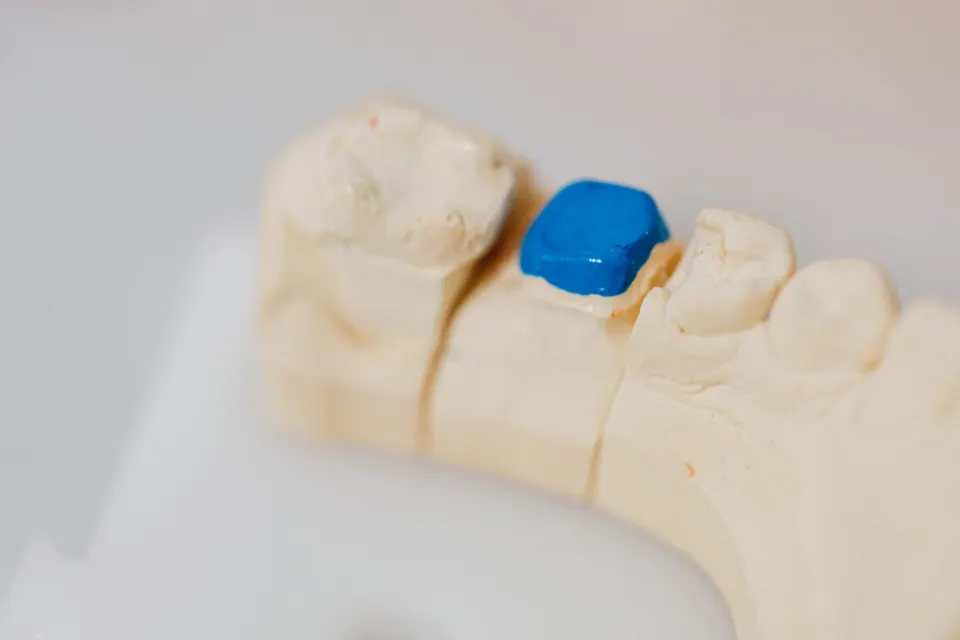
Under local anaesthetic, the dentist then reduces the tooth evenly on all sides to make room for the crown. How much is removed depends on the chosen material: some need more space than others, which is part of the discussion about options.
When the tooth is very broken down, it may first need to be built up (a core, sometimes anchored in the root of a root-filled tooth) to give the crown a solid foundation.
The edge of the preparation is usually placed at the gum line, or slightly below when appearance requires it. Healthy, non-inflamed gums make an accurate fit easier, which is why a scale and polish is sometimes advised beforehand.
Conventional impression or digital scan?
To make a crown that fits precisely, the shape of the prepared tooth, the neighbouring teeth and the opposing teeth must be recorded.
- A conventional impression is taken with a paste in a tray, held in the mouth for a few minutes. The mould is then cast in plaster at the laboratory.
- A digital impression is taken with an intraoral scanner: a small camera sweeps over the teeth and creates a 3D model on screen. There is no paste, which people with a strong gag reflex often appreciate, and the dentist can check straight away that the preparation has been captured properly.
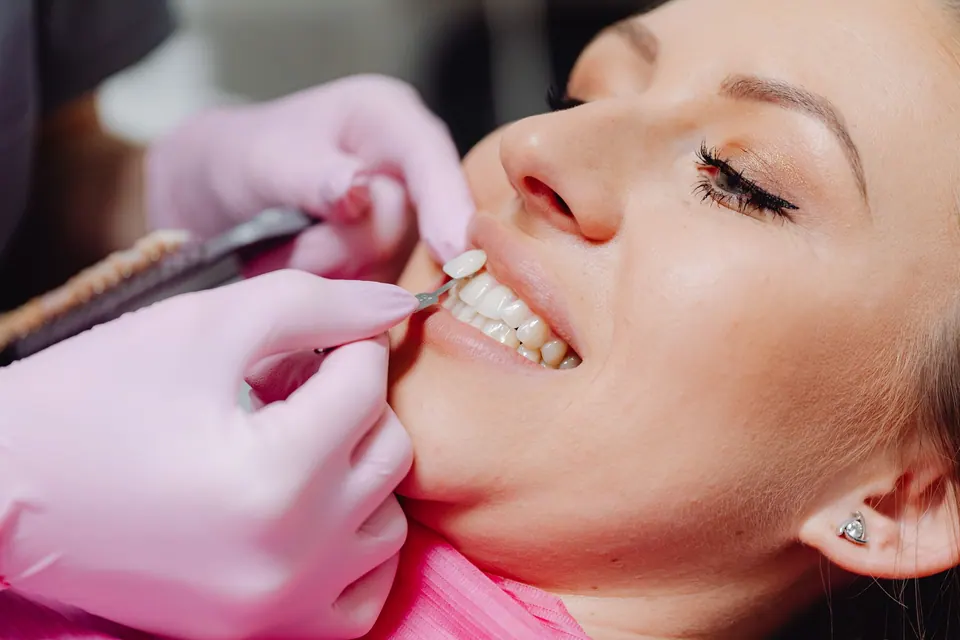
When done well, both methods produce accurate crowns. The shade is chosen at the same time, in daylight where possible, so that the crown blends in with your neighbouring teeth.
The temporary crown
When the final crown is not fitted on the same day, a resin temporary crown is placed on the prepared tooth. It protects the tooth from sensitivity, keeps the gum and neighbouring teeth in place, and lets you eat and smile normally in the meantime.
It is fixed with temporary cement designed to come off easily, so it is less strong than a permanent crown. A few precautions:
- avoid very sticky foods (toffee, chewing gum) and very hard foods on that side;
- when flossing, slide the floss out sideways rather than pulling it back up;
- if the temporary comes off, keep it and call the practice to have it re-cemented: a prepared tooth left exposed can become sensitive, and the neighbouring teeth may shift.
Some mild sensitivity to cold is common during this phase.
Ceramic, zirconia, porcelain fused to metal: which material?
No material is ideal for every situation. The choice depends on the position of the tooth, biting forces, the look you want, the space available and the colour of the underlying tooth.
- Glass ceramic has a translucency close to that of enamel. It is often favoured for visible teeth, when biting forces allow.
- Zirconia is a very strong ceramic, used in particular for back teeth or where biting forces are high. Newer zirconias have improved considerably in appearance.
- Porcelain fused to metal combines a metal framework with a ceramic covering. It has been used for a long time and can sometimes show a greyish line at the gum margin.
- All-metal crowns are requested less often for cosmetic reasons, but remain useful in some cases where space is limited.
During the consultation, the dentist explains the advantages and limitations of each option for your dental crown, based on your tooth and your expectations.
Chairside CAD/CAM: a crown made on site
CAD/CAM (computer-aided design and manufacturing) links the digital impression to production. From the 3D model, the crown is designed on screen and then milled from a block of ceramic or zirconia.
German Dental Clinic in Agdal has an intraoral scanner and a CAD/CAM milling unit that make it possible to produce some restorations on site. Depending on the material and the clinical situation, this can reduce the number of appointments, and in some cases allow the crown to be fitted on the same day.
That is not always possible or desirable: some materials need firing or characterisation, and some complex restorations require extra steps. Speed is never the main criterion: fit, bite and appearance come first. On the day of fitting, the dentist checks the contact with the neighbouring teeth, the fit at the margins and the way you bite before the crown is bonded or cemented.
Aftercare and what affects how long a crown lasts
A crown itself cannot decay, but the tooth underneath can, especially where the crown meets the tooth near the gum. So you look after it just like your natural teeth, paying particular attention to that area.
- Brush twice a day with a fluoride toothpaste.
- Clean between your teeth every day (floss or interdental brushes).
- Cut down on sugary snacks.
- Do not use your teeth as tools (opening packaging, cracking stones or shells).
- If you clench or grind your teeth, say so: a night guard can protect the crown.
How long a crown lasts cannot be guaranteed in advance. It depends on several factors: the condition of the supporting tooth and its root, your oral hygiene, your eating habits, tooth grinding, the material and how regularly you attend check-ups. Those check-ups make it possible to spot leakage or a crack early. To have a damaged tooth assessed in Rabat, you can book an appointment.
Sources
Frequently asked questions
Does having a crown fitted hurt?
The preparation is done under local anaesthetic, so it is generally comfortable. Some sensitivity to cold or mild gum soreness may occur for a few days after preparation or fitting. If pain persists or gets worse, let the practice know so the tooth can be reassessed.
Does a tooth need a root canal before a crown?
Not necessarily. A healthy, living tooth can receive a crown and keep its nerve. Root canal treatment is only needed if the nerve is infected or irreversibly inflamed, or if the build-up requires it. The examination and X-ray decide.
Can a crown be done in a single visit?
It is possible in some cases thanks to chairside CAD/CAM, when the material and the clinical situation allow. In other situations, a temporary crown and a second visit remain the better choice. The dentist will explain the planned sequence at the consultation.
What should I do if my crown comes off?
Keep it, avoid chewing on that side and contact the practice. Do not glue it back yourself with a household adhesive, which can damage the tooth and prevent proper re-cementing. A crown coming off can also be a sign of decay underneath, so an examination is worthwhile.
The information on this page is general. Only a consultation allows a diagnosis and a suitable treatment plan.