Why no reliable price can be given without an examination
It is often the first question on the phone: how much does an implant, a crown or whitening cost? The most honest answer is that a price quoted without seeing the patient's mouth is likely to be wrong, one way or the other.
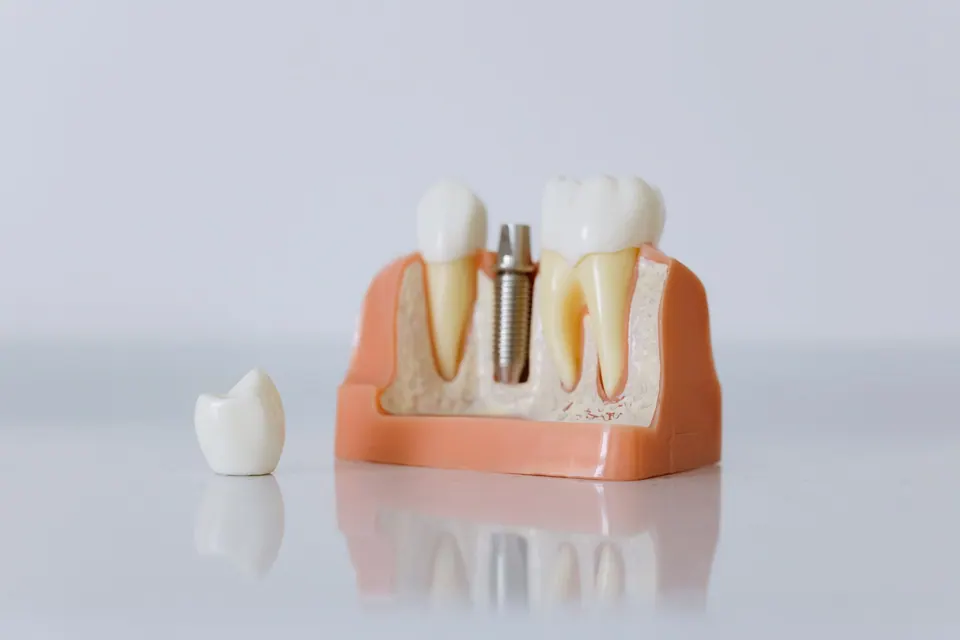
The same word covers very different situations. An implant placed in good-quality bone has little in common with one that first requires a bone graft. A crown on a healthy tooth does not involve the same work as a crown on a tooth that must first have root canal treatment and be rebuilt. A simple scale and polish and gum treatment over several sessions are not the same procedure.
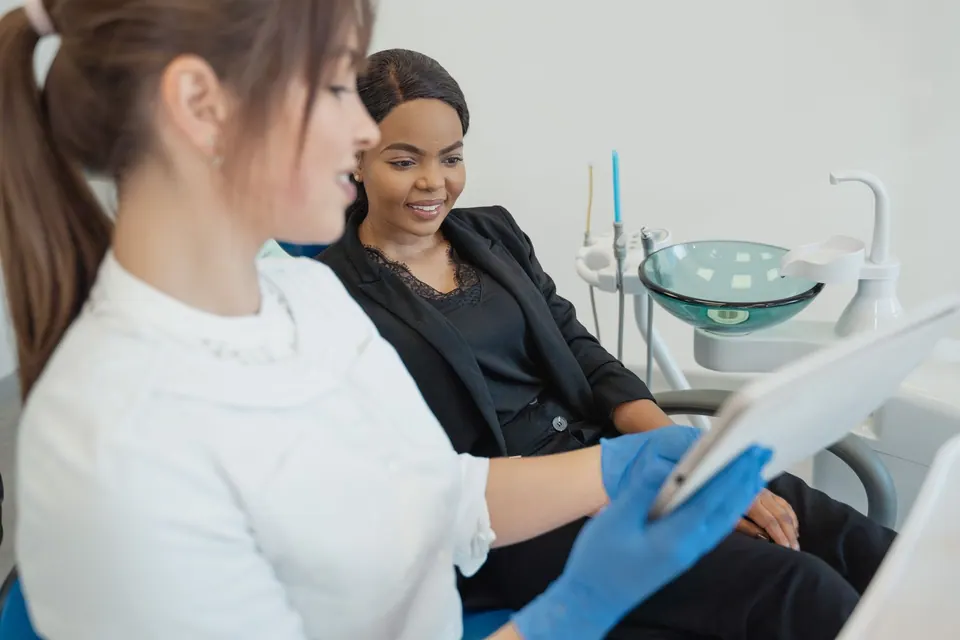
That is why the responsible approach is to carry out an examination and the necessary X-rays, then provide a written treatment plan and quote. In addition, professional ethics rules and medical advertising regulations govern how health professionals communicate in Morocco, which explains why you will find few detailed price lists on practice websites.
The factors that influence cost
Several elements affect the cost of treatment, and they add up:
- The complexity of the case: number of teeth involved, condition of the bone and gums, preliminary treatment needed (cavities, root canal treatments, extractions).
- Additional examinations: panoramic X-ray, three-dimensional imaging for surgery, digital impression.
- Materials: type of ceramic or zirconia for a crown, implant system chosen, prosthetic components.
- Laboratory work: a prosthesis is custom-made, either in the practice using CAD/CAM or in a dental laboratory, and its precision takes time and expertise.
- The number of sessions and the length of follow-up, including any temporary restorations.
- Associated procedures: bone grafting, sinus lift, guided surgery, gum management.
Understanding these parameters helps you read a quote with a clear mind and ask the right questions.
What compulsory health insurance covers
In Morocco, compulsory health insurance (AMO, Assurance Maladie Obligatoire) has been extended to the whole population in recent years. Depending on your situation (private-sector employee, civil servant, self-employed, retired or covered by a solidarity scheme), it is managed by the CNSS (the national social security fund) or by another managing body.
As a general rule, AMO covers part of routine dental care, based on reference rates set by national agreements. These reference rates are often lower than the fees actually charged, particularly in private practice, which leaves the patient with a share to pay.
For prostheses, the rules are more restrictive and a prior approval request may be required before work begins. Cosmetic procedures (whitening, veneers) and certain treatments such as implants are frequently excluded or only minimally covered. As the rules change, the safest course is to check directly with your insurer what applies to your file.
The role of top-up and supplementary insurance
Many employees also have supplementary insurance or a mutual insurance scheme, taken out by their employer, a professional association or individually. These policies can top up AMO reimbursement, sometimes with specific annual ceilings for dental care and optics.
Cover varies enormously from one policy to another. Before starting major treatment, it is worth:
- rereading your table of benefits, under dental care and prostheses;
- checking whether there is an annual ceiling and whether part of it has already been used;
- asking whether a quote must be sent in advance;
- finding out about reimbursement times and the documents required (claim form, invoices, X-rays).
Some practices also have agreements with associations or organisations. German Dental Clinic, for example, has an agreement with AMFAJ (Amicale marocaine des femmes de l'Administration judiciaire, an association of women working in the judicial administration); ask at reception if this applies to you.
How to read a dental quote
A good quote is a basis for discussion, not just an amount. It should allow you to identify clearly:
- each planned procedure, tooth by tooth;
- the materials used for prostheses;
- whether preliminary procedures are included (extractions, grafts, temporaries);
- any treatment phases, which may be spread over time.
Do not hesitate to ask what happens if an additional procedure turns out to be necessary during treatment, and what alternatives exist. For example, to replace a tooth, a dental implant, a bridge or a removable denture do not involve the same investment or the same maintenance.
Comparing several quotes is perfectly legitimate, provided you compare equivalent treatment plans. A lower quote that leaves out a necessary procedure will not necessarily cost less in the end.
Investing in prevention
The least expensive treatment is the one you never need. A cavity treated early is repaired with a simple filling; left untreated, it can lead to root canal treatment, then a dental crown, or even an extraction followed by a replacement.
Regular check-ups, scaling and cavity treatment at the right time are therefore a reasonable investment compared with the major treatments they often help avoid. The same applies to gum health: stabilising gum disease protects your existing teeth and any future treatment.
When a comprehensive treatment plan is needed, it can often be organised in stages, dealing first with emergencies and infections, then with restorations, according to your priorities.
Getting a quote in Rabat
At German Dental Clinic in Agdal, every treatment plan is drawn up after a consultation, a clinical examination and any necessary imaging. You receive the quote together with the explanations you need for your dealings with your insurer. If you are covered by a foreign health insurer or a travel insurance policy, bear in mind that they apply their own rules; the written quote and explanations can support your request to them.
If you would like to know the cost of treatment suited to your situation in Rabat, the first step is to book an appointment for a consultation.
Frequently asked questions
Why does the clinic not give prices over the phone?
Because the cost depends on the condition of your mouth, the examinations needed and any associated procedures, which can only be known after an examination. A figure given blindly would probably be inaccurate. The quote provided after the consultation reflects your actual situation.
Does AMO reimburse dental implants?
In general, implants are covered little or not at all by compulsory health insurance, and the crown placed on top may fall under the rules for prostheses. Your supplementary insurance may sometimes contribute. Check with your insurers using the detailed quote.
Can dental treatment be spread over time?
Often, yes. A comprehensive treatment plan can be organised in stages, starting with urgent care and gum health. The arrangements are discussed with the dentist and the reception team, according to your situation.
The information on this page is general. Only a consultation allows a diagnosis and a suitable treatment plan.