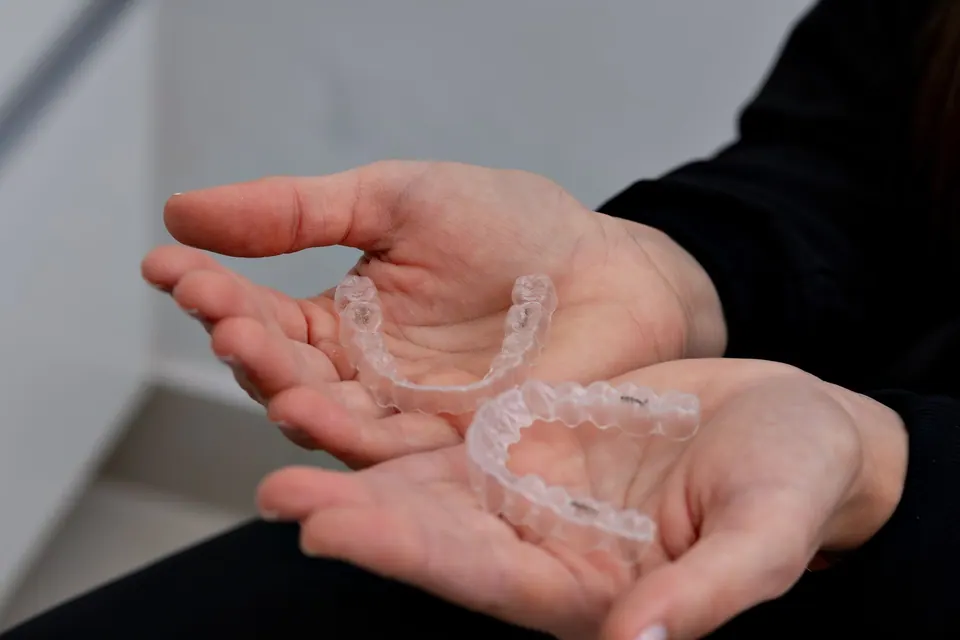
How do aligners work?
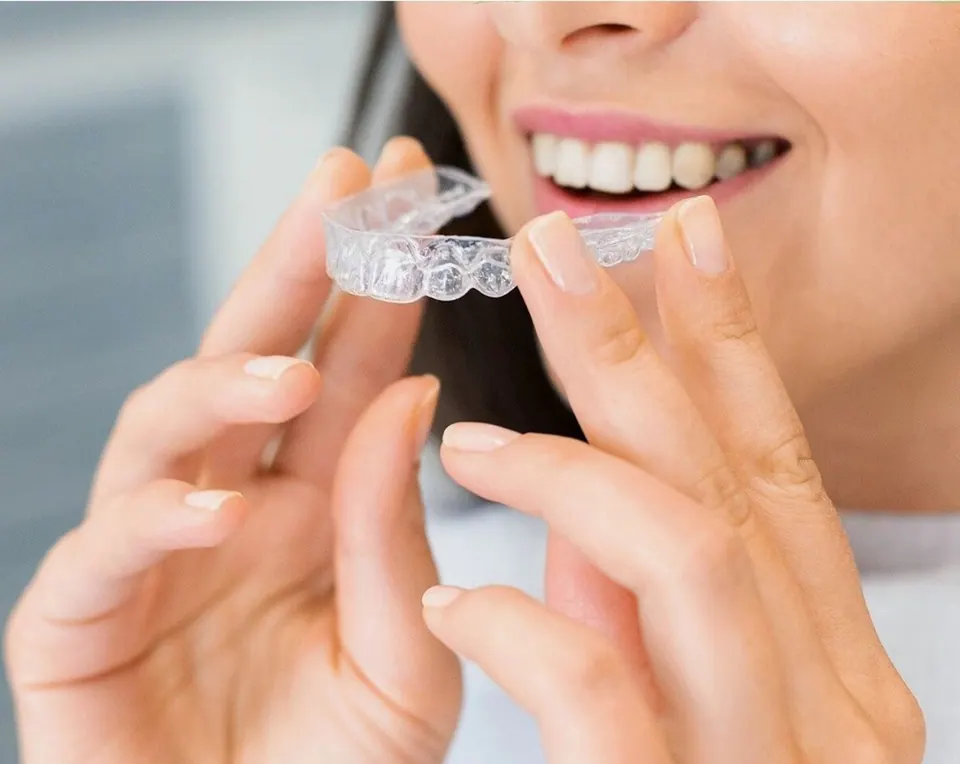
The principle is the same as in all orthodontics: a gentle, continuous force applied to a tooth causes the surrounding bone to remodel, which allows the tooth to move. With aligners, this force is delivered by a series of clear plastic trays, each one slightly different from the last.
You wear each tray for a set period, then move on to the next. The total movement is broken down into many small steps, planned in advance on a computer.
For some movements, small tooth-coloured composite bumps called attachments are bonded temporarily to a few teeth. They give the tray a better grip. Gentle polishing between certain teeth may also be planned to create space. These details are explained and shown to you before treatment begins.
Tooth movement is slow by nature: the bone needs time to remodel around each tooth. Trying to go faster than biology allows leads to unnecessary pain and can even weaken the roots. That is why the pace at which you change trays is set by the dentist and adjusted if needed at each check-up.
Which cases can be treated?
Aligners are suitable for many situations, including:
- crowded or misaligned teeth, from mild to moderate;
- gaps between the teeth;
- relapse after earlier orthodontic treatment, when teeth have shifted because no retainer was worn;
- some discrepancies between the upper and lower arches (deep bite, open bite, crossbite), depending on their severity;
- preparation for a prosthetic or cosmetic plan, repositioning teeth before veneers, a crown or an implant.
More complex cases (major jaw discrepancies, severely rotated or impacted teeth, certain vertical movements) may call for fixed braces, a combined approach or even surgical treatment. Only a full assessment can tell whether aligners are right for you and what results can reasonably be expected.
The assessment before you start
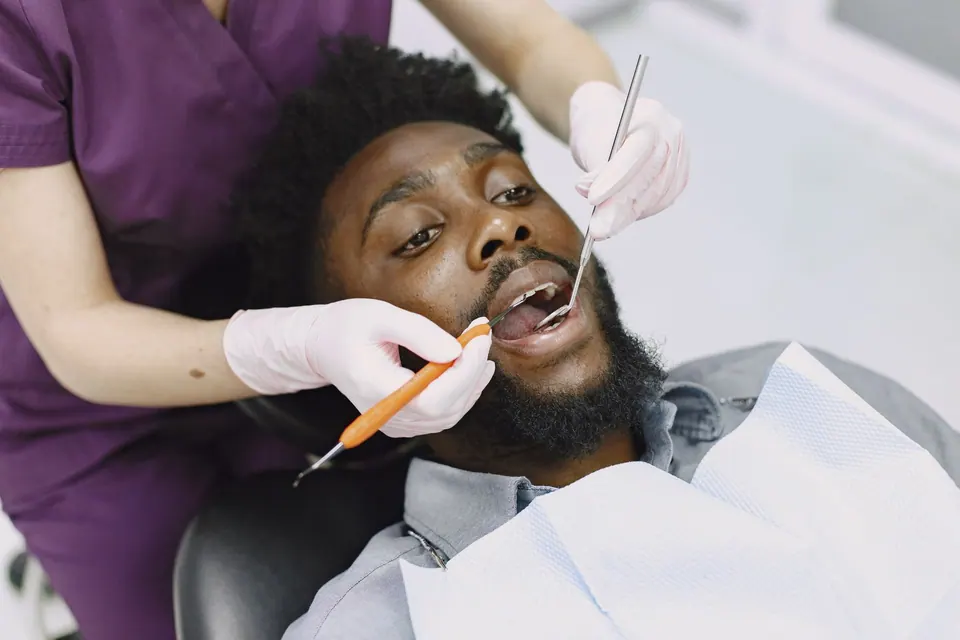
Orthodontic treatment is never started on the strength of a photo alone. The assessment includes:
- a clinical examination of the teeth, gums and jaw joint;
- X-rays, including a panoramic X-ray, to check the roots, the bone and any impacted teeth;
- photographs of the face and teeth;
- a digital impression with the intraoral scanner, more comfortable than a traditional putty impression.
Gum health is decisive: moving teeth on an inflamed foundation can worsen bone loss. If there is bleeding, tartar or gum pockets, gum treatment comes first. Any decay is also treated before starting.
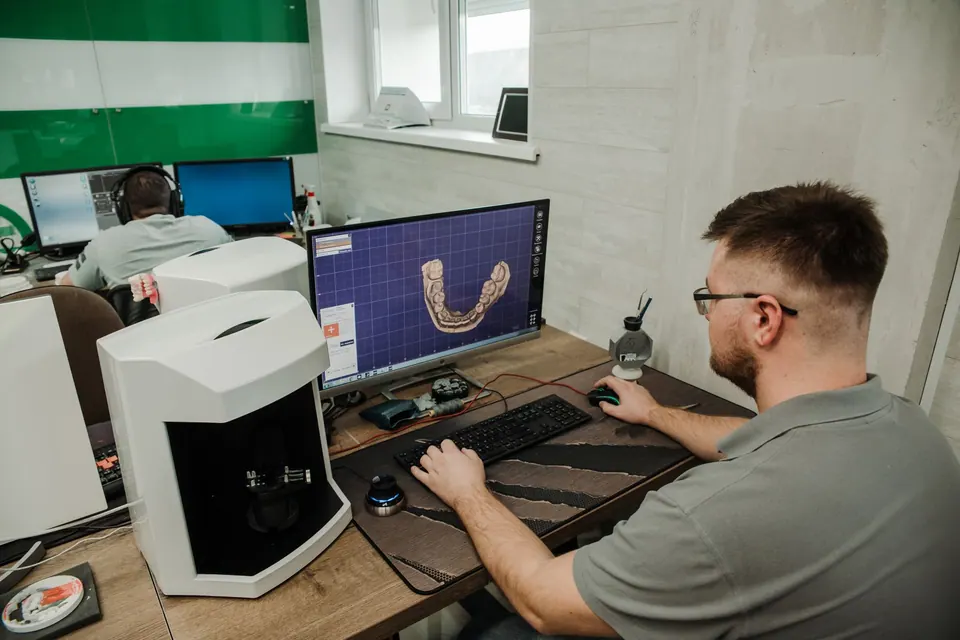
From this data, a digital simulation of the treatment is prepared. It shows the planned stages and the intended final position, and forms the basis for discussion before any decision is made.
Everyday wear: discipline and comfort
How well aligners work depends largely on you. They must be worn for most of the day and night, usually around 22 hours out of 24, and taken out only to eat, to drink anything other than water and to brush your teeth. Insufficient wear slows treatment down and can stop it from succeeding.
A few simple rules:
- brush your teeth before putting the trays back in, so you do not trap debris against the enamel;
- rinse and clean the aligners every day with lukewarm water (not hot, which can warp them);
- always keep them in their case, never wrapped in a paper napkin where they often end up thrown away;
- avoid drinking coffee, tea or sugary drinks with the trays in place.
Pressure or mild discomfort for a day or two with each new tray is common: it is a sign that the teeth are moving. Your speech may also change slightly at first, and this usually fades quickly.
Aligners or fixed braces: how to choose?
Both approaches have their advantages:
- Discretion: aligners are barely visible, which matters to many adults in their working lives.
- Hygiene: they come out for eating and brushing, which makes cleaning easier than with brackets.
- Diet: no particular restrictions, since the trays are removed for meals.
- Control of movements: fixed braces often remain better suited to complex movements.
- Reliance on compliance: fixed braces work all the time, aligners only when they are worn.
The choice depends on your case, your lifestyle and your ability to wear the trays consistently. The options are set out transparently during your consultation in Rabat.
Retention: keeping the result
After orthodontic treatment, teeth naturally tend to drift back towards their original position, especially at first. Retention is therefore essential. It can take the form of:
- a bonded wire discreetly fixed behind the front teeth;
- a retainer tray worn at night;
- or both.
How long it lasts is decided with the dentist, and it is often continued over the long term, at least at night. Neglecting retention is the most common cause of relapse. Once the teeth are aligned, it is also a good moment to consider, if you wish, teeth whitening or minor cosmetic refinements.
What affects the cost of aligner treatment
The budget depends mainly on how complex the case is:
- the number of trays needed, linked to the extent of the movements;
- treating one arch or both;
- any refinement trays at the end of treatment;
- preliminary care (gums, decay, scaling);
- the type of retention planned.
A detailed quote is drawn up after the assessment and simulation. To find out whether your case is suited to aligners, you can book an appointment at the Agdal practice.
How it works
- Consultation and assessmentClinical examination, X-rays, photographs and a digital impression.
- Treatment simulationPresentation of the planned stages and the intended final position, with adjustments if needed.
- Fitting the alignersAttachments bonded if necessary, first trays handed over and instructions on how to wear them.
- Regular follow-upCheck-up appointments to monitor progress and hand over the next sets of trays.
- RefinementsRefinement trays if certain movements need fine-tuning.
- RetentionAttachments removed, then a bonded wire or retainer tray put in place.
Frequently asked questions
Are aligners really invisible?
They are very discreet but not completely invisible: up close, a slight sheen or the attachments on some teeth may be noticeable. In everyday life, most people you talk to will not notice them. They stay transparent if you clean them well and avoid coloured drinks while wearing them.
Does it hurt?
Aligners do not really hurt, but each new tray brings a feeling of pressure for a day or two. That is a sign the teeth are moving. Switching to a new tray in the evening, before going to sleep, often makes this phase easier.
Can adults have this treatment?
Yes, there is no age limit for moving teeth, provided the gums and the bone supporting them are healthy. In adults, the gum assessment plays an important part. Aligners are often chosen precisely because they are discreet in professional life.
What happens if I forget to wear my trays?
Forgetting once in a while is not serious, but regularly wearing them too little slows treatment and the next trays may no longer fit properly. If a tray no longer fits, do not force it in and contact the practice: you may need to go back to the previous stage.
Can aligners replace veneers?
In some cases, yes. Slightly crowded or spaced teeth can be realigned without any preparation, which sometimes avoids the need for veneers. In other situations, the teeth are aligned first so that any veneers can be thinner and more conservative.
Do I need to wear a retainer for life?
Retention is often recommended over the long term, at least at night, because teeth can move throughout life. Its form and duration are agreed with the dentist at the end of treatment, depending on your teeth and the type of correction carried out.
The information on this page is general. Only a consultation allows a diagnosis and a suitable treatment plan. Updated on 14 October 2026.