What is tooth decay and how does it progress?
Tooth decay is the gradual breakdown of the hard tissues of the tooth. It starts with dental plaque: the bacteria it contains turn sugars from food into acids, which slowly dissolve the minerals in the enamel.
Decay usually goes through several stages:
- Enamel decay: a white or brownish spot, often completely painless. At this stage the surface can sometimes still remineralise with fluoride and better oral hygiene.
- Dentine decay: the lesion spreads faster, because dentine is softer than enamel. Sensitivity to cold or sweet foods often appears.
- Decay approaching the nerve: the pain becomes sharper, sometimes spontaneous or worse at night. The nerve may become inflamed, reversibly or irreversibly.
This is why painless decay is not harmless decay: the absence of pain mostly means it has not yet reached the sensitive parts of the tooth.
Signs that you should see a dentist
Some signs call for an examination without waiting for your next routine check-up:
- sensitivity to cold, heat or sweet foods in one particular tooth;
- a dark spot, a visible hole or a rough area you can feel with your tongue;
- food that always gets stuck in the same place;
- the edge of a tooth crumbling, or an old filling cracking;
- bad breath or an unpleasant taste that does not go away;
- pain that lasts several minutes after the trigger, or that wakes you up at night.
The last sign suggests the nerve is already affected. In that case a simple filling may no longer be enough, and root canal treatment is sometimes needed. Only an examination can tell.
Diagnosis at the Agdal practice
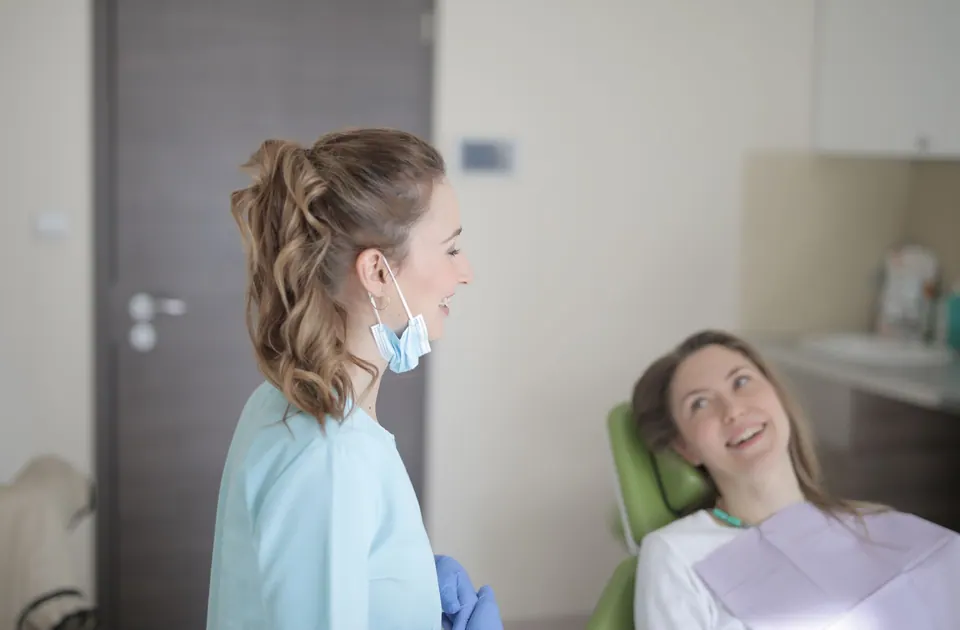
The examination begins with your symptoms: how long you have had them, when they occur and how strong they are. The dentist then checks each tooth, dries the surfaces to spot early lesions more easily and, if needed, tests how the tooth reacts to cold.
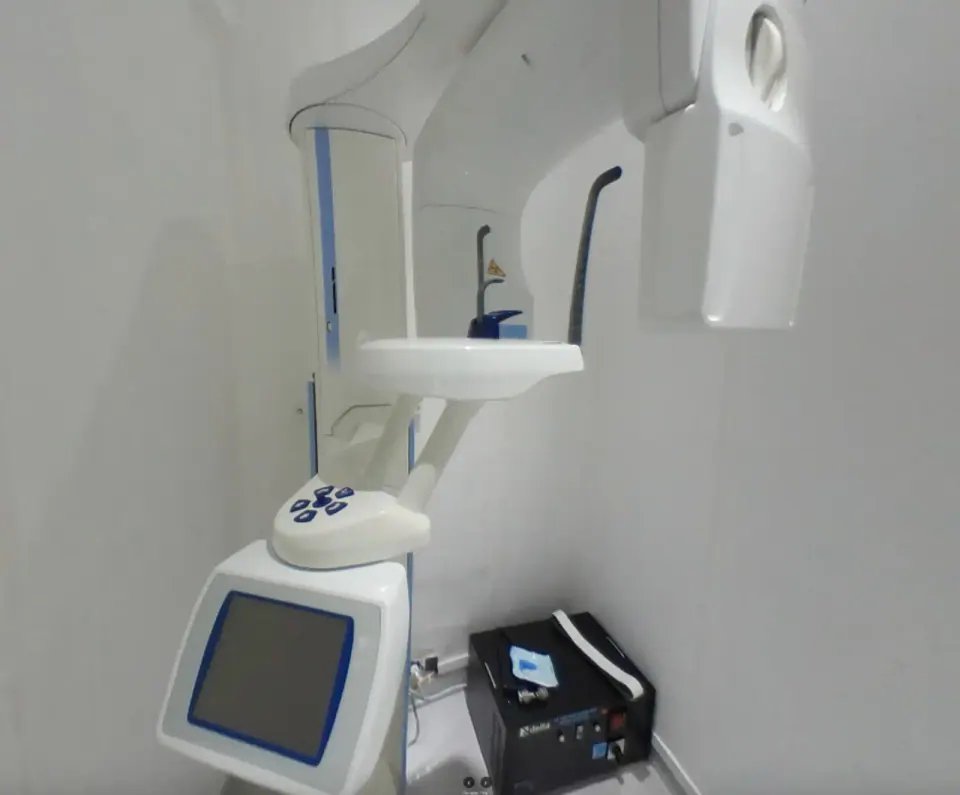
Decay between teeth or underneath an old filling is often invisible to the naked eye. Targeted digital X-rays, and in some cases a panoramic X-ray, show how deep it goes and how close it is to the nerve. The images appear on screen, so you see what the dentist sees, which makes the explanation clearer.
After the examination, the stage of the decay and the proposed treatment are explained to you, together with any alternatives.
How is a cavity treated?
For decay in the enamel or dentine, treatment is usually completed in one visit:
- Local anaesthetic if the decay has reached the dentine, so that treatment is comfortable.
- Removal of the decayed tissue: only the infected, softened part is removed, to keep as much healthy tooth as possible.
- Disinfection and preparation of the cavity.
- Filling with a suitable material, most often a tooth-coloured composite resin, placed in layers and hardened with a curing light.
- Bite adjustment and polishing, so the tooth meets the opposing teeth naturally again.
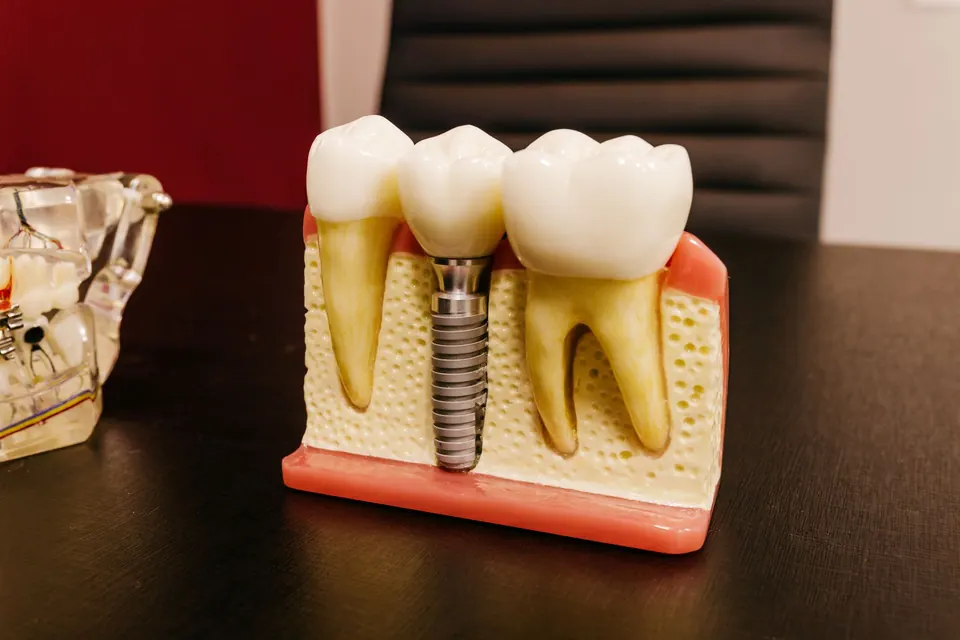
When the decay is extensive and the tooth has lost a large part of its walls, a simple filling can weaken it further. A stronger restoration is then considered: an inlay, an onlay or a dental crown, which, depending on the case, can be designed with our digital CAD/CAM workflow.
Composite, inlay, onlay: which material for which situation?
The choice depends on how much tooth structure has been lost, where the tooth is in the mouth and the chewing forces it has to withstand.
- Composite resin suits most small and medium-sized cavities. It bonds to the tooth, which allows minimal preparation, and its shade blends in with your smile.
- Inlays and onlays are custom-made pieces in ceramic or composite that are bonded into place. They are useful for larger cavities, particularly in molars, as they strengthen the tooth without covering it completely.
- A crown is kept for teeth that are badly broken down or weakened, for example after root canal treatment.
The dentist talks you through the options for your tooth, with their advantages and limitations, before any decision is made.
What to do while waiting for your appointment
If a tooth becomes sensitive a few days before your appointment, a few simple measures can ease the discomfort, although they do not replace treatment:
- keep brushing the area gently, even if it is sensitive: a tooth that is not kept clean becomes more irritated;
- avoid very cold, very hot or very sugary food on that side;
- rinse your mouth with lukewarm water after meals to dislodge any food caught in the cavity;
- you can take a standard painkiller following the leaflet, but never place a tablet directly on the gum, as it burns the tissue.
On the other hand, do not take antibiotics on your own initiative: they do not treat tooth decay and are only useful for certain infections, on prescription. If the pain becomes throbbing, your cheek swells or you develop a fever, do not wait for your appointment and see our dental emergency in Rabat page.
After treatment and preventing new decay
After a filling, some mild sensitivity to cold or when chewing may appear for a few days and usually fades. If it gets worse, if the tooth feels too high when you bite, or if spontaneous pain develops, contact the practice again.
A treated tooth can decay again, often at the edge of the filling. A few habits significantly reduce this risk:
- brushing twice a day with a fluoride toothpaste, including in the evening before bed;
- cleaning between your teeth with floss or suitable interdental brushes;
- limiting snacks and sugary drinks, especially between meals;
- regular check-ups, with a scale and clean as needed.
A check-up picks up new lesions at the stage when they are simplest to treat. For an examination in Rabat, book an appointment at the Agdal practice.
How it works
- Examination and discussionYour symptoms are noted, then each tooth is examined and tested if needed.
- Digital X-rayTargeted images measure how deep the decay goes and how close it is to the nerve.
- Local anaestheticThe area is numbed when the decay has reached the dentine, so treatment is painless.
- Removal of decayOnly the affected part is removed, preserving the healthy tooth.
- RestorationThe cavity is filled with composite or, if it is large, with a custom-made piece.
- Adjustment and adviceYour bite is adjusted, the surface polished, and you are given advice on prevention.
Frequently asked questions
Can tooth decay go away on its own?
Decay that has reached the dentine does not reverse: the cavity does not fill itself back in. Only a very early enamel lesion, the white spot, can sometimes remineralise with fluoride and careful oral hygiene. Telling these apart is exactly what a check-up is for, before treatment becomes more extensive.
Is having a cavity treated painful?
In the vast majority of cases, no. A local anaesthetic is given as soon as the decay has reached the dentine, and treatment is painless. You may feel vibration or pressure. Afterwards, slight sensitivity to cold may last a few days and then usually fades.
Why does my tooth still hurt after the filling?
Moderate sensitivity is common in the first few days, especially after deep decay. Pain that gets worse, comes on at night or for no reason, or a feeling that the tooth is too high, means you should contact the practice: the bite may need adjusting or the nerve may need treatment.
Should old silver fillings be replaced?
Not automatically. An old amalgam filling in good condition with no decay underneath can be kept. Replacement is discussed if there is a crack, leakage, recurrent decay or a cosmetic wish. The dentist assesses each restoration at your check-up and explains what is worthwhile and what is not.
Can tooth decay be treated during pregnancy?
Yes, fillings can be done during pregnancy, and it is actually better not to let an infection progress. The second trimester is often considered the most comfortable time. Tell the dentist you are pregnant so that the anaesthetic can be adapted and X-rays kept to what is strictly necessary.
How long does a composite filling last?
Its lifespan depends on the size of the filling, the tooth involved, your oral hygiene, your diet and habits such as clenching your teeth. There is no guaranteed lifespan: regular check-ups make it possible to monitor the edges of the filling and act early if needed.
The information on this page is general. Only a consultation allows a diagnosis and a suitable treatment plan. Updated on 14 October 2026.