At what age should the first visit take place?
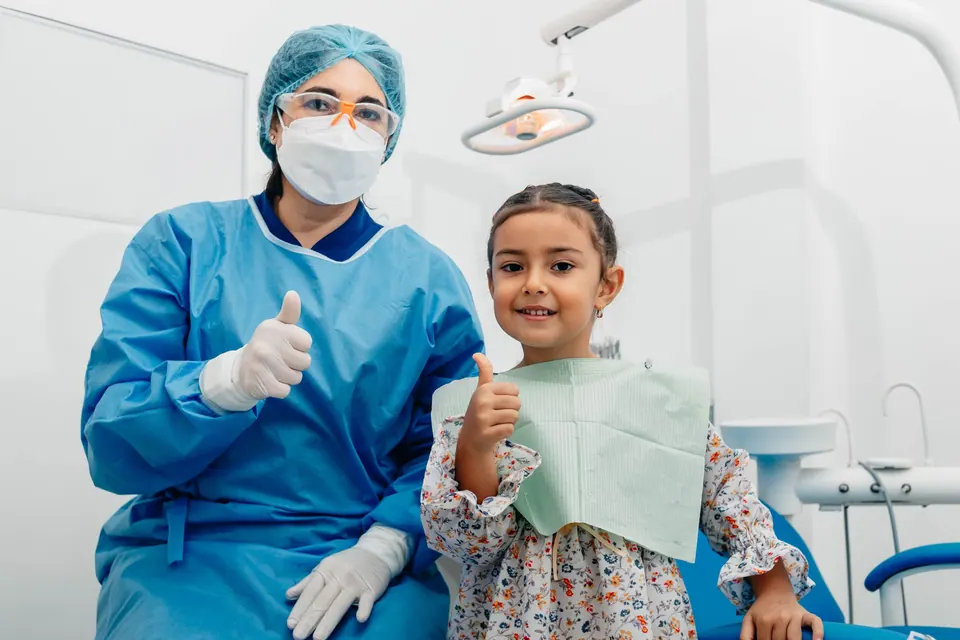
Paediatric dental societies recommend an early first visit, within the year after the first teeth appear, and in practice before your child starts school. Many parents wait for a problem before seeing a dentist. Yet the first visit works best as a simple introduction, with no treatment to carry out, in a relaxed setting.
This early visit has several benefits:
- spotting any early decay, sometimes invisible to parents;
- giving tailored advice on brushing, toothpaste, bottles and diet;
- checking the development of the jaws and the arrival of the teeth;
- getting your child used to the practice before they need any treatment.
Baby teeth matter: they are used for chewing and speaking and they guide the position of the permanent teeth. Decay in a baby tooth is therefore not a minor detail.
Preparing your child at home
The way adults talk about the dentist has a big influence on children. A few simple tips:
- Talk about it positively and simply, a few days beforehand: the dentist is going to count their teeth and check that they are healthy.
- Avoid frightening words: injection, hurt, pull out, and phrases like it won't hurt, which introduce the idea of pain.
- Do not pass on your own worries: if you are anxious yourself, ask the other parent or a calm relative to go with your child.
- Play dentist: count a soft toy's teeth, open wide in front of the mirror.
- Read a book or watch a short story on the subject suited to their age.
- Do not promise a reward for being brave, which suggests there is something difficult to face.
The aim is for your child to arrive curious rather than worried.
On the day: choosing the right time
Choosing the time of the appointment matters as much as preparation. Pick a slot when your child is rested and not hungry: outside nap time for the youngest, after a light meal. A tired or hungry child copes far less well with something new.
Arrive a few minutes early so they can discover the waiting room without rushing. You can bring their comforter or a small familiar toy.
Also prepare useful information for the dentist: medical history, allergies, current medication, habits (night-time bottle, dummy, thumb-sucking), and any questions you have. Your child's health record may be useful.
How the visit goes
A first paediatric dentistry appointment is above all a time for conversation and observation. Depending on the child's age and cooperation, the dentist:
- talks with the parents about hygiene and eating habits;
- examines the teeth and gums, sometimes with very young children sitting on a parent's lap;
- shows the instruments and explains in simple words what they are doing;
- checks the bite, the position of the teeth and any sucking habits;
- gives practical brushing advice, often with a demonstration.
The visit does not try to do everything at once. If the child is shy, the dentist goes at their pace. A shorter but positive visit is better than a complete examination experienced as an ordeal.
What if a cavity is found?
Sometimes the examination reveals a cavity, even in a young child. In that case, the dentist explains to the parents what they have seen and proposes a suitable plan. As a rule, treatment is avoided at the very first visit, except in case of pain or emergency, to give the child time to become familiar with the surroundings.
Cavity treatment in children follows the same principles as in adults, with adapted techniques and vocabulary. A local anaesthetic is used if necessary so that the treatment is comfortable.
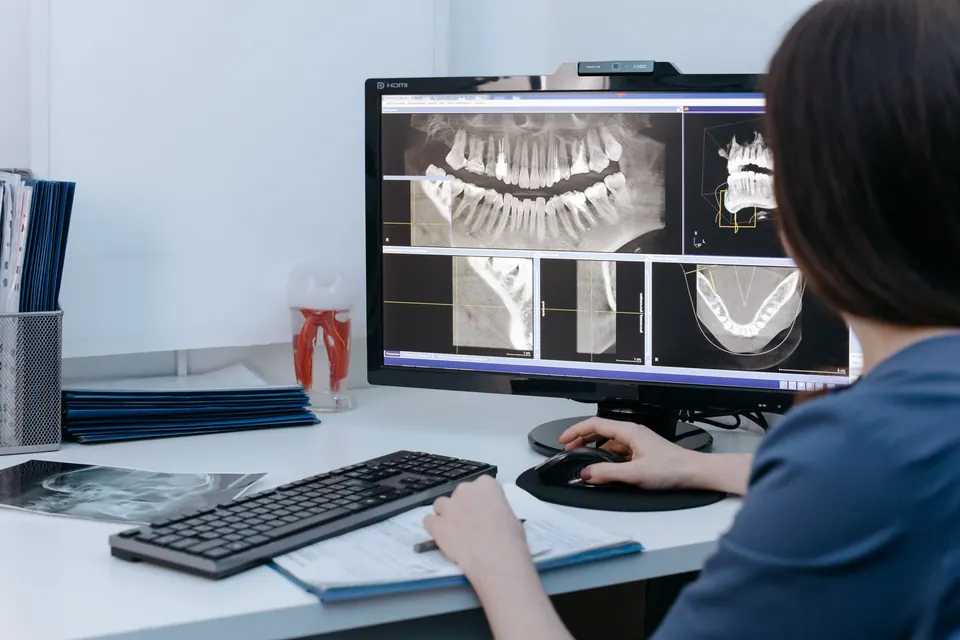
Depending on age and situation, X-rays can be useful to detect cavities between the teeth or follow the arrival of the permanent teeth. A panoramic X-ray is sometimes indicated a little later, in particular to check for the presence and position of developing teeth.
Habits that protect baby teeth
Prevention happens mainly at home. A few general guidelines, which the dentist adapts to each child:
- brush from the very first tooth, morning and evening, with a small amount of fluoride toothpaste suited to your child's age;
- an adult should brush, or go over the teeth again after the child, until the child has enough dexterity;
- avoid a bottle of milk or juice to fall asleep, which leaves sugar in contact with the teeth all night;
- limit snacking and sugary drinks between meals, and offer water instead;
- see the dentist if a white or brown mark appears on a tooth.
Regular check-ups then make it possible to follow your child's growth, reinforce good habits and, if needed, suggest preventive measures such as fissure sealing on certain permanent molars.
A child-friendly welcome in Agdal
At German Dental Clinic, care for children from their very first teeth is part of the services offered. The team takes time to explain, reassure and involve parents at every stage.
If you live in Rabat and would like to arrange a first introductory visit for your child, you can book an appointment, mentioning that it is a first visit so that a suitable time slot can be planned.
Frequently asked questions
Do cavities in baby teeth need to be treated?
Yes. A cavity in a baby tooth can cause pain and infection, disturb eating and sleep, and sometimes affect the permanent tooth underneath. Baby teeth stay in the mouth for several years and should be protected.
Should I stay with my child during the appointment?
For young children, having a parent present is generally reassuring and welcome. The dentist may sometimes ask you to stay in the background and keep quiet so that your child can focus on them. This is decided together, depending on the child.
My child sucks their thumb, is that a problem?
It is common in young children. If the habit continues beyond early childhood, it can affect the position of the teeth and the shape of the palate. The dentist assesses the situation and advises you on how to help your child stop.
Which toothpaste should I use for my child?
A fluoride toothpaste with a strength suited to your child's age, used in a small amount. The dentist will tell you the right amount and strength at the visit, based on age and the risk of decay.
The information on this page is general. Only a consultation allows a diagnosis and a suitable treatment plan.