When do baby teeth come through?
All twenty baby teeth are already present in the jaws at birth, hidden under the gums. The first ones usually appear at around six months, most often the lower front teeth. In some children the first tooth only arrives at around one year, which is not necessarily a cause for concern.
The others follow gradually: incisors, first molars, canines, then second molars. Most children have all twenty baby teeth by around the age of three.
Teething can come with swollen gums, dribbling, a need to chew and some irritability. However, a high temperature or a very unwell child should not automatically be put down to teething: ask your doctor for advice.
At what age do they fall out?
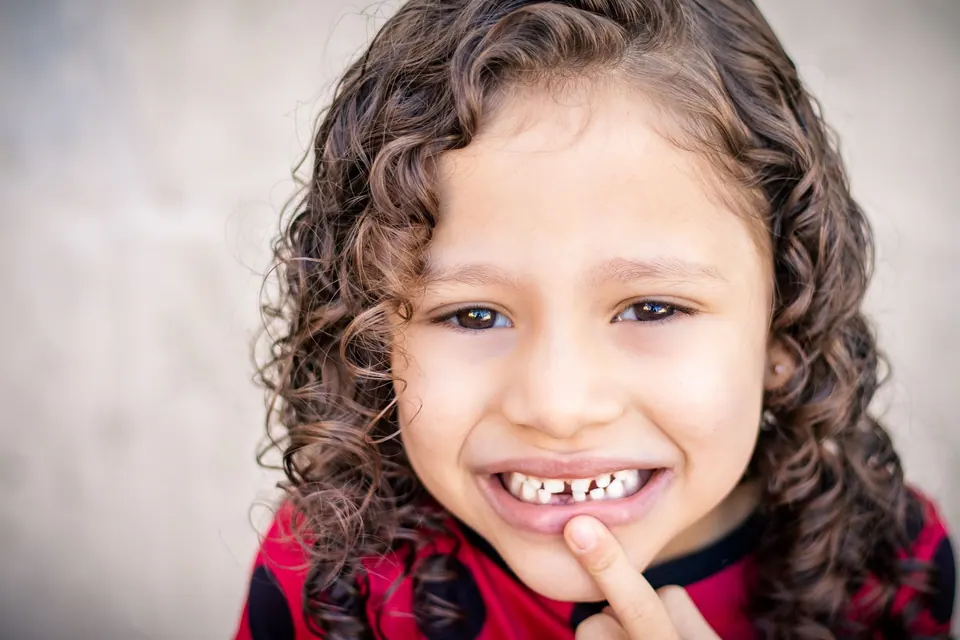
Baby teeth usually start to fall out at around six or seven, beginning with the lower front teeth, then the upper ones. The canines and baby molars come out later, and the changeover is usually complete at around eleven to thirteen. These ages are only guidelines: a difference of a year or more either way is common.
Some situations do deserve a professional opinion:
- an adult tooth coming through behind a baby tooth that is still in place (the so-called double row, common with the lower front teeth);
- a baby tooth that stays firmly in place long after its twin on the other side has gone;
- a tooth lost far too early after a knock or decay;
- a marked delay compared with children of the same age.
A simple examination, sometimes with an X-ray, confirms that the adult tooth is there and correctly positioned.
Why baby teeth really matter
People often say it does not matter because they are only baby teeth. That is a misconception. These teeth have several important jobs:
- chewing properly, and so eating well;
- learning to speak: some sounds depend on the front teeth;
- keeping space for adult teeth: a baby molar lost too early can let neighbouring teeth drift and make it harder for the adult tooth to come through;
- self-confidence: a damaged smile can make a child self-conscious at school.
In some cases, an infection in a baby tooth can also affect the developing adult tooth just beneath it. Caring for baby teeth therefore also protects the future adult teeth.
Decay in baby teeth
The enamel of baby teeth is thinner than that of adult teeth, so decay can progress quickly. It often starts as chalky white spots near the gum, then turns brown and forms a cavity. Children do not always complain of pain, even when decay is advanced.
The main risk factors are well known: frequent snacking, sugary drinks, prolonged bottle or breastfeeding at night, and irregular brushing. To prevent it:
- brush your child's teeth twice a day from the first tooth, with a fluoride toothpaste in an amount suited to their age;
- help them, then supervise their brushing, until they are truly independent;
- keep sweets and juice to mealtimes and offer water in between.
Decay in a baby tooth can be treated: depending on its extent, child-friendly cavity treatment often keeps the tooth in place until it falls out naturally.
The six-year molar, an adult tooth that often goes unnoticed
At around six, a large molar appears at the back of the mouth, behind the last baby molar. Because no tooth has fallen out there, many parents assume it is a baby tooth. It is in fact the first permanent molar, and it has to last a lifetime.
It arrives just as children start brushing more on their own, and it is hard to reach at the back of the mouth. Its deep grooves easily trap food, which makes it vulnerable to decay.
Make sure the brush reaches right to the back, and mention it at the check-up: depending on the shape of the tooth and the risk of decay, the dentist may suggest fissure sealing, a protective coating applied without drilling.
Thumbs, dummies and bottles: habits to watch
Sucking a thumb or a dummy is a natural, comforting reflex in young children. The habit mainly becomes a problem when it goes on for a long time: according to the American Academy of Pediatric Dentistry, it is worth seeking advice if thumb sucking continues beyond the age of three, as it can affect the position of the teeth and the shape of the palate. Encourage your child to stop gently, without punishment, and praise progress.
As for bottles:
- avoid putting your child to sleep with a bottle of milk, juice or a sweet drink: saliva protects the teeth less during sleep;
- if a bottle is needed at bedtime, it should contain water only;
- gradually introduce a cup from the age your paediatrician recommends.
Never dip a dummy in sugar or honey.
When should your child see a dentist?
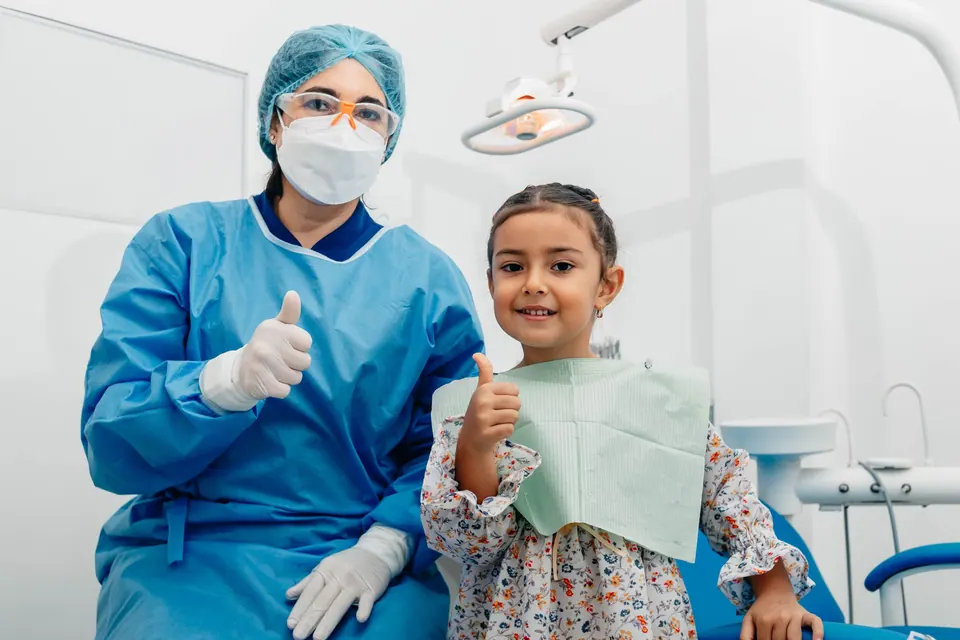
A first visit is recommended as soon as the first teeth appear, to check that everything is developing well and to get tailored advice. Check-ups then continue regularly, at intervals the dentist suggests based on your child's needs. Our article on the first visit to the dentist can help you prepare.
See a dentist sooner if you notice:
- a white or brown spot, a visible hole or a tooth changing colour;
- pain or swelling of the gum or cheek;
- a knock to a tooth, even if it looks intact;
- an adult tooth coming through before the baby tooth has fallen out.
In Agdal, German Dental Clinic sees children from their very first teeth, with explanations suited to their age. Find out about our children's dentistry in Rabat or book an appointment for a check-up.
Sources
Frequently asked questions
Should decay in a baby tooth be treated if the tooth will fall out anyway?
In most cases, yes. Untreated decay can cause pain and infection, and some baby teeth stay in place for several more years. The dentist takes your child's age and the expected time of loss into account to suggest the most suitable option.
My child is 8 and has not lost a tooth yet. Is that normal?
The age at which teeth fall out varies a great deal between children, and delays are common. If you are unsure, an examination, with an X-ray if needed, can confirm that the adult teeth are present and developing normally.
What should I do if a baby tooth is knocked out?
Stay calm, rinse the mouth gently and apply a clean compress if there is bleeding. Unlike an adult tooth, a knocked-out baby tooth is usually not put back. See a dentist promptly to check the other teeth and the gum.
The adult tooth is growing behind the baby tooth. Is that serious?
It is a common situation, especially with the lower front teeth. Often the baby tooth eventually falls out and the adult tooth moves forward on its own. If the baby tooth is still firmly in place after a few weeks, a consultation will help decide whether it needs to be removed.
The information on this page is general. Only a consultation allows a diagnosis and a suitable treatment plan.