When does a tooth need to be extracted?
The priority is to keep natural teeth. Deep decay can often be treated with root canal treatment followed by a crown, and a loose tooth can sometimes be stabilised with gum treatment. Extraction nevertheless becomes the sensible solution in several situations:
- a tooth fractured below the gum, along the length of the root, with no reliable way to rebuild it;
- decay so extensive that not enough healthy tissue remains;
- persistent infection at the tip of the root despite well-performed root canal treatment;
- advanced gum disease that has destroyed the supporting bone;
- a baby tooth that does not fall out and gets in the way of the permanent tooth;
- a lack of space, as part of orthodontic treatment;
- an impacted wisdom tooth or one causing repeated infections.
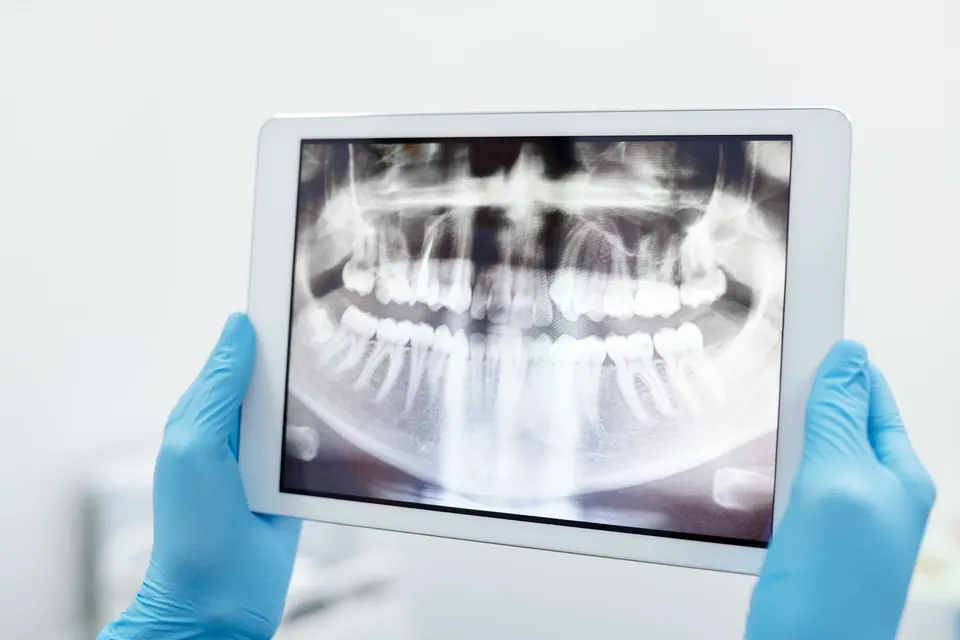
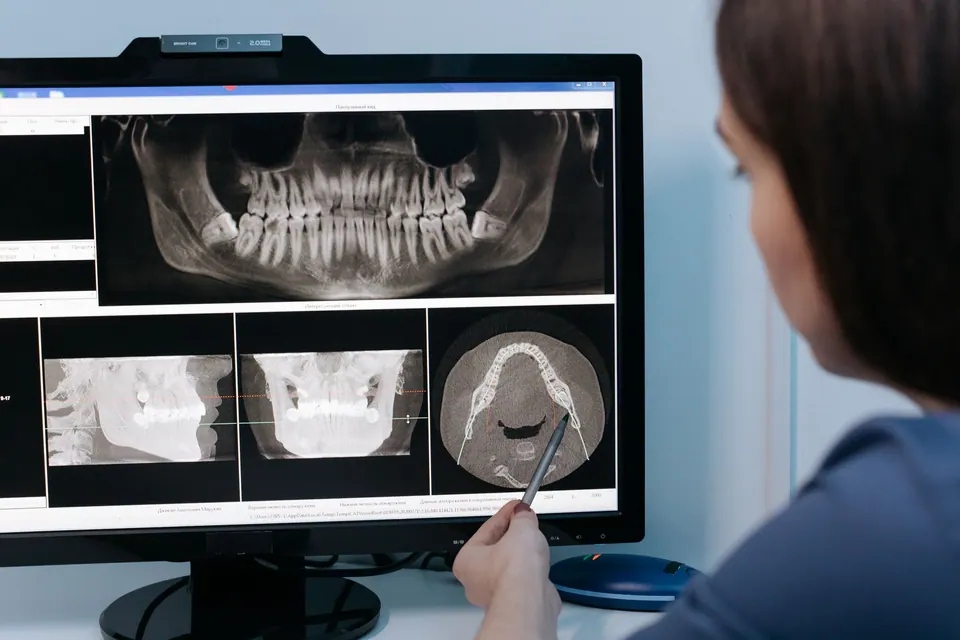
In every case, the diagnosis is based on examination and X-rays, and the alternatives are explained to you before any decision is made.
Before the extraction: what the dentist needs to know
An extraction is a surgical procedure, even when it looks simple. Your medical questionnaire therefore really matters. Remember to mention:
- medication that thins the blood (anticoagulants, antiplatelet drugs such as aspirin): never stop these on your own, any adjustment is decided with your doctor;
- treatment for osteoporosis or certain cancer treatments, which affect how bone heals;
- heart disease, particularly an artificial valve, which may require antibiotic cover;
- diabetes, pregnancy or known allergies.
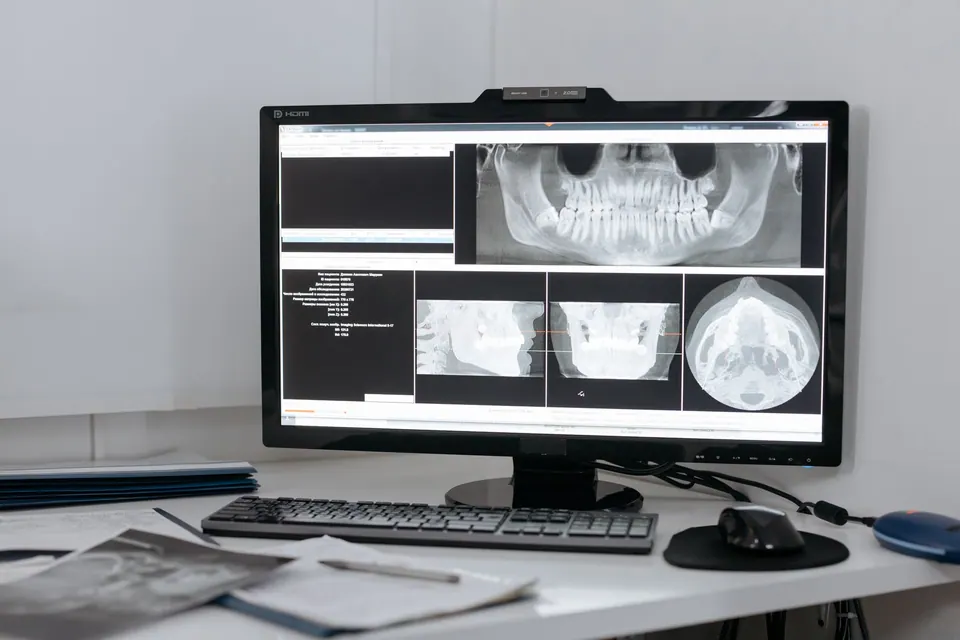
An X-ray, either periapical or panoramic, shows the shape and number of roots, their curvature and their relationship to the sinus or the nerve of the lower jaw. It helps anticipate how difficult the procedure will be. If there is a large abscess, treatment is sometimes prescribed first to calm the infection before operating.
Simple or surgical extraction
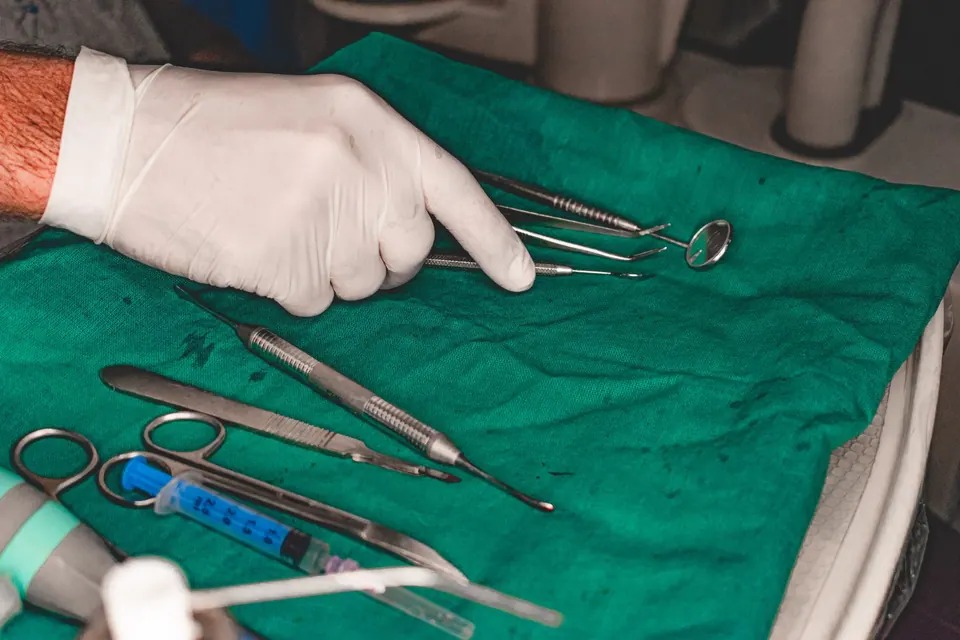
After careful local anaesthesia, given time to take full effect, the dentist releases the tooth from its attachments and gradually eases it out of its socket. You feel pressure, sometimes strong, but no pain. For a clearly visible tooth with a straight root, this is usually quick.
An extraction is called surgical when the gum needs to be opened, a little bone removed or the tooth divided into several pieces. This applies to teeth broken off at gum level, molars with spread or curved roots, and roots left behind after an old extraction. Separating the roots often allows them to be removed one by one, taking away far less bone than removing the tooth in one piece.
This minimally traumatic approach, taught in European schools of oral surgery, takes time and method. It protects the walls of the socket and helps healing. The wound is then cleaned and, if needed, closed with a few stitches.
Preserving the bone to replace the tooth
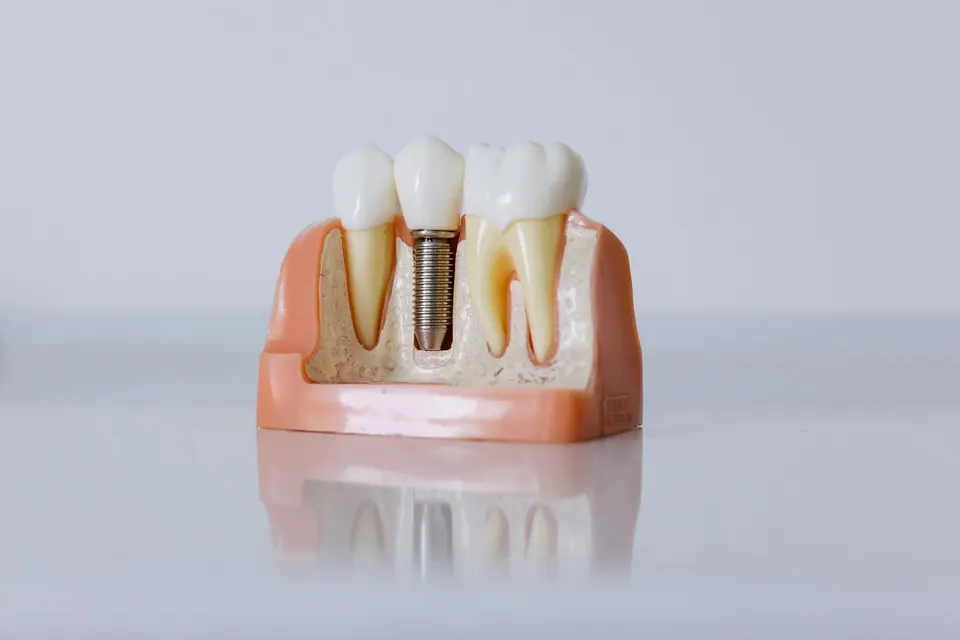
An extracted tooth leaves a gap that the bone tends to fill by shrinking. If a dental implant is being considered, the way the tooth is removed and what is done with the socket straight afterwards matter a great deal.
Depending on the situation, several options can be discussed: letting the area heal naturally and placing the implant a few months later, filling the socket with a bone substitute to limit bone loss (known as socket preservation, a procedure close to a bone graft), or, in some favourable cases, placing the implant during the same appointment.
In a visible area, appearance during healing also matters. A temporary tooth can be planned so that you are not left with a gap in your smile. It is therefore useful to talk about the replacement before the extraction, not after.
After the extraction: what to do
A blood clot forms in the socket: it is what allows healing, and almost all the instructions are aimed at protecting it.
- Bite on the gauze for the time indicated, without changing it constantly.
- On the first day, do not rinse your mouth, spit or drink through a straw.
- Avoid smoking for as long as possible, ideally several days.
- Apply cold to the cheek for short periods.
- Eat lukewarm, soft food on the other side, and avoid alcohol.
- Resume brushing from the next day, gently near the wound, then use mouthwash if prescribed.
- Keep your head slightly raised when sleeping on the first night.
Take your medication as prescribed. Moderate discomfort during the first two or three days is normal and then gradually eases.
Possible complications and warning signs
The vast majority of extractions heal without any problem. Some complications do exist, however, and you should know about them.
Dry socket occurs when the clot breaks down too early. It shows up a few days after the extraction as intense pain radiating towards the ear, often with bad breath. It is more common in smokers and after removal of lower molars. It is treated at the practice by cleaning the socket and applying a local dressing.
Bleeding that continues despite firm pressure for around thirty minutes, swelling that increases after the third day, fever, or difficulty swallowing or opening your mouth should lead you to seek care quickly. If this happens outside your follow-up appointment, the dental emergency in Rabat page explains how to reach us.
After removal of an upper molar, an opening into the sinus is possible; in that case avoid blowing your nose hard, and the dentist will give you specific instructions.
How it works
- Examination and X-rayAssessment of the tooth, review of tooth-saving alternatives and analysis of the roots on X-ray.
- Medical reviewReview of current medication and medical history, with any adjustment made in liaison with your doctor.
- Local anaesthesiaThe area is numbed, allowing the time needed for full effect.
- ExtractionThe tooth is removed while sparing the bone, with the roots separated if needed and stitches where necessary.
- Instructions and follow-upWritten aftercare instructions, appropriate prescription and a healing check if needed.
Frequently asked questions
Does having a tooth out hurt?
Thanks to local anaesthesia, the extraction itself does not hurt: you feel pressure, sometimes cracking sounds, but no sharp pain. If you feel pain during the procedure, say so and the anaesthesia can be topped up. Afterwards, moderate discomfort is usual for a few days and is generally well relieved by the prescribed painkillers.
Can an infected tooth or an abscess be extracted?
Often yes; removing the tooth actually eliminates the source of infection. But when the abscess is large, with significant swelling, the anaesthetic works less well and treatment may be prescribed for a few days beforehand. The dentist decides case by case. Swelling spreading towards the eye or neck needs urgent care.
How soon after an extraction can I eat?
You can eat once the anaesthetic has worn off, to avoid biting your cheek or tongue without realising. For the first few days, choose lukewarm, soft food and chew on the other side. Avoid very hot, spicy or crunchy dishes, or food with small grains that could lodge in the socket. Return to a normal diet gradually.
Should an extracted tooth be replaced?
In most cases yes, except for wisdom teeth. A gap can cause neighbouring teeth to shift, upset the balance of chewing and lead to gradual bone loss. An implant, a bridge or a removable denture are options to discuss, ideally before the extraction, so that the area can be prepared as well as possible.
I take a blood thinner: can I have a tooth extracted?
Yes, in the great majority of cases, but you must not stop this treatment on your own. Let us know when you book and bring your prescriptions. Depending on the medication, local precautions, measures to control bleeding and sometimes advice from your doctor or cardiologist make it possible to carry out the extraction safely.
What is dry socket and how can I avoid it?
It is a painful inflammation of the socket that occurs when the blood clot disappears too early, usually two to four days after the extraction. To avoid it, do not smoke, rinse or spit on the first day, and follow the hygiene instructions. If strong pain appears after an initial improvement, come and see us: local treatment brings quick relief.
The information on this page is general. Only a consultation allows a diagnosis and a suitable treatment plan. Updated on 14 October 2026.