Why bone disappears after a tooth is lost
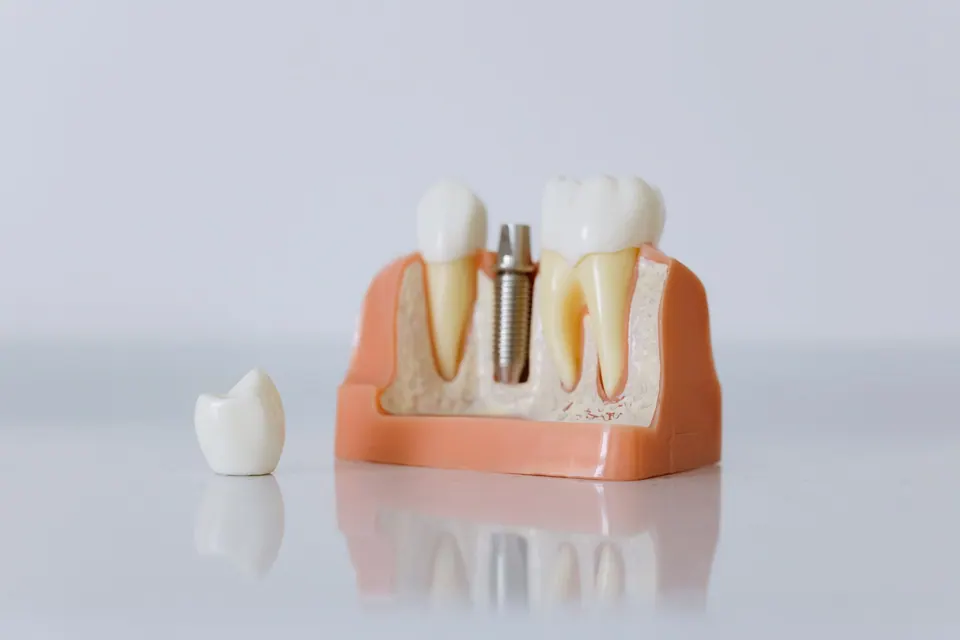
The jawbone surrounding the roots, called the alveolar bone, exists to support the teeth. When a tooth is extracted or lost, this bone is no longer stimulated by chewing and begins to shrink. The process is often most marked in the first few months, then continues slowly over the years, in height and above all in width.
Other factors can accelerate this loss:
- a long-standing infection around the root;
- gum disease that has destroyed the bone around the teeth;
- a difficult or traumatic extraction;
- long-term wear of a removable denture pressing on the ridge;
- in the upper jaw, enlargement of the sinus above missing molars.
As a result, when an implant is being considered, the available bone is sometimes too thin or too low to receive it in good conditions.
When a graft becomes necessary
A dental implant must be completely surrounded by bone, with sufficient thickness on each side to remain stable and protect the gum over time. When this is not the case, several options are discussed: choosing an implant of suitable size, changing its position, or rebuilding the bone.
A bone graft is proposed when there is a significant lack of volume, or when an implant placed in the existing bone would be poorly positioned for the future tooth. This last point matters: a poorly angled implant can be stable yet difficult to restore attractively and to clean.
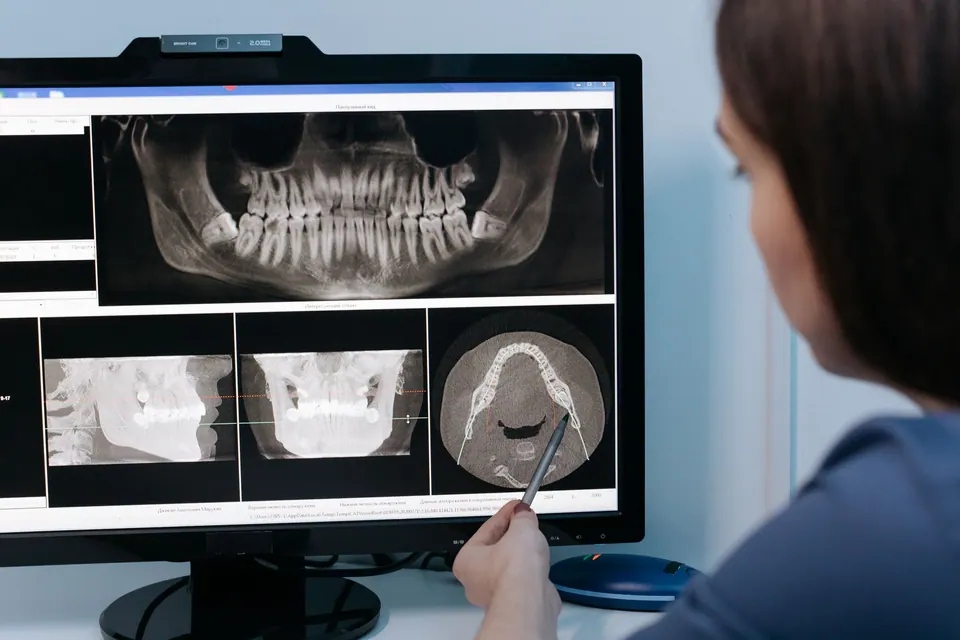
The assessment is based on a clinical examination and three-dimensional imaging, which precisely measures the height and width of available bone and identifies structures to be protected, such as the nerve in the lower jaw or the sinus.
The main reconstruction techniques
There is not just one bone graft, but several techniques chosen according to the area and the size of the defect:
- Socket preservation: at the time of extraction, a filling material is placed in the socket to limit bone loss. This is a preventive approach.
- Guided bone regeneration: graft material, often covered with a membrane, is placed against the existing bone to increase its volume, sometimes at the same time as the implant.
- Sinus lift: in the upper jaw, the sinus membrane is gently lifted so that graft material can be placed beneath it to gain height.
- Block grafts or bone shell techniques: for larger defects, a piece of bone, often taken from the patient's own mouth in another area, is fixed in place to rebuild the ridge.
The material may come from the patient (autogenous bone), be of treated animal or human origin, or be synthetic. The dentist explains the reasons for the choice.
How the procedure is carried out
Most bone grafts in the mouth are carried out in the practice under local anaesthetic. Once the area is numb, the gum is opened to access the bone, the material is placed, and the gum is closed with stitches.
Depending on the situation, the implant can be placed:
- at the same time as the graft, when the remaining bone allows it to be stabilised;
- at a later stage, after a healing period of several months, when the reconstruction is more extensive.
Guided surgery, when indicated, helps place the implant in the position planned on the imaging. Dr Fenjero Walid has undertaken training with leading European figures in oral surgery and cosmetic dentistry.
After the graft: recovery and precautions
Recovery after a bone graft resembles that of a slightly larger extraction: swelling for a few days, sometimes bruising, and discomfort controlled by the prescribed medication.
A few instructions help healing go well:
- apply something cold to the cheek in the first few hours;
- avoid chewing on the area and touching the wound with your tongue or fingers;
- do not smoke, as tobacco is a major cause of graft failure;
- after a sinus lift, avoid blowing your nose hard and sneezing with your mouth closed for the period indicated;
- use the mouthwash as instructed and keep your follow-up appointments;
- do not wear a removable denture that presses on the area without the dentist's approval.
Swelling that increases after a few days, fever or discharge mean you should contact the practice without delay.
Can a graft be avoided?
In some cases, yes. The best prevention is to plan ahead at the time of tooth extraction: a gentle extraction and, if an implant is being considered, socket preservation limit bone loss. The earlier the replacement of the tooth is planned, the less extensive any reconstruction is likely to be.
Depending on the situation, there are also alternatives: shorter or narrower implants where reasonable, angled placement, or prosthetic solutions without implants such as a bridge. Each of these options has its indications and limits, which the dentist explains during the assessment.
Finally, some patients are not good candidates for a graft, because of their general health or heavy smoking. The decision is always made case by case.
A thorough assessment before any decision
Hearing the word graft can be worrying. In practice, it is a common step in implant dentistry that creates a solid base for the implant and a natural-looking tooth. What matters most is understanding why it is being proposed in your case, what it involves and the overall treatment timeline.
At German Dental Clinic in Agdal, the implant assessment includes an examination, imaging and a detailed explanation of the options. If you live in Rabat and have been told you lack bone, you can book an appointment for an opinion.
Frequently asked questions
Is a bone graft painful?
It is carried out under local anaesthetic, which generally makes the procedure comfortable. In the following days, swelling and discomfort are common, more so when bone is taken from another area of the mouth. The prescribed treatment usually keeps them well under control.
How long do I have to wait before the implant is placed?
It depends on the technique and the volume rebuilt. When the implant cannot be placed at the same time, a healing period of several months is generally needed. The dentist will give you a suitable timeline after the examination.
Where does the bone used for the graft come from?
It may come from the patient, taken from another area of the mouth, or be a bone substitute of animal origin, treated human origin or synthetic. The choice depends on the defect to be corrected and is explained to you before the procedure.
Can smokers have a bone graft?
Smoking significantly increases the risk of failure and complications. Stopping is strongly advised, at least around the time of the procedure and during healing. The dentist will assess with you whether a graft remains reasonable in your situation.
The information on this page is general. Only a consultation allows a diagnosis and a suitable treatment plan.