What is dental CAD/CAM?
CAD/CAM links three tools:
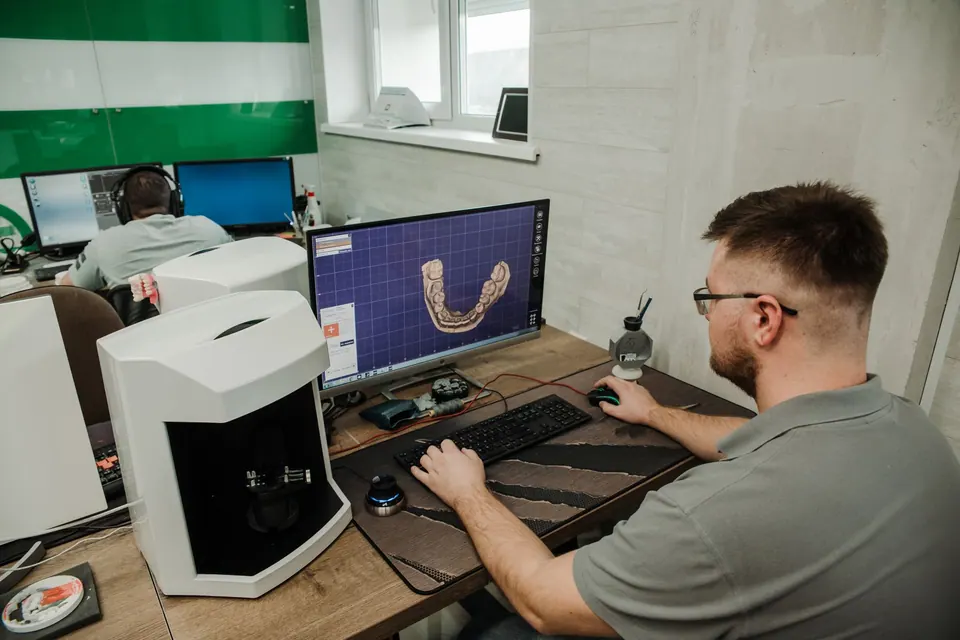
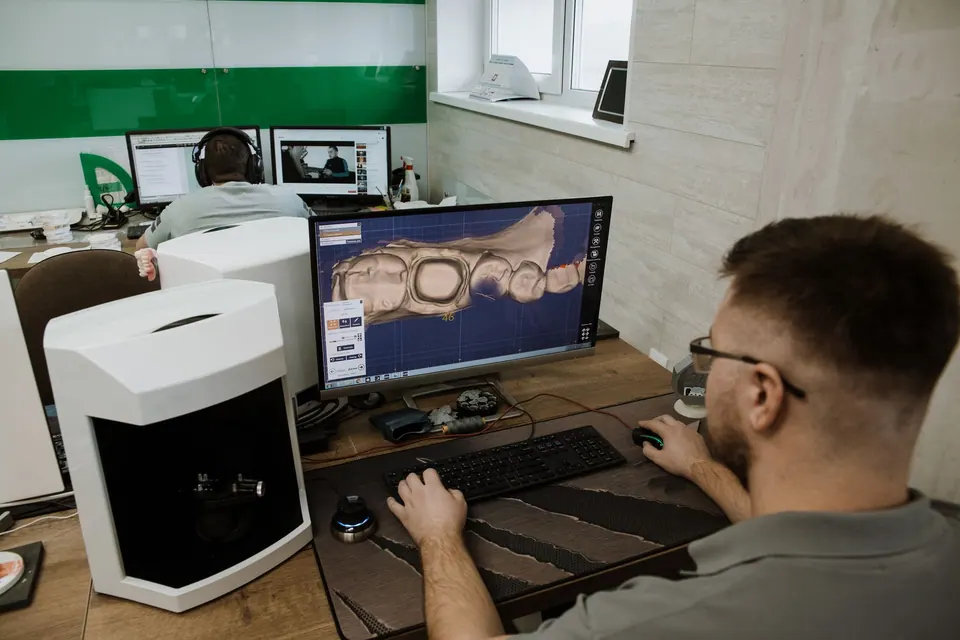
- The digital impression, taken with the intraoral scanner, which records the prepared tooth, its neighbours and the opposing teeth in 3D.
- The design software, in which the dentist draws the restoration: shape, contact points with neighbouring teeth, the contours of the chewing surface, material thickness.
- The milling unit, a compact machine that carves the piece out of a block of material with very fine burs, following the design file exactly.
The milled piece is then finished by hand: adjustments, shade characterisation if needed, firing or polishing depending on the material, then a try-in in the mouth.
Which restorations can be made on site?
The practice's milling unit is suited to single-tooth restorations, including:
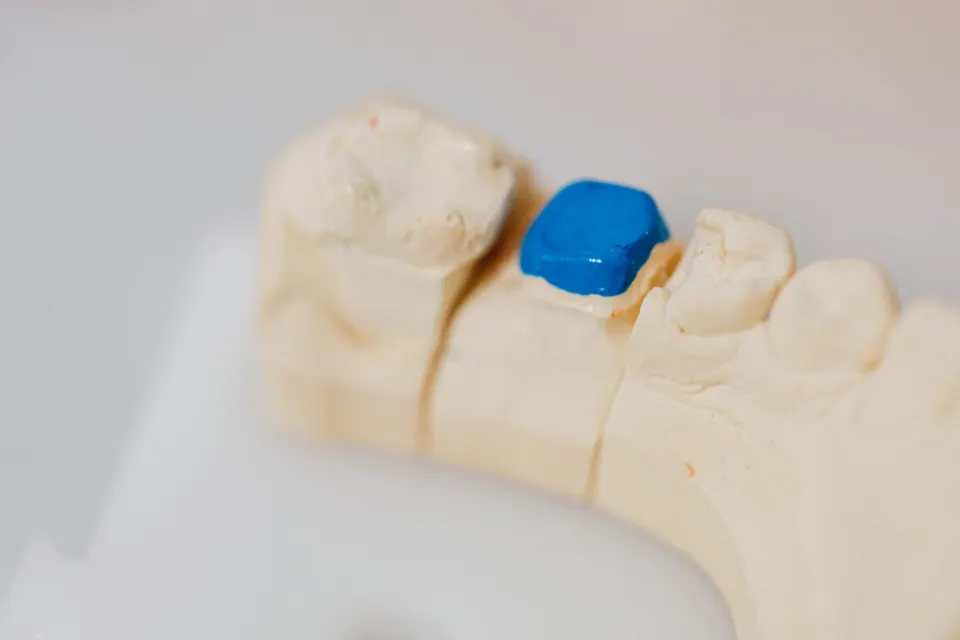
- inlays and onlays, bonded pieces that rebuild part of a tooth after extensive decay or when an old filling is replaced;
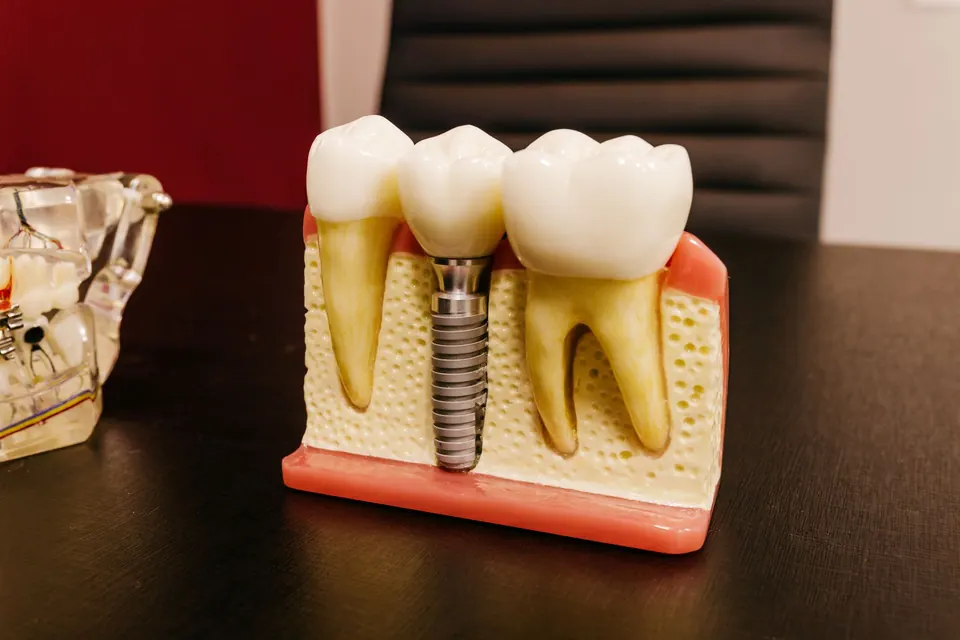
- single dental crowns, for example on a weakened or root-treated tooth;
- some long-term temporary restorations, useful during treatment in several stages.
More extensive work, such as long-span bridges, certain implant prostheses or dental veneers with high aesthetic demands, may be entrusted to a partner dental laboratory. The choice between making a piece at the practice or in the laboratory is made case by case, in the interest of the result.
The materials used
Millable blocks come in several families: glass ceramics, reinforced ceramics, high-performance composite resins or zirconia, depending on the system. Each has its strengths: glass ceramics offer attractive translucency for visible areas, while other materials favour strength for molars.
The dentist chooses the material according to the tooth, the available thickness, your habits (clenching, grinding) and the desired appearance. These materials are biocompatible and contain no visible metal, which avoids the grey line sometimes seen at the edge of older porcelain-fused-to-metal crowns.
How does a CAD/CAM restoration work in practice?
The typical path for a crown or onlay milled at the practice is as follows: the tooth is prepared under local anaesthesia, the impression is taken with the scanner, then the restoration is designed on screen. You can see the design before it is made. The piece is then milled, finished, tried in, and bonded or cemented. The bite is adjusted last.
When the situation allows, everything can be done in a single appointment, longer than a standard treatment, which avoids a temporary crown and a second anaesthetic. This is not always possible: bleeding gums, a complex preparation or a material that needs a long firing cycle may mean planning a second session.
Advantages and limitations
The main advantages for patients are practical: fewer appointments in many cases, no putty impression, no temporary crown that might come loose, and a restoration designed precisely from your impression.
Another, less well-known benefit: the digital file of the restoration remains archived in your records. If the piece were ever to fracture, it could, depending on the situation, be remade from that file without starting from scratch. The dentist can also compare the designed shape with the wear observed at later check-ups.
CAD/CAM is not suitable for every situation. Full-mouth rehabilitations, very particular shades or certain materials still call for the skill of a dental technician in the laboratory. A milled restoration, like any prosthesis, then needs good hygiene and regular check-ups.
To find out whether your tooth can be restored with CAD/CAM, book an appointment at Dr Fenjero Walid's practice in Agdal, Rabat.
How it works
- DiagnosisExamination and X-ray determine the type of restoration suited to the tooth.
- Preparing the toothUnder local anaesthesia, the tooth is shaped to receive the restoration.
- Digital impressionThe intraoral scanner records the prepared tooth and the bite.
- On-screen designThe restoration is designed in software, based on the shape of your teeth.
- Milling and finishingThe milling unit carves the piece, which is then finished and adjusted.
- Fitting and adjustmentThe piece is bonded or cemented, then the bite is checked.
Frequently asked questions
Is a crown milled at the practice as strong as a laboratory crown?
Strength depends mainly on the material chosen, the thickness of the piece and the quality of the bonding, not on where it is made. Millable blocks are industrially produced with a uniform structure. For each tooth, the dentist chooses between in-house and laboratory fabrication according to what gives the best result in your situation.
Can I really have a crown in a single visit?
It is possible in many cases of single crowns or onlays, provided the preparation, the gum and the material allow it. The appointment is then longer. If a second session is preferable, for example for firing or an aesthetic adjustment, the dentist will tell you at the planning stage.
What is the difference between an inlay, an onlay and a crown?
An inlay fills a cavity inside the tooth without covering the cusps (the raised points). An onlay covers one or more weakened cusps. A crown covers the entire visible part of the tooth. The more partial the restoration, the more healthy tissue it preserves: the most conservative option possible is chosen.
Will the restoration match the shade of my teeth?
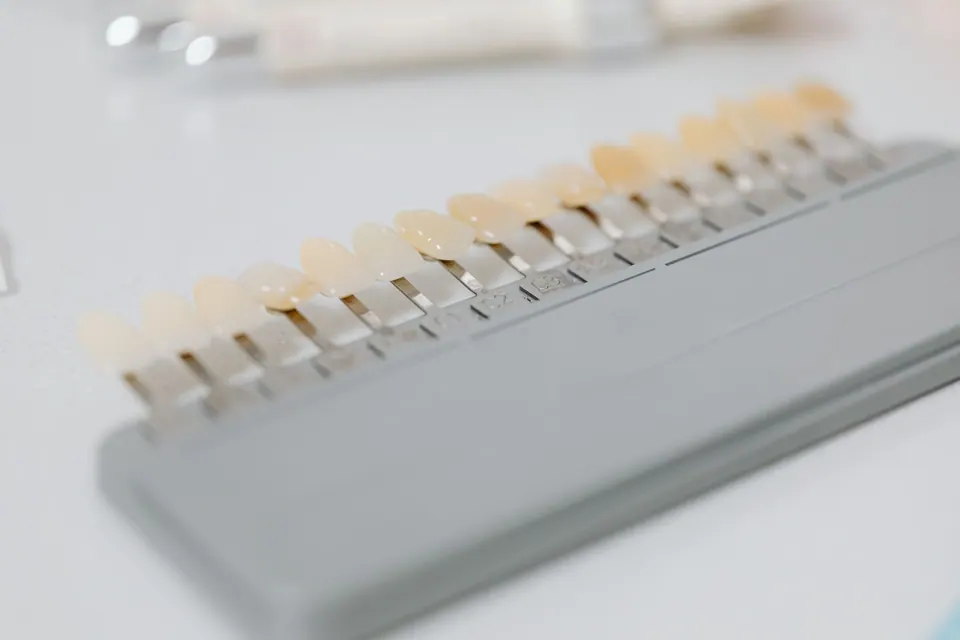
Blocks come in several shades and levels of translucency, and the piece can be characterised before firing or polishing. On a molar, the result is generally very discreet. For a front tooth with high aesthetic demands, fabrication by a dental technician may be suggested to refine the nuances.
Can a CAD/CAM restoration come loose or break?
Like any restoration, it can fracture or come loose, particularly after a knock, with teeth grinding or if decay develops at its edge. A night guard may be recommended if you clench your teeth. Good hygiene and regular check-ups help spot any problem early.
The information on this page is general. Only a consultation allows a diagnosis and a suitable treatment plan. Updated on 14 October 2026.