The nerve of the tooth: what happens when it is affected
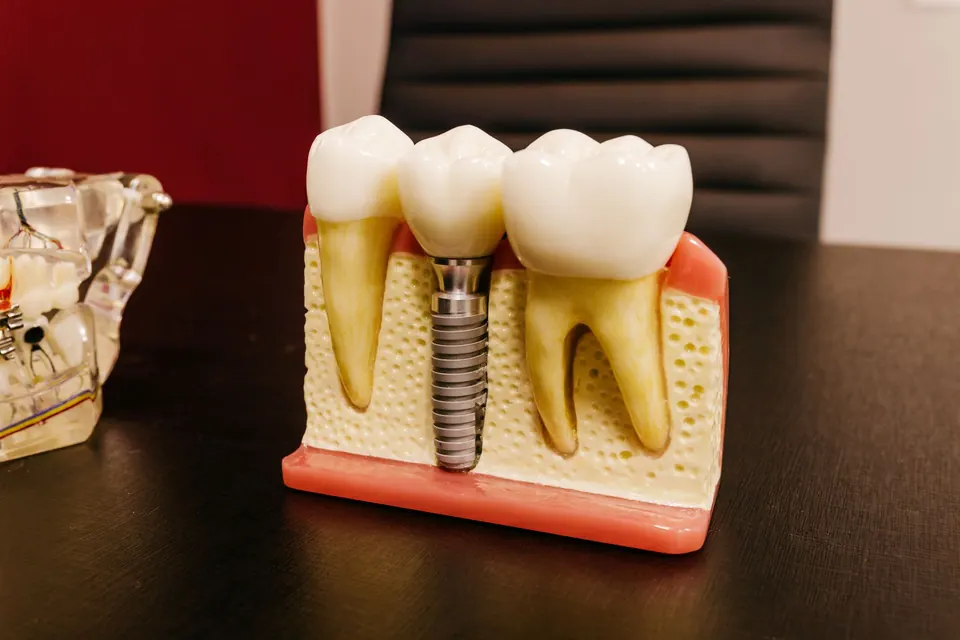
At the centre of every tooth lies the pulp, a living tissue made of nerves and blood vessels, housed in the pulp chamber and then in one or more canals that run down to the tips of the roots. This is what is commonly called the nerve.
When bacteria reach the pulp, most often through deep decay, the pulp becomes inflamed. Enclosed within rigid walls, it cannot swell: that is what makes toothache so intense. Beyond a certain point, the inflammation becomes irreversible. The pulp then eventually dies, sometimes without pain, and the infection can escape through the tip of the root and form an abscess in the bone.
Root canal treatment consists of removing this diseased tissue, cleaning the inside of the tooth and sealing it tightly, to eliminate the source of infection while keeping the tooth.
When is root canal treatment needed?
It is generally recommended in the following situations:
- irreversible pulpitis: spontaneous, throbbing pain that lingers long after hot or cold, often worse at night or when lying down;
- pulp necrosis: the tooth no longer responds to tests, may change colour, and a lesion sometimes shows at the tip of the root on the X-ray;
- dental abscess: swelling of the gum or cheek, pain when chewing, a small pus-filled spot on the gum;
- trauma: a fractured tooth with the nerve exposed, or an old knock that has killed the nerve;
- prosthetic reasons: in some cases, before placing a crown on a very damaged tooth.
A tooth that is sensitive to cold does not necessarily need root canal treatment: simple sensitivity that stops as soon as the cold is gone often calls for standard treatment of decay. The examination makes the difference.
Diagnosis before treatment
The dentist starts by listening to how you describe the pain, which says a great deal about the diagnosis. Simple tests follow: reaction to cold, sensitivity to tapping and pressure, and examination of the gum.
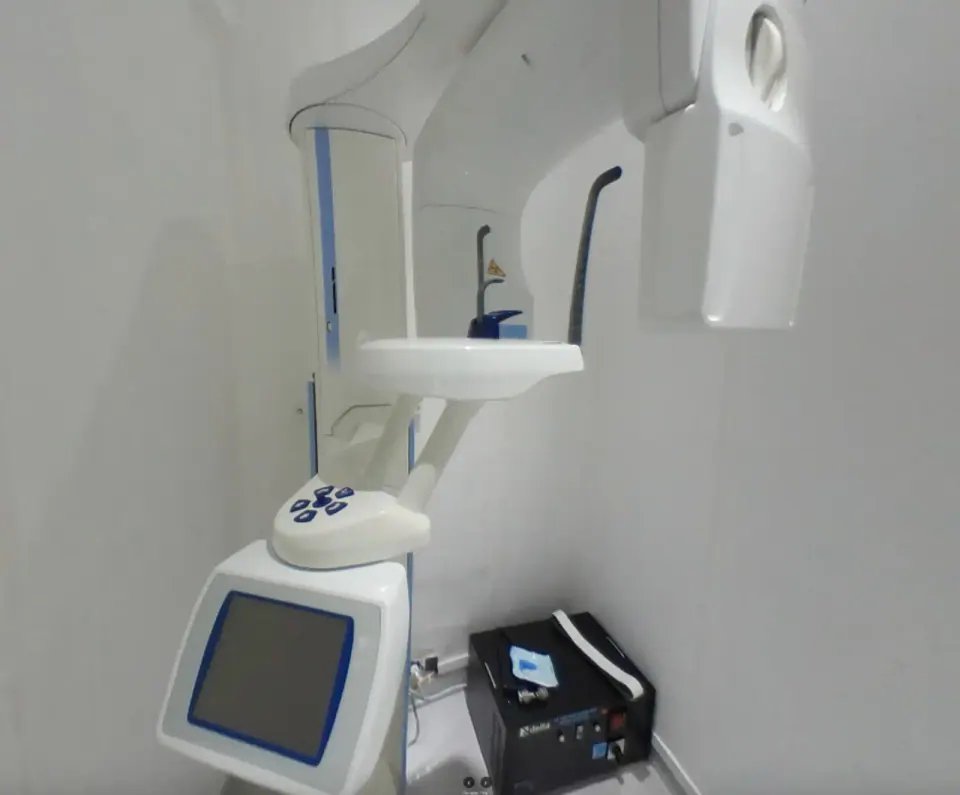
A digital X-ray is essential: it shows the depth of the decay, the shape and number of roots, the curvature of the canals and any bone lesion. A panoramic X-ray sometimes completes the assessment, for example to see the tooth in its surroundings or look for other problem areas.
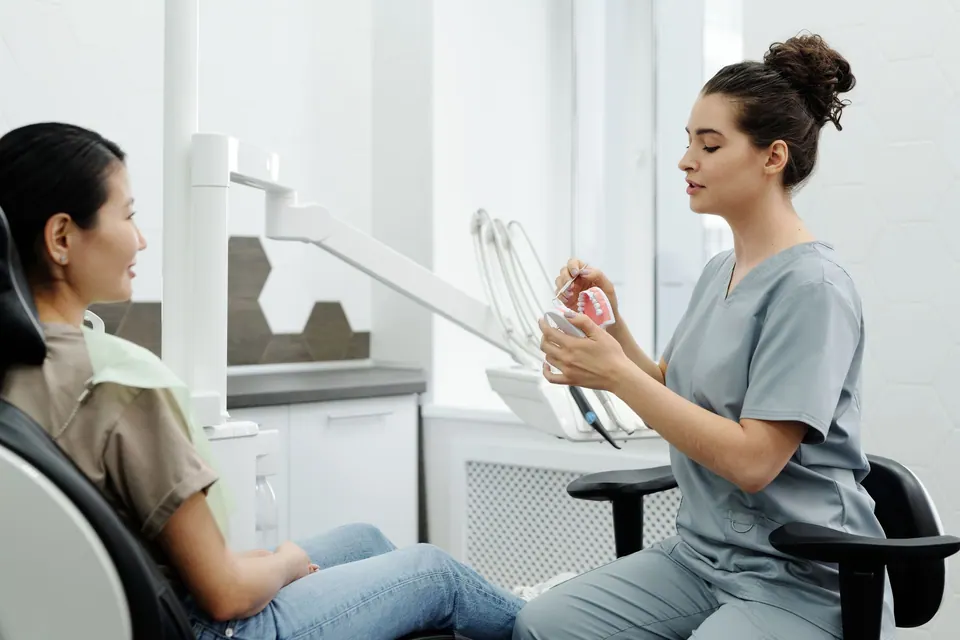
This assessment also answers a key question: can the tooth be saved? A vertically fractured root, very advanced bone loss or a tooth too damaged to be rebuilt may lead to discussing other options, such as tooth extraction followed by a replacement.
What happens during root canal treatment?
Treatment is carried out under local anaesthesia. A very inflamed tooth is sometimes harder to numb; the dentist can then top up the anaesthetic so that the treatment remains comfortable.
- Isolating the tooth, ideally with a rubber dam (a small flexible sheet that protects the tooth from saliva and prevents you from swallowing any products).
- Opening the crown to reach the pulp chamber, and removing the decayed tissue.
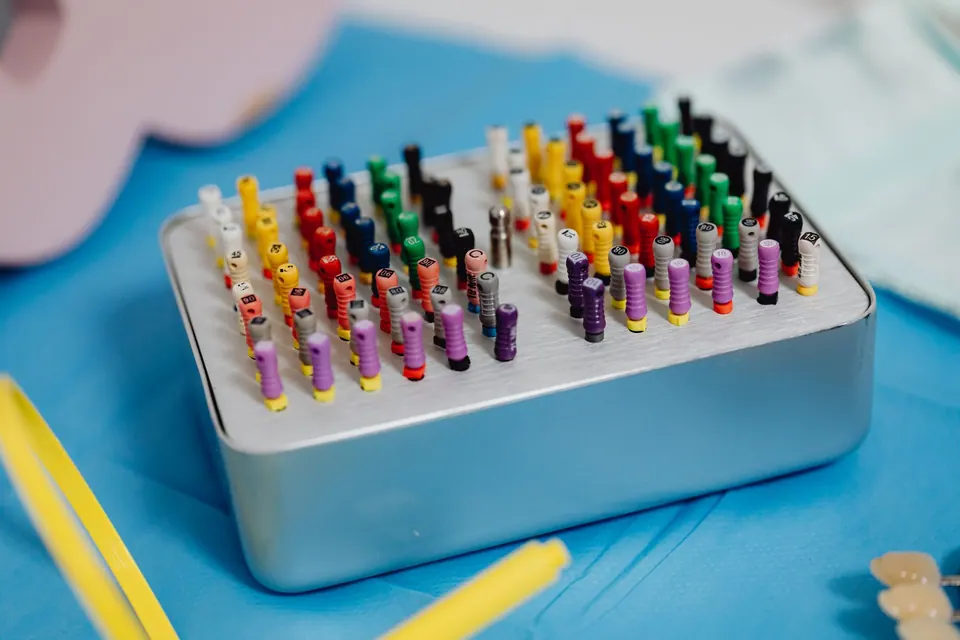
- Shaping and cleaning the canals with fine files, with generous irrigation using disinfecting solutions.
- Measuring the length of each canal, in order to work right to the end of the root without going beyond it.
- Filling the canals with a material that seals them along their whole length.
- Temporary or permanent closure of the tooth, followed by a check X-ray.
Depending on the number of canals and the extent of the infection, treatment is done in one or more appointments. Between appointments, a disinfecting dressing may be left inside the tooth.
Rebuilding the tooth after root canal treatment
A root-treated tooth no longer has a nerve, but it remains firmly anchored in the bone. However, it has often lost a lot of structure (decay, access opening) and becomes more brittle, especially if it is a premolar or molar.
To protect it, a suitable restoration is usually needed:
- a composite build-up when the loss of structure is limited;
- a bonded onlay or overlay, which covers the fragile cusps;
- a dental crown, possibly with a post in a canal, when the tooth is very damaged.
Do not delay this step: a root-treated tooth left without a permanent restoration can fracture or become reinfected through leakage. Thanks to the practice's digital impressions and CAD/CAM milling, some of these restorations can be designed and milled on site.
After treatment: what is normal and what is not
After the appointment, the tooth and gum may be tender when chewing for a few days: this is a common reaction of the tissues around the root. A standard painkiller is usually enough, following the advice given at the practice. Chew on the other side until the permanent restoration is in place.
Contact the practice again if you notice:
- swelling that appears or increases;
- pain that gets worse instead of better;
- a fever;
- loss of the temporary filling.
The tooth will be checked by X-ray at your following visits, to make sure the bone around the root is healing. A root-treated tooth can also darken over time; cosmetic solutions exist if this happens.
Is pain waking you at night, or is a previously treated tooth still bothering you? The earlier an infection is dealt with, the better the chances of keeping the tooth. Book an appointment at the practice in Agdal, Rabat, for a precise assessment and a clear explanation of your options.
How it works
- Assessing the painDescription of symptoms, cold and tapping tests, examination of the gum.
- X-rayAnalysis of the roots, canals and bone to confirm the need for treatment and check the tooth can be saved.
- Anaesthesia and isolationThe tooth is numbed and then isolated from saliva.
- Cleaning the canalsThe nerve is removed and the canals are shaped and disinfected along their whole length.
- Filling and checkThe canals are sealed, the tooth is closed and a check X-ray is taken.
- Permanent restorationThe tooth is protected with a build-up, an onlay or a crown, depending on how strong it is.
Frequently asked questions
Does root canal treatment hurt?
The treatment itself is carried out under local anaesthesia and is generally no more uncomfortable than a filling. It is often the pain before treatment that is worst. A very inflamed tooth may need additional anaesthetic. After the appointment, tenderness when chewing is common for a few days, then fades.
Is it better to have a root canal or to have the tooth taken out?
When the tooth can be saved, root canal treatment keeps its natural root, its bone and its place in the dental arch. An extraction leaves a gap that often needs filling with an implant or a bridge. If the tooth cannot be saved (fractured root, significant bone loss), extraction is discussed. The decision is made with you after the assessment.
Can antibiotics replace root canal treatment?
No. Antibiotics may be prescribed in certain situations, for example when an infection is spreading or there is a fever, but they do not remove the infected nerve. Without treatment of the tooth, the infection usually returns as soon as the medication stops. Do not take antibiotics without medical advice.
Can a root-treated tooth still hurt?
It no longer has a nerve inside, but the tissues around the root remain sensitive. Temporary discomfort after treatment is common. Persistent pain, swelling or a lesion visible on the X-ray may point to residual infection; retreatment of the canal or another solution is then discussed.
Why do I need a crown after root canal treatment?
Not always, but often for molars and premolars. These teeth, already weakened by decay and the access opening, take strong chewing forces and are at risk of splitting. A crown or onlay protects them. For a front tooth with little damage, a simple build-up may be enough.
Can a baby tooth have root canal treatment?
For a baby tooth, a specific pulp treatment is usually carried out, different from adult root canal treatment, so that the tooth can be kept until it falls out naturally. Whether it is appropriate depends on the child's age and the condition of the tooth. See our children's dentist page to learn more about paediatric care.
The information on this page is general. Only a consultation allows a diagnosis and a suitable treatment plan. Updated on 14 October 2026.