Chipped, broken or cracked: what is the difference?
Not all broken teeth are alike, and how serious it is depends mainly on how deep the fracture goes:
- A chip of enamel: a small piece of the tooth's edge is missing. It is often painless, but the edge may feel sharp against the tongue.
- A fracture into the dentine: the softer layer beneath the enamel is exposed and the tooth becomes sensitive to cold, heat or air.
- A fracture exposing the pulp: the living part of the tooth, with its nerve and blood vessels, is laid bare. You may see a pink or red spot, and the tooth can be very painful.
- A crack: the tooth looks intact, but a fracture line runs through it. It often causes a sharp, brief pain when biting, or when releasing the bite.
- A root fracture below the gum, which can only be detected through examination and an X-ray.
The most common causes are injuries (falls, sport, accidents), biting on hard foods (olive stones, bones, ice), decay or a large filling that weakens the tooth, and teeth grinding.
First steps after the break
If you have just broken a tooth, a few simple steps help limit the damage until you are seen:
- Rinse your mouth with warm water.
- Keep the broken piece if you find it, in a small container with milk or saliva: it can sometimes be bonded back.
- If there is bleeding, press a clean gauze pad on the area for about ten minutes.
- If there is swelling, apply something cold to the outside of the cheek, for short periods.
- If an edge is sharp, cover it temporarily with sugar-free chewing gum or dental wax from a pharmacy to protect your tongue and cheek.
- Avoid chewing on that side and choose soft, lukewarm foods.
- For pain, an over-the-counter painkiller can be taken, following the leaflet and taking your own contraindications into account.
After a blow to the face, check for other injuries. Loss of consciousness, vomiting, heavy bleeding or a jaw that no longer closes properly need a hospital emergency department.
Knocked-out tooth: act within minutes
When an adult tooth has come completely out of its socket after an injury, every minute counts: the chances of saving it are better if it is put back very quickly.
- Hold the tooth by the crown, the white part you normally see, never by the root.
- If it is dirty, rinse it briefly with water, without scrubbing, without soap and without drying it.
- If you can, push it back into its socket and hold it in place by biting gently on a clean gauze pad or handkerchief.
- If that is not possible, keep it in milk, or in the mouth next to the cheek (never for a young child, who might swallow it). Tap water is not recommended for storing it.
- See a dentist immediately, ideally within half an hour.
Important: a knocked-out baby tooth should not be put back, as this could damage the adult tooth developing underneath. Still see a dentist to check that nothing else has been injured. To find out how to be seen quickly, see our page on emergency dental care in Rabat.
Pain and sensitivity: what do they mean?
Pain does not always reflect how serious a fracture is, but it does give useful clues:
- Sensitivity to cold or air often points to exposed dentine.
- Sharp pain that comes on by itself, or that lingers after cold or heat, may mean the pulp is affected.
- Brief pain when biting, especially on release, is typical of a cracked tooth.
- A tooth that is tender to touch or a swollen gum a few days after an injury may signal inflammation or infection.
On the other hand, no pain is not necessarily reassuring. After an injury, a tooth's nerve can be damaged silently and die weeks or months later; the tooth may then darken. That is why a check-up is still advisable, even for a small chip.
What your dentist may suggest
After a clinical examination and, in most cases, an X-ray, the dentist chooses the treatment according to the extent of the fracture and the condition of the nerve:
- Simple smoothing of the edges for a very small chip.
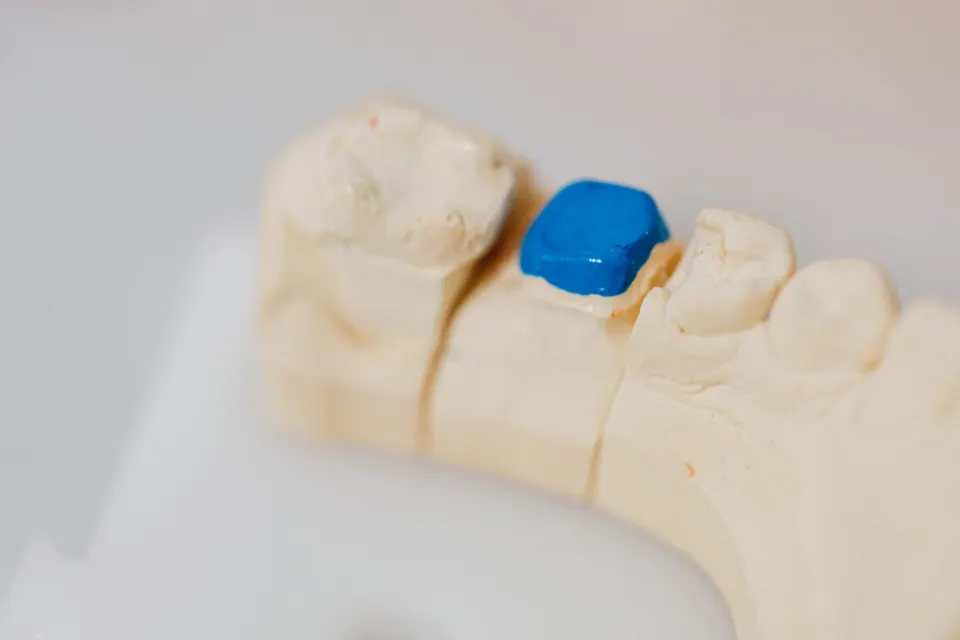
- A tooth-coloured composite resin restoration bonded to the tooth to rebuild the missing part. In some cases, the original fragment can be bonded back.
- A dental crown when a lot of tooth structure has been lost, or to hold a cracked tooth together and limit the spread of the crack.
- Root canal treatment when the pulp is exposed, infected or unable to recover, followed by rebuilding the tooth.
- A splint, a small wire or fibre bonded to the neighbouring teeth, to stabilise a tooth that has been displaced or put back.
- A tooth extraction when the tooth cannot be saved, for example with a vertical root fracture, followed by planning for its replacement.
The first appointment often focuses on relieving pain and protecting the tooth. Definitive treatment may then take one or more sessions.
After treatment: monitoring and prevention
A tooth that has suffered an injury should be monitored. Your dentist may suggest check-ups, with tests and X-rays, to make sure the nerve and root remain healthy. Report any change in the tooth's colour, new pain or a small spot on the gum without delay.
To reduce the risk of another fracture:
- wear a suitable mouthguard for contact sports or activities where falls are likely;
- avoid crunching ice, olive stones or hard objects, and do not use your teeth to open packaging;
- have decay treated early, as a heavily filled tooth breaks more easily;
- if you grind or clench your teeth, mention it: a night splint protects the enamel.
Getting seen quickly in Rabat
A broken tooth is not always an absolute emergency, but it should not wait for weeks: a crack can spread and an exposed pulp can become infected. If a tooth has been knocked out, or if you have severe pain or swelling, try to be seen the same day.
German Dental Clinic is located in Agdal, on the corner of avenue de France and avenue Ibn Sina. It is open Monday to Friday from 9 am to 7 pm and on Saturday from 10 am to 4 pm. Call the practice to describe what has happened: you will be told how soon to come in and what to do in the meantime.
Sources
Frequently asked questions
Does a chipped tooth that does not hurt need treatment?
It is a good idea to have it checked. A small chip can sometimes simply be smoothed, but a crack invisible to the naked eye may be present too, and the nerve may have been affected by the impact. The dentist will check and, if needed, suggest a discreet restoration.
Can I glue a piece of tooth back myself?
No. Household glues are toxic in the mouth and can make treatment more difficult. Keep the fragment in milk or saliva and bring it to the practice: the dentist will decide whether it can be bonded back with suitable materials.
Can a cracked tooth heal on its own?
No, a crack does not close up. It may stay stable for a while, but chewing can make it spread. Depending on how deep it is, the dentist may suggest a restoration, a crown to hold the tooth together, or other treatment if the pulp is affected.
What should I do if my child breaks a baby tooth?
Rinse, comfort your child and see a dentist promptly, even if the pain seems mild. The dentist checks the injured tooth, the gum and the adult tooth developing underneath. A knocked-out baby tooth should not be put back.
The information on this page is general. Only a consultation allows a diagnosis and a suitable treatment plan.