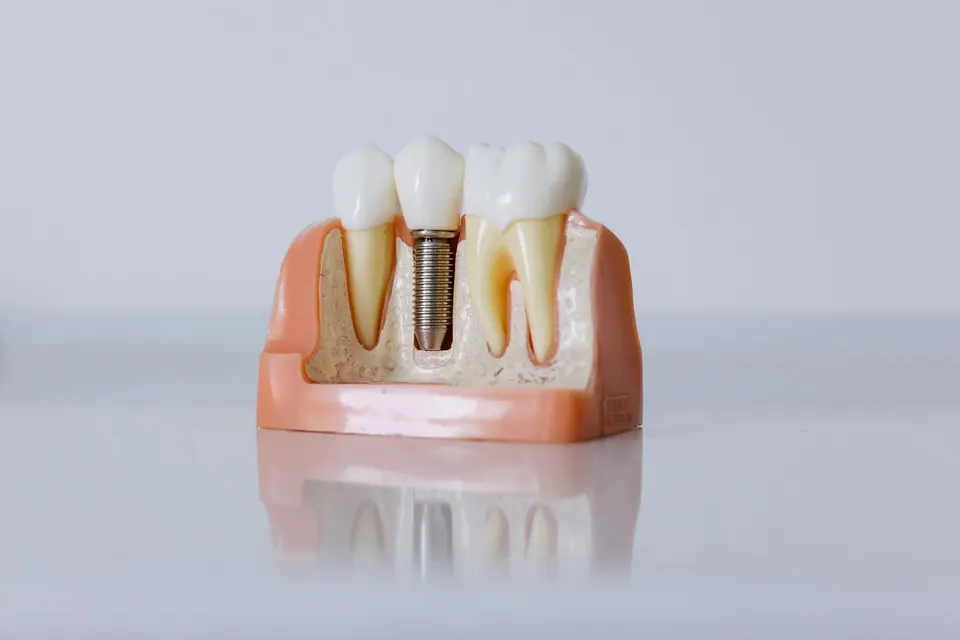
What is a dental implant?
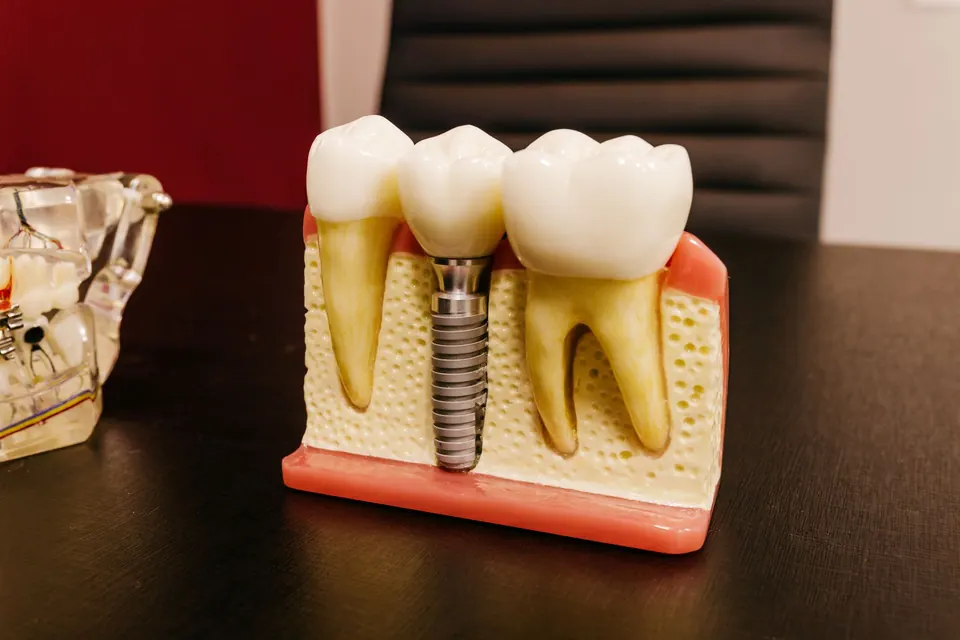
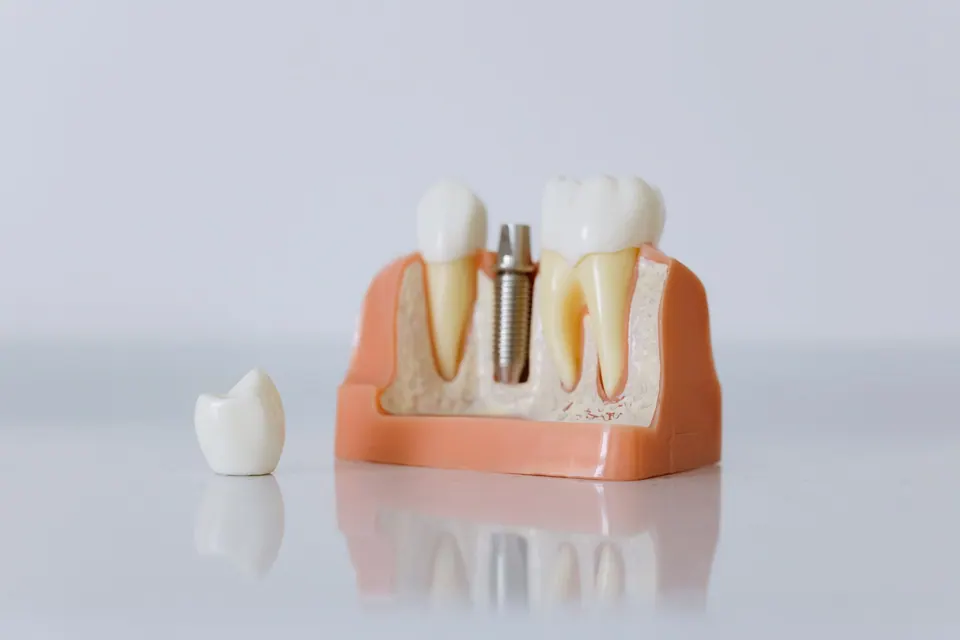
An implant is a small screw, usually made of titanium, placed in the jawbone where the root of the tooth used to be. Titanium is well tolerated by the body: bone grows against its surface and eventually holds it firmly in place. This process is called osseointegration.
Once the implant has integrated, a connecting piece called an abutment is screwed or cemented onto it, followed by a ceramic crown whose shade and shape are matched to the surrounding teeth. The whole unit behaves like a fixed tooth: you chew, speak and brush as normal.
Implants are not only used to replace a single tooth. Several implants can support a fixed bridge or stabilise a loose denture. The number of implants and the type of restoration depend on the amount of bone available, the position of your remaining teeth and your own priorities.
Who are dental implants suitable for?
Implants are an option for most adults who have lost one or more teeth, whether through deep decay, a fracture, an injury or gum disease. They are also worth discussing when a tooth that cannot be saved has to be removed: the implant can then be planned from the time of the extraction.
Some situations call for extra caution or for postponing treatment:
- poorly controlled diabetes, which slows healing;
- heavy smoking, which increases the risk of failure and of infection around the implant;
- certain treatments for osteoporosis or cancer, which you must always tell us about;
- radiotherapy to the head and neck;
- untreated gum disease, which needs to be stabilised before any implant is placed;
- in teenagers, jaws that have not finished growing.
This is why a medical questionnaire and, where needed, a conversation with your GP are part of the first consultation.
The initial assessment: seeing clearly before treatment
A well-placed implant is above all a well-planned implant. At your first appointment, Dr Fenjero Walid examines the area to be treated, the condition of your gums, your bite (the way your teeth meet) and your overall oral hygiene.
A panoramic X-ray gives an overview of both jaws. When the width and height of the bone need to be measured precisely, or when sensitive structures lie close by (the nerve in the lower jaw, the maxillary sinus), a three-dimensional cone beam scan is requested. A digital impression taken with the intraoral scanner completes the records, with no impression paste.
This information is used to choose the length and diameter of the implant, its angle and its position in relation to the future crown. Where appropriate, the clinic uses guided surgery: a guide made from the digital plan directs the drilling to within a millimetre. If there is not enough bone, a bone graft may be suggested before or during implant placement.
How an implant is placed at our Agdal clinic
The procedure is carried out under local anaesthetic at the clinic. You are awake but the area is numb: you feel pressure and vibration, not pain. For a single implant without a graft, the time in the chair is usually measured in tens of minutes; it takes longer when several implants are placed or a bone procedure is added.
Depending on the technique chosen, the dentist either opens the gum or works directly through it, prepares a site in the bone and places the implant. The gum is then closed with a few stitches or left around a healing screw.
Next comes the osseointegration phase, which generally lasts from several weeks to a few months depending on the quality of the bone and the area treated. During this time, a temporary solution can be arranged so that you are not left with a visible gap. In selected cases, a temporary tooth can be attached to the implant quickly: this option depends on the stability achieved on the day of surgery and cannot be promised in advance.
Once the implant has integrated, a new digital impression is taken to make the final crown.
The cost of a dental implant in Morocco: what affects your estimate
This is one of the first questions patients ask, and a fair one. However, there is no single fee that applies to everyone, because implant treatment is a series of procedures that varies from one patient to the next. Several factors come into play:
- the number of implants and where they are placed;
- the implant brand and system chosen;
- the examinations required (panoramic X-ray, 3D imaging, surgical guide);
- whether a bone graft, a sinus lift or a gum graft is needed;
- the type of abutment and crown (ceramic, zirconia);
- any temporary solutions during healing.
For this reason, we do not publish prices online. After the consultation and examinations, you receive a detailed, itemised estimate that lets you compare options, ask questions and check with your insurer. A price quoted without an examination cannot take account of what actually makes a case straightforward or complex.
After placement: recovery and long-term care
In the days after placement, mild swelling and some tenderness in the area are normal. They are managed with the prescribed painkillers, a cold compress on the cheek and soft, lukewarm food. Avoid smoking, spitting forcefully and chewing on the treated side. A mouthwash may be recommended for a few days.
Once the crown is fitted, the implant needs the same care as a natural tooth, with one particular point to watch: it has no nerve, so it gives no warning when the gum around it becomes inflamed. Careful brushing, interdental brushes or suitable floss, and regular check-ups with professional cleaning help prevent peri-implantitis, an inflammation that can weaken the bone around the implant.
How long an implant lasts depends largely on this care, on stopping smoking and on regular follow-up. No lifespan can be guaranteed, but a well-maintained implant can stay in place for a very long time.
Implant, bridge or removable denture: how to choose?
An implant is not always the only answer. A conventional bridge is anchored to the neighbouring teeth, which have to be prepared: this makes sense when those teeth already have crowns. A removable denture costs less at the outset but is less stable and does not stop the bone from shrinking.
An implant has the advantage of preserving the adjacent teeth and stimulating the bone, in exchange for surgery and a longer treatment time. At your consultation in Rabat, these options are set out side by side, with their benefits and limitations in your particular situation. To discuss them, you can book an appointment at the Agdal clinic.
How it works
- Consultation and assessmentClinical examination, medical questionnaire, panoramic X-ray and, if needed, 3D imaging.
- Planning and estimateChoice of implant, its position and the restoration, followed by a detailed estimate.
- Implant placementProcedure under local anaesthetic, guided where appropriate, with a bone graft if the bone volume requires it.
- Healing and osseointegrationBone forms around the implant over several weeks to a few months, with a temporary solution if needed.
- Final crownDigital impression, fabrication of the crown and adjustment of the bite.
- Follow-upRegular check-ups and professional cleaning to protect the gum and bone around the implant.
Before & after
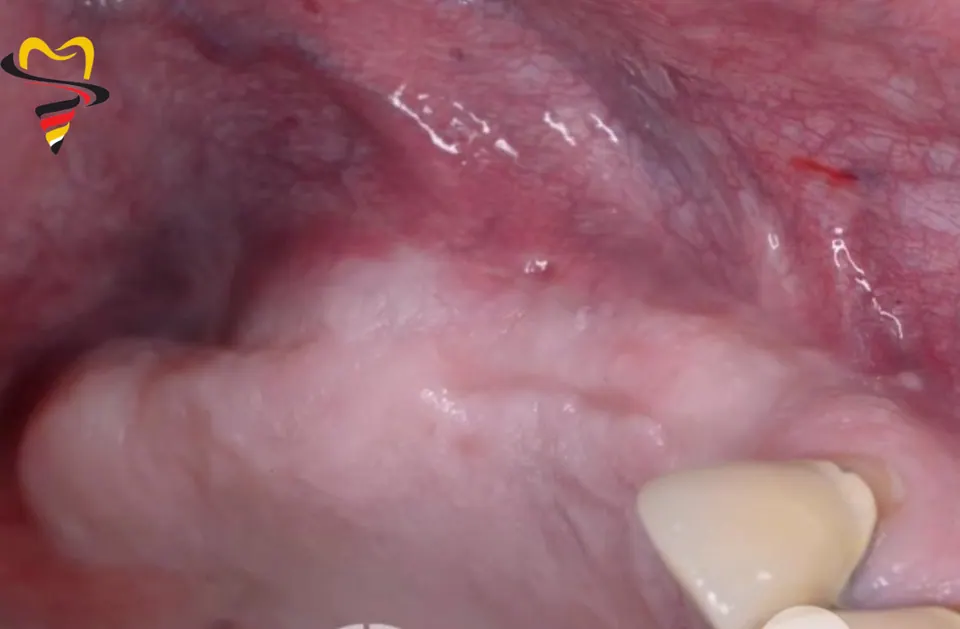
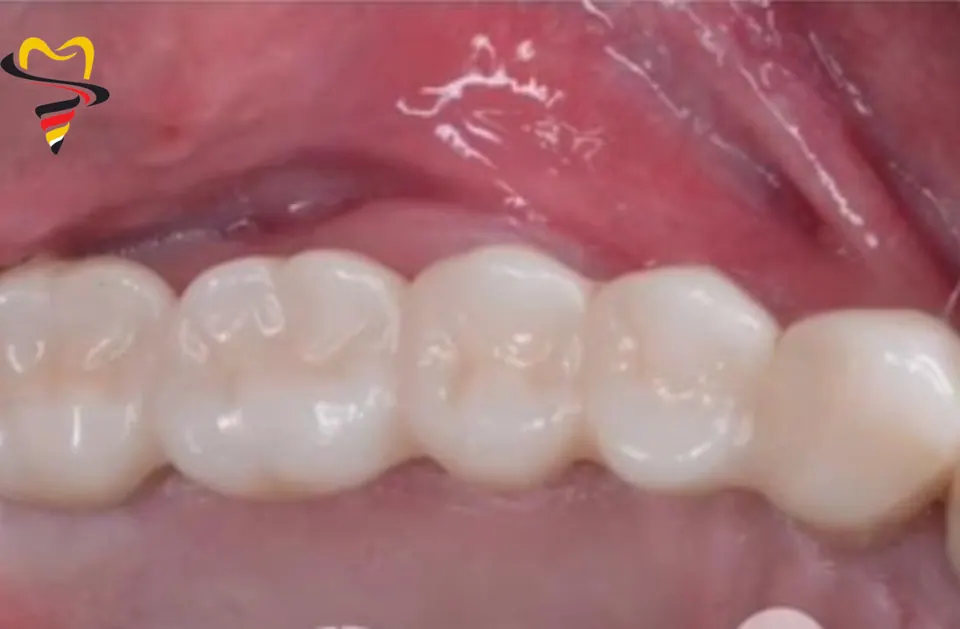 BeforeAfter
Dental implant
Dental implantFrequently asked questions
Is having a dental implant placed painful?
During the procedure, the local anaesthetic blocks pain: you feel pressure but no sharp or burning sensation. Afterwards, most patients describe discomfort similar to that after an extraction, sometimes with swelling of the cheek for a few days. The prescribed painkillers and a cold compress are usually enough. If the pain gets worse instead of easing, please contact us.
How much does a dental implant cost in Rabat?
The cost depends on the number of implants, the system chosen, the examinations, any bone graft and the type of crown. That is why we prepare a detailed estimate after the consultation and X-rays rather than displaying a fixed fee online. The estimate shows you each item in advance and lets you check with your insurer.
Can an implant be placed straight after an extraction?
Sometimes, when the bone is healthy, there is no active infection and the implant can be stabilised in the socket. In other cases it is better to wait for healing, while preserving the bone at the time of the extraction. The decision is made case by case, based on X-rays and a clinical examination.
Am I too old for an implant?
Age alone is not a contraindication. What matters is your general health, the medication you take, the quality of your bone and your ability to look after the implant. Many older patients benefit from implants, particularly to stabilise a denture. The medical assessment at the first consultation is designed to evaluate exactly these points.
What if I am told I do not have enough bone?
A lack of bone does not necessarily rule out an implant. Depending on the area and the extent of the loss, a bone graft or sinus lift can rebuild the volume needed, before or during placement. Sometimes a shorter implant or a different position is enough. Three-dimensional imaging helps choose the most reasonable solution.
Can an implant be rejected?
It is not rejection in the sense of an allergy, as titanium is very well tolerated. However, an implant may fail to integrate with the bone, or weaken later because of infection, smoking or inadequate care. Following the instructions and attending regular check-ups significantly reduce this risk.
The information on this page is general. Only a consultation allows a diagnosis and a suitable treatment plan. Updated on 14 October 2026.