Healthy gums do not bleed
Many people think a little blood on the toothbrush is normal, or that it comes from brushing too hard. In fact, healthy gums, firm and pale pink, do not bleed with proper brushing or when you floss.
Bleeding is most often a sign of inflammation. It is sometimes accompanied by other subtle signs: red or swollen gums, tender gums, persistent bad breath, an unpleasant taste in the mouth. The absence of pain is misleading: gum disease often progresses without hurting, which explains why it is sometimes discovered late.
The good news is that at the early stage, the inflammation is generally reversible. Hence the value of talking to a dentist without waiting.
Gingivitis: the most common cause
Dental plaque is a film of bacteria that constantly forms on the teeth, particularly along the gum line. If it is not removed every day, it irritates the gum and causes gingivitis: redness, swelling and easy bleeding.
Over time, plaque hardens into tartar, a hard layer that a toothbrush can no longer remove. Tartar provides a rough surface where plaque clings even more easily, keeping the inflammation going.
At this stage, treatment rests on two pillars: professional scaling to remove tartar and plaque, followed by better oral hygiene at home. In most cases, the bleeding decreases significantly within a few weeks when both conditions are met.
When inflammation reaches the bone: periodontitis
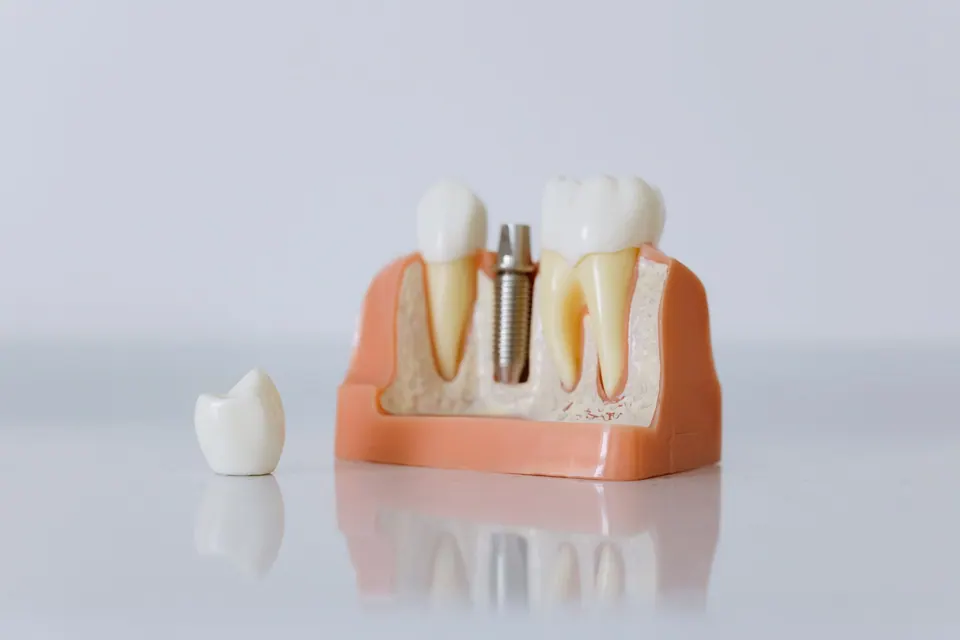
If gingivitis persists, the inflammation can spread deeper and affect the tissues that anchor the tooth in the bone: this is periodontitis. The gum comes away from the tooth and forms pockets where bacteria multiply, out of reach of the toothbrush. The bone supporting the teeth is gradually lost.
Signs that should make you think of periodontitis:
- receding gums, teeth that look longer;
- gaps appearing between the teeth;
- teeth that become loose or shift;
- persistent bad breath despite brushing;
- sometimes discharge or a gum abscess.
Periodontitis cannot be treated with a simple mouthwash. It requires a precise assessment (pocket measurements, X-rays) and appropriate gum treatment, followed by regular maintenance.
Other possible causes
Plaque is by far the main cause, but other factors can encourage or worsen bleeding:
- Hormonal changes: pregnancy, puberty and some forms of contraception make the gums more reactive. Pregnancy gingivitis is common and should be monitored.
- Smoking: it reduces blood flow and can mask bleeding, giving a false impression of healthy gums.
- Diabetes: poorly controlled diabetes and gum disease influence each other.
- Certain medicines: anticoagulants, antiplatelet drugs and some other treatments can encourage bleeding or swelling of the gums.
- Stress, fatigue and some nutritional deficiencies can weaken the body's defences.
- Poorly fitting dentures, crowns or fillings that trap plaque.
More rarely, unusual bleeding that occurs spontaneously or comes with bruising or severe tiredness should prompt a visit to a doctor, as it may reveal a general health problem.
What you can do right now
While waiting for your appointment, a few simple steps already help:
- Do not stop brushing the area that bleeds: you should do the opposite, gently and thoroughly.
- Use a soft toothbrush, angling the bristles towards the gum with small movements.
- Clean between your teeth every day with floss or suitable interdental brushes.
- Avoid using antiseptic mouthwashes continuously without advice: they can be useful for a short period, but they replace neither brushing nor scaling.
- Never stop blood-thinning treatment on your own because your gums bleed. Talk to your doctor and your dentist.
Improvement after a few days of careful brushing is encouraging, but it does not replace a check-up if the bleeding was frequent or long-standing.
What happens at the consultation
The dentist starts by asking about your medical history, medication, smoking and oral hygiene habits. They then examine the gums, look for tartar and, if needed, measure the depth of the spaces between gum and tooth with a small graduated probe. X-rays are used to assess the level of the bone.
Depending on the diagnosis, the plan may range from a simple scale and polish with hygiene advice to periodontal treatment over several sessions under local anaesthetic, followed by scheduled maintenance. Results depend greatly on regular home care and on stopping or reducing smoking.
At German Dental Clinic in Agdal, periodontology is one of the areas of care, with particular attention paid to explaining each step.
Why you should not let it drag on
Untreated periodontitis can eventually lead to loose teeth and then tooth loss. It also complicates future treatment: placing a dental implant in a patient whose gum disease has not been stabilised carries a greater risk of complications around the implant.
Taking care of bleeding gums therefore means protecting your teeth, but also keeping your options open for the future. If you live in Rabat or the surrounding area and notice regular bleeding, you can book an appointment for a gum assessment.
Frequently asked questions
Should I stop brushing when my gums bleed?
No, quite the opposite. Bleeding shows that plaque is building up in that area. Keep brushing with a soft toothbrush, gently and precisely, and clean between your teeth. If the bleeding continues, see a dentist.
Is a mouthwash enough to treat the gums?
No. A mouthwash may be prescribed for a short time, but it removes neither tartar nor the established plaque under the gum. Treatment relies on scaling, sometimes periodontal treatment, and good daily hygiene.
Is it normal for gums to bleed during pregnancy?
It is common, because hormones make the gums more reactive to plaque. That is no reason to ignore it: a check-up and scaling can be carried out during pregnancy and help keep the gums healthy.
Does scaling damage the teeth?
No. When carried out correctly, scaling removes tartar without wearing away the enamel. Temporary sensitivity may occur when areas previously covered by tartar are exposed, and it usually fades quickly.
The information on this page is general. Only a consultation allows a diagnosis and a suitable treatment plan.